Categories
Historic Districts

Villa Roma Garden Homes

Villa Roma Garden Homes 2500 South Sierra Madre, Palm Springs, CA 92264

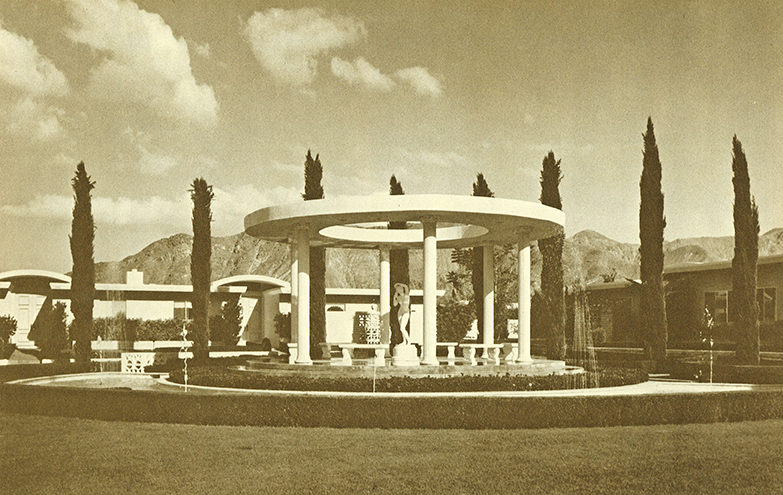
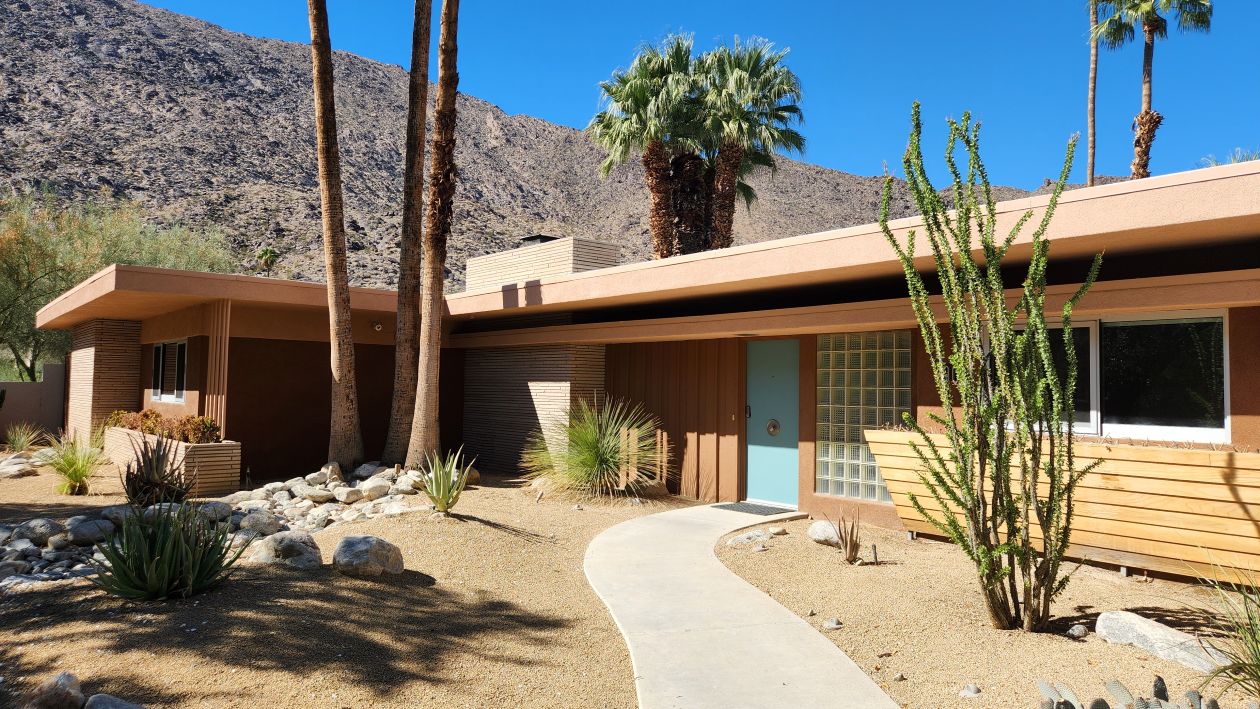
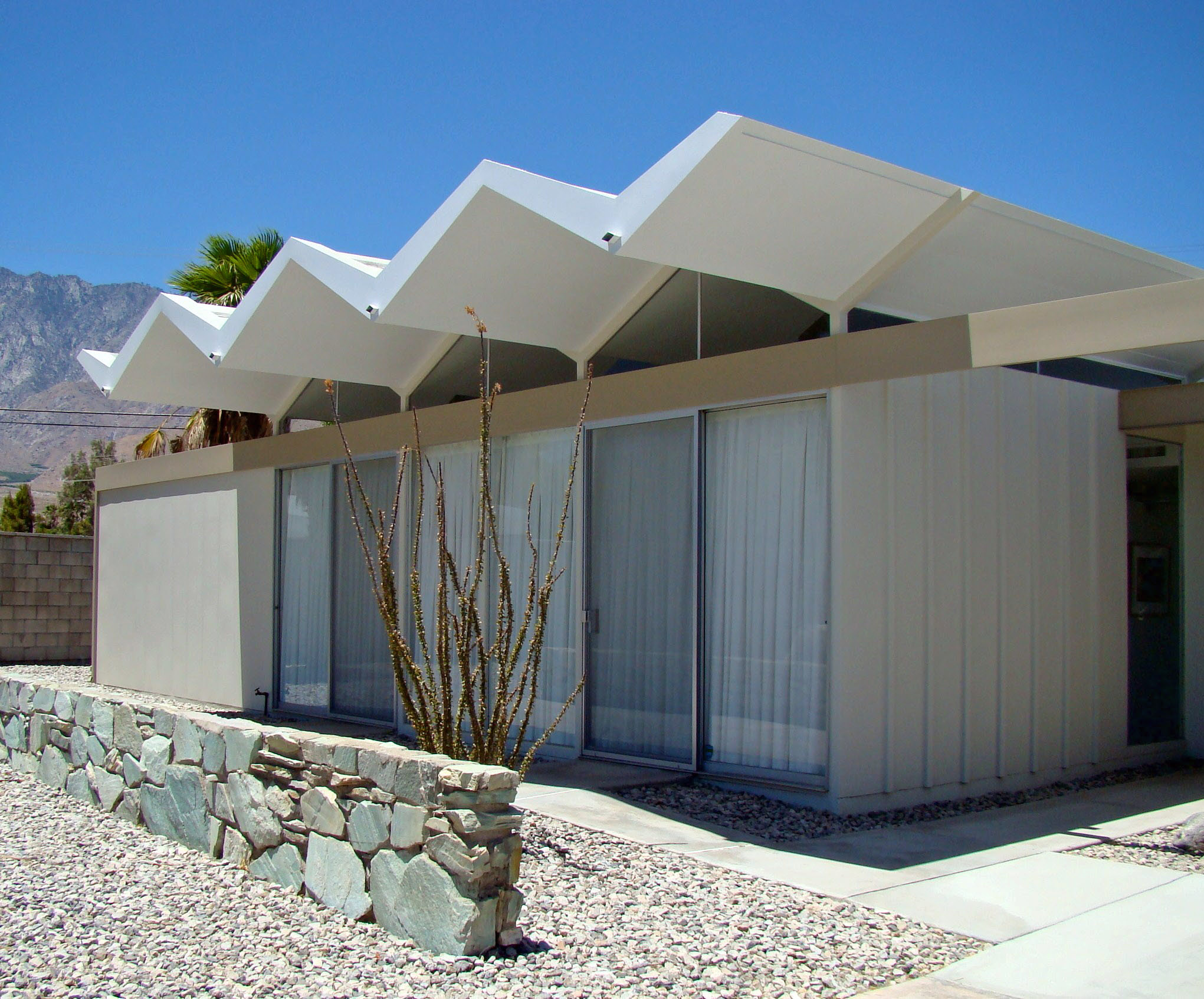
Completed in 1964, Villa Roma Garden Homes is a 69-unit condominium complex designed by James K. Schuler & Associates and built by Orange County developer Dominick Sfregola. The complex has stood as one of south Palm Springs’ best-known landmarks owing to its quirky and highly visible Roman-themed design.

REFERENCES

On February 21, 2023 the Palm Springs city council approved (3-2) the historic designation of Villa Roma.  Making public comment in support of the designation were PSPF board member Ron Marshall, PSPF board advisor Steve Vaught, PSModCom board member Peter Moruzzi, and a host of enthusiastic Villa Roma homeowners.  At 69 units, Villa Roma becomes the city’s eighth, and largest, residential historic district.

On September 6, 2022 the Palm Springs’ Historic Site Preservation Board voted unanimously (4-0, with one recusal) to recommend to the city council the designation of Villa Roma Garden homes as a Historic District.

On July 5, 2022 the city of Palm Springs’ Historic Site Preservation Board met to further discuss the Villa Roma Garden Homes historic district nomination including the proposed verbiage of the city council resolution on the topic. The HSPB’s discussion was greatly informed by previously submitted letters from PSPF board member Steven Keylon in which he expounded on the importance of the garden apartment building type to the development of Palm Springs. Additional public comment by PSPF board member Gary Johns emphasized the uniqueness of some of the architectural detailing of Villa Roma. PSPF advisor and nomination author Steve Vaught also greatly aided in the HSPB’s lengthy discussion. Ultimately, the HSPB voted 5-0 to approve a much-strengthened resolution. To read PSPF board member Keylon’s letter of June 10, 2022 click here. To read PSPF board member Keylon’s letter of July 4, 2022 click here.

On June 7, 2022 the city of Palm Springs’ Historic Site Preservation Board met to discuss the Villa Roma Garden Homes historic district nomination. PSPF board advisor and nomination author, Steve Vaught, made a compelling case for historic designation and rebutted, in detail, the negative city staff report. PSPF board members Gary Johns and Ron Marshall made public comment in support of the nomination. Most noteworthy, almost twenty Villa Roma homeowners made public comment in support of the nomination. The HSPB voted unanimously (4-0) to recommend designation of the condominium complex to the city council.

On May 31, 2022 PSPF advisor and renowned author, Alan Hess, wrote a letter to the city of Palm Springs’s Historic Site Preservation Board describing the importance of Villa Roma Garden Homes to the architectural legacy of southern California. To read the letter click here.

On August 19, 2021, the Palm Springs Preservation Foundation (acting as agent for the owners) submitted the 63-page Historic District nomination for the Villa Roma Garden Homes to the city of Palm Springs.

On November 24, 2020, the Palm Springs Preservation Foundation board of directors assigned the task of writing the Historic District nomination for the Villa Roma condominium complex to PSPF board advisor Steve Vaught.

Courtesy Steve Vaught
PSPF Arch of Desert Leisure
Courtesy Jesse McManus
Categories
Grants and Sponsorships

Aluminaire House

Aluminaire House GRANT

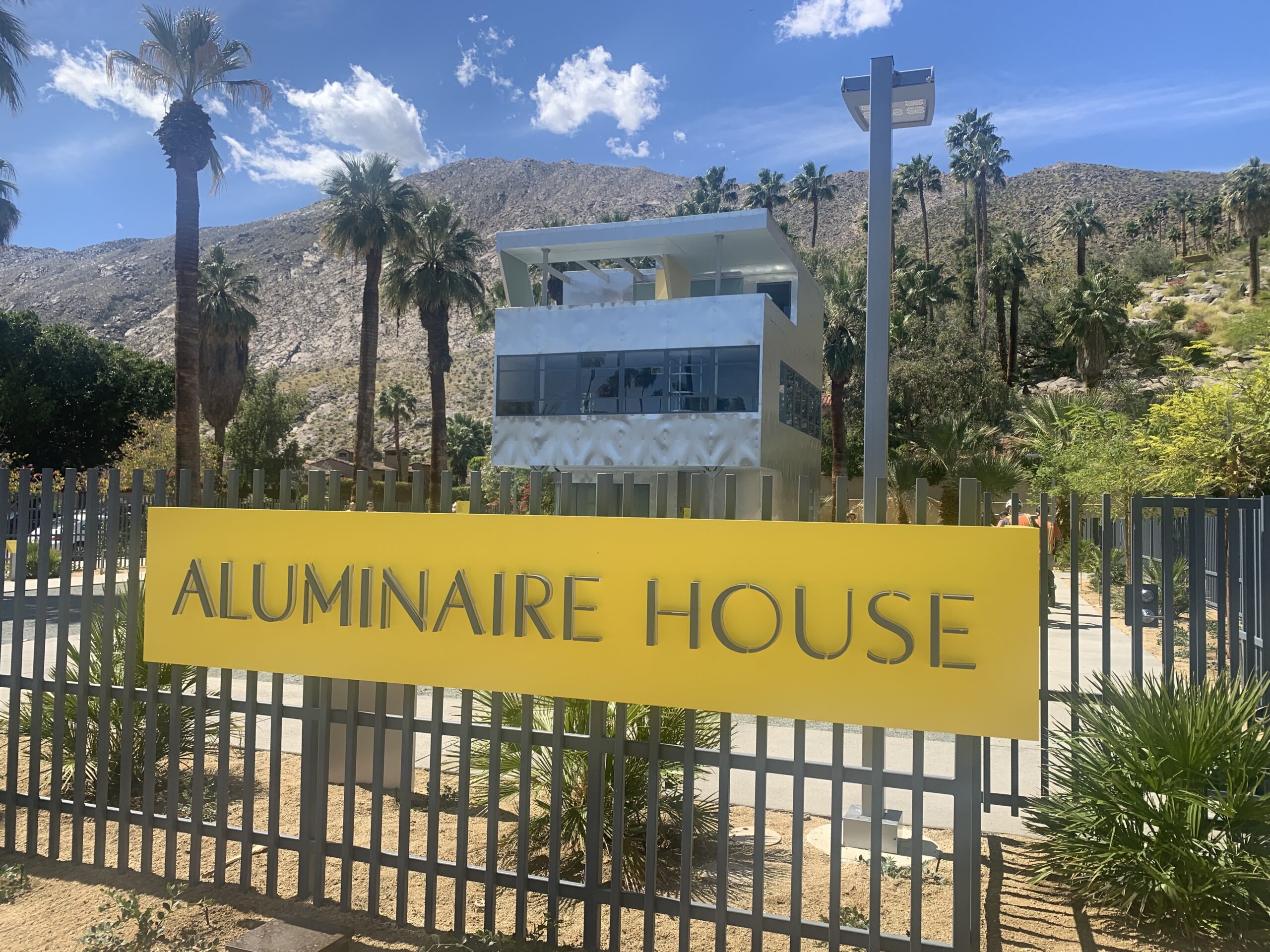
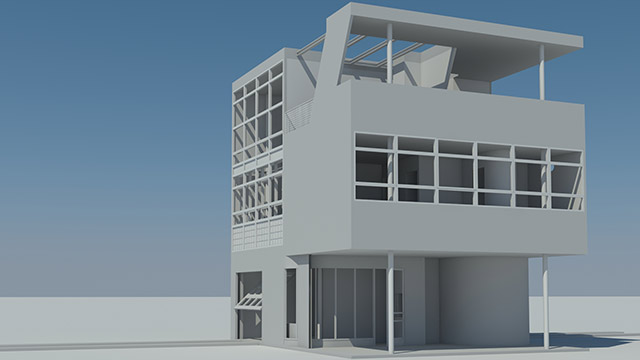
The Aluminaire House was designed as a case study by architects A. Lawrence Kocher and Albert Frey in April of 1931. The three-story house, made of donated materials and built in ten days, was the first all-metal house in the United States. It was shown in the Grand Central Palace exhibition hall on Lexington Avenue in New York City as part of the Architectural and Allied Arts Exhibition. In 1932, the house was exhibited again at the Architectural League of New York show sponsored by the Museum of Modern Art (MOMA). The MOMA show was entitled “The International Style – Architecture Since 1922,” which became the basis of a book by Philip Johnson and Henry Russell Hitchcock. The Aluminaire House arrived in Palm Springs (unassembled) in February of 2017.

On March 23, 2024 the Palm Springs Art Museum celebrated the grand opening of the long-awaited installation of the Aluminaire House™ Exhibit. The event was attended by PSPF board members Gary Johns and Erik Rosenow.

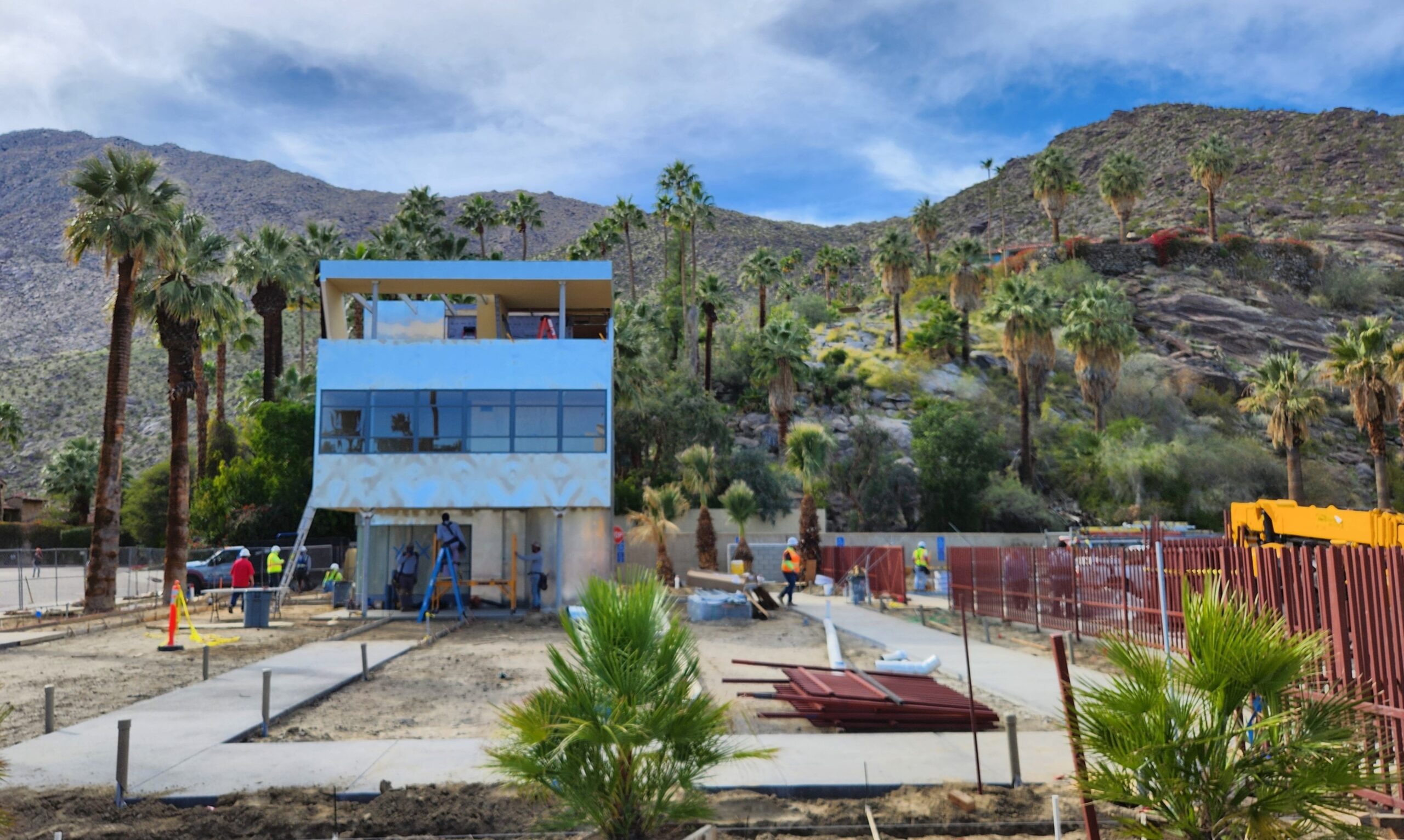
In early 2024 the Palm Springs Art Museum made remarkable progress in the reconstruction of the Aluminaire House.

On September 24, 2023 (after confirming that significant progress on Aluminaire House site preparation was being made) PSPF sent a grant check for $100,000 to the Palm Springs Art Museum. To read the PSPF grant letter click here.

On May 1, 2023 the Aluminaire House Foundation (California) returned the PSPF grant money with the understanding that PSPF would transfer the monies to the Palm Springs Art Museum when the museum formulated a “viable plan” for the assembly and display of the Aluminaire House.

As part of its programming for Modernism Week in February 2021, the Aluminaire Foundation premiered a fascinating 38-minute film entitled “Albert Frey, the 1931 Aluminaire House and Palm Springs – The Story.” During the film architect Frances Campani and Palm Springs Art Museum director Louis Grachos recognized PSPF’s recent grant.
Watch the Film

On December 14, 2020, PSPF sent a letter to the Aluminaire House Foundation (California) informing them of the award of a $100,000 grant to aid in the “assembly and display” of the historic structure. PSPF’s grant letter states, in part, that “[PSPF] believes the assembly and display of the historic Aluminaire House…in Palm Springs will reinforce the city’s international reputation as a mecca for modernist architecture.” A condition of the PSPF grant is that the assembly and display of the Aluminaire House be completed, to PSPF’s satisfaction, no later than December 31, 2023. To read the PSPF grant letter click here.

In the summer of 2020, the Aluminaire House Foundation passed a major milestone when it received a “Certificate of Appropriateness” from the city of Palm Springs’ Historic Site Preservation Board to allow for the siting of the Aluminaire House on the grounds of the Palm Springs Art Museum.

To read more about the Aluminaire House click here.

Courtesy Gary Johns
Courtesy Gary Johns
Early 2024 progress on Aluminaire House.
Courtesy Kyle Ng, CalPoly Pomona
Aluminaire-arrival-BAM-14Feb17-825

IN THE MEDIA

January 1, 2021, M Weekly, Modernism Week (Aluminaire House Foundation)
May 2015 Issue, Palm Springs Life (Aluminaire House Foundation)

Categories
Historic Sites

Merrill & Juanita Crockett Residence

Merrill & Juanita Crockett Residence 590 West Linda Vista Road, Palm Springs, CA 92262

The Crockett Residence, constructed in 1952 in the historic Tennis Club neighborhood, is one of architectural designer Herbert W. Burns’ most elegant late Moderne designs.  Merrill Crockett, a friend of Burns, was a pharmacist and well-regarded local businessman.  The residence’s striking façade is anchored by a series of opposing Arizona sandstone pylons and piers.  The Crockett Residence was toured as part of PSPF’s “Herbert Burns Weekend” in March of 2018 and is prominently mentioned in PSPF’s book The Design of Herbert W. Burns written by PSPF board member Steven Keylon.

REFERENCES

On July 8, 2021, the Palm Springs city council unanimously (5-0) approved the Class 1 Historic Resource designation of the Crockett Residence. PSPF board member and nomination author Steven Keylon made compelling public comment in support of the designation.

On May 4, 2021, the city’s Historic Site Preservation Board voted unanimously (7-0) to recommend to city council approval of the Class 1 Historic Resource designation of the Crockett Residence. PSPF board member and nomination author Steven Keylon made public comment in support of the nomination.

On February 9, 2021, the Palm Springs Preservation Foundation (acting as agent for the owner) submitted the 51-page Class 1 Historic Resource nomination for the Merrill & Juanita Crockett Residence to the city of Palm Springs.

In October of 2019, Palm Springs Preservation Foundation board member Steven Keylon volunteered to write the nomination for the Merrill and Juanita Crockett Residence.

Photo by Julius Shulman © J. Paul Getty Trust. Getty Research Institute, Los Angeles (2004.R.10)
Crockett_PSPF_BAM
Categories
Historic Sites

Theodore & Marguerite Sutter Residence

Theodore & Marguerite Sutter Residence 1207 South Calle de Maria, Palm Springs, CA 92264

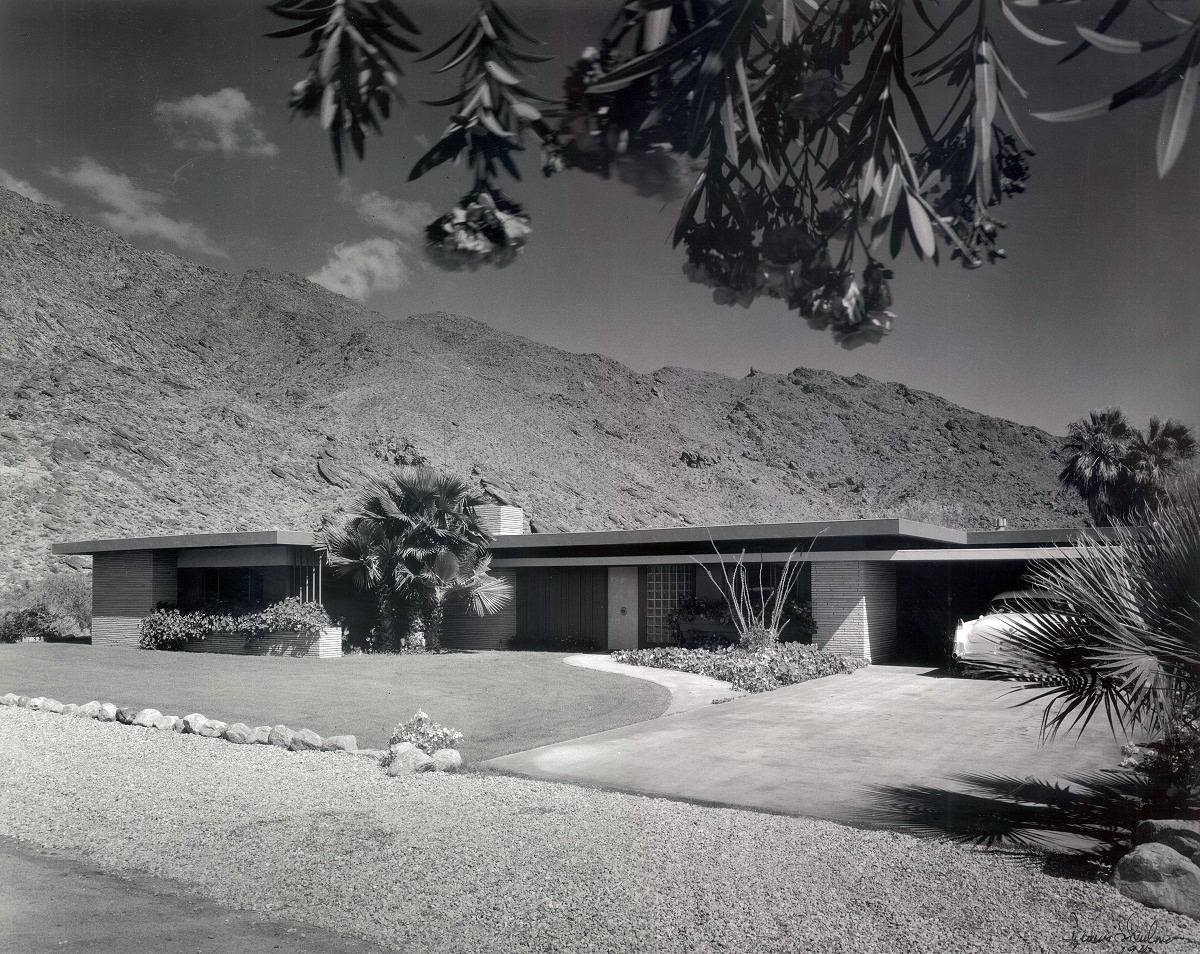
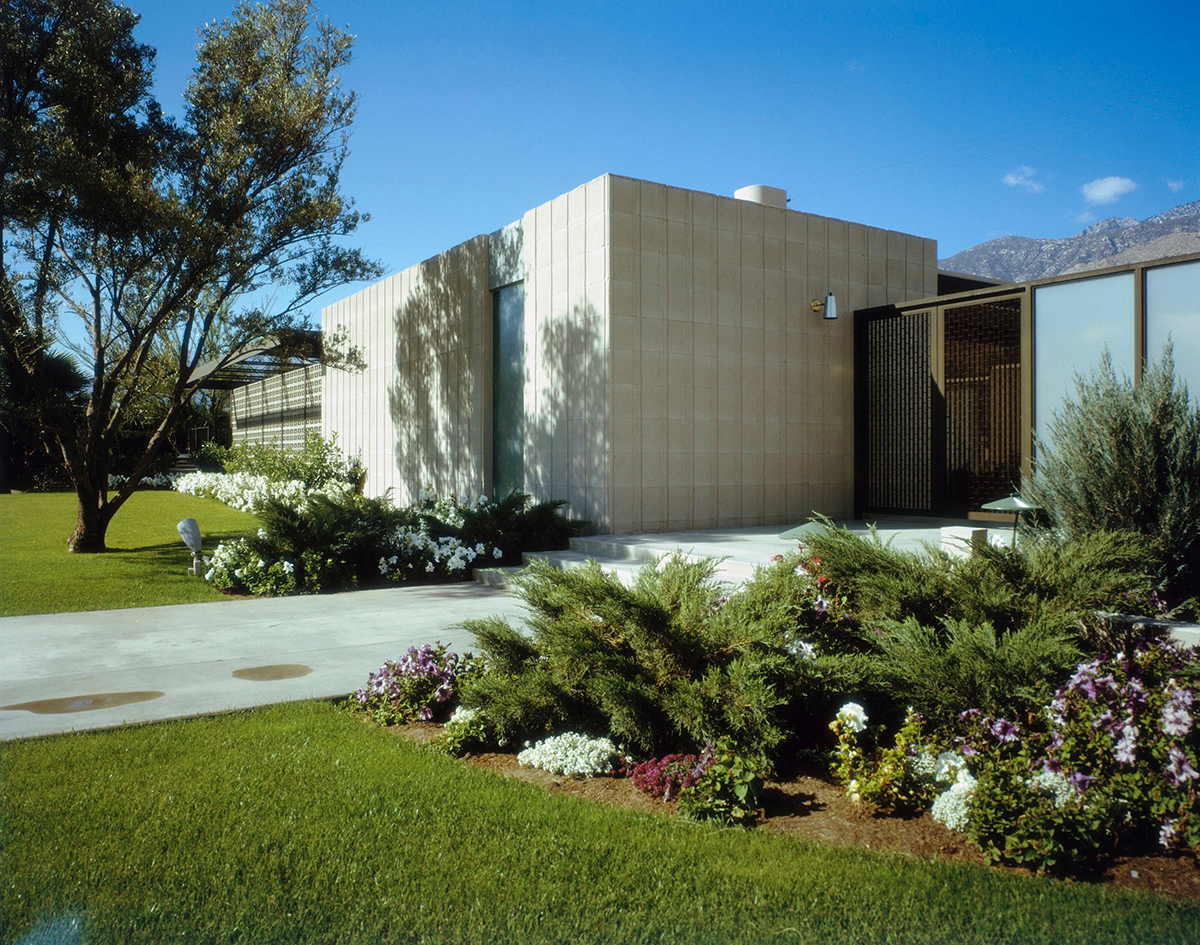
The Sutter Residence, completed in 1960 in the Deepwell neighborhood, was a modest, “starkly simple” design by architect E. Stewart Williams.  For nearly fifty years, Theodore Sutter was associated with Baker Oil Tools, Inc., a pioneering oil drilling equipment company.  Per the clients’ wishes, the modernist design was intended as a weekend retreat that could be managed with no live-in staff.  Notably, architect Williams’ design was sensitive to the more lavish Koerner Residence he had designed next door a few years earlier in 1955.

REFERENCES

On February 25, 2021, the Palm Springs city council unanimously (5-0) approved the Class 2 Historic Resource designation of the Sutter Residence. PSPF board member Barbara Marshall and, PSPF board advisor and nomination author Steve Vaught made compelling public comment in support of the designation.

On December 8, 2020, the Palm Springs Historic Site Preservation Board met to consider the Class 1 historic resource designation of the Theodore and Marguerite Sutter Residence. Although some HSPB members opined that the Sutter Residence had significantly more integrity than some previously designated Class 1 properties, staff recommended it be designated a Class 2 property. Ultimately, the HSPB made a unanimous (5-0) recommendation for a Class 2 designation with a provision that it be “bumped up” to Class 1 after certain glass elements of the structure were replaced (this action was later found administratively improper by the city’s attorney). PSPF board advisor Steve Vaught eloquently explained the architectural importance of the Sutter Residence and PSPF board members Tracy Conrad and Barbara Marshall made compelling public comment in support of the historic site designation.

On October 13, 2020, the Palm Springs Preservation Foundation (acting as agent for the owner) submitted the 57-page Class 1 Historic Resource nomination for the Theodore and Marguerite Sutter Residence to the city of Palm Springs.

On June 11, 2020, the Palm Springs Preservation Foundation board of directors assigned the task of writing the Class 1 Historic Resource nomination of the Theodore and Marguerite Sutter Residence nomination to PSPF board advisor Steve Vaught.

Photo by Julius Shulman © J. Paul Getty Trust. Getty Research Institute, Los Angeles (2004.R.10)
Categories
Buildings to Watch

Amado Post Office Building

Amado Post Office Building 333 East Amado Road, Palm Springs, CA 92262

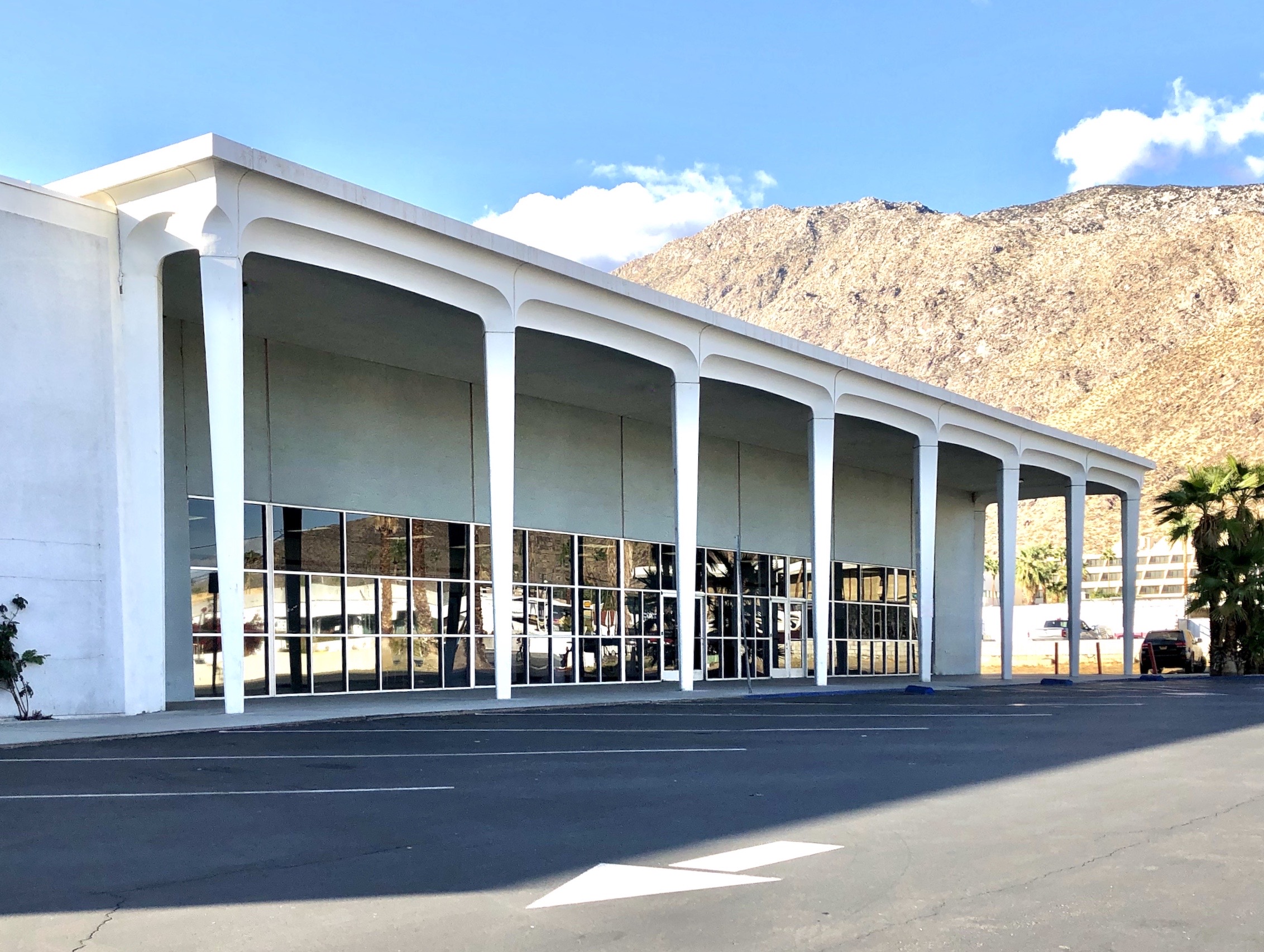
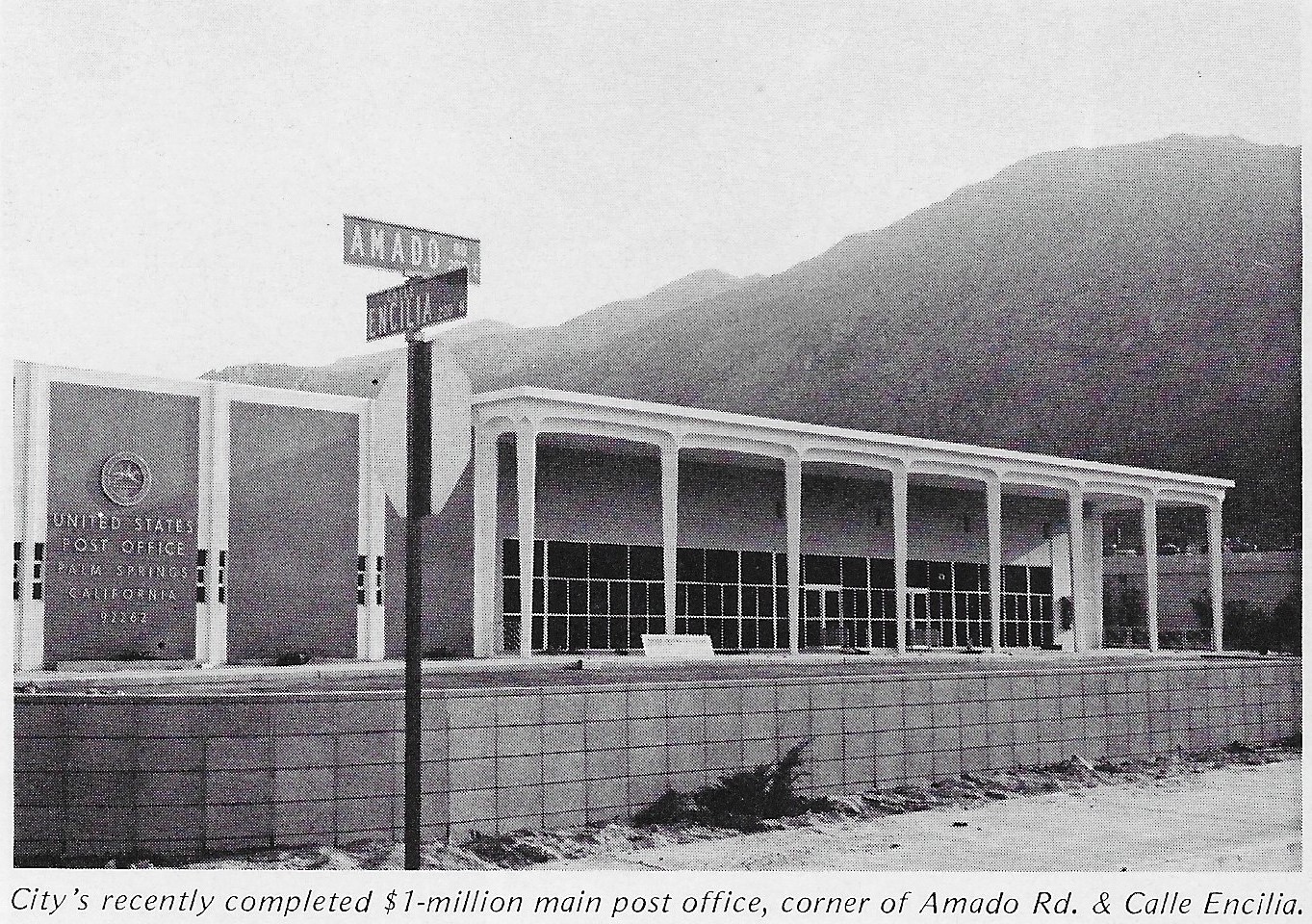
Built in 1970 by San Rafael contractor Floyd Allensby, the Amado Post Office Building is an exceptional example of the “New Formalism” style of modernist architecture. The building’s design is highlighted by tall, expressive arches of cast concrete, large expanses of north-facing glass windows, and walls of period porcelain tile. As is often the case across the United States, the architecture of a town’s main post office reflects the dominant architectural style of the surrounding community.

On April 22, 2021, the Palm Springs Post Office discontinued operations at 333 East Amado Road and moved to a new facility at 333 North Sunrise Way. The decision to relocate the post office was made on April 13, 2019 and was reportedly due to the expiration of the lease.

On September 14, 2020, PSPF sent a letter to the Agua Caliente Band of Cahuilla Indians (ACBCI) requesting they consider the adaptive reuse of the U.S. Post Office Building at 333 East Amado Road.  Aside from chronicling the architectural merits of the building, the PSPF letter pointed out that the Amado Post Office Building had “performed both an essential civic function, and served as an informal community gathering place.”  The PSPF letter offers to fund a sustainability study to “quantify the merits of adaptively reusing the building.”  To read the PSPF letter click here .

Courtesy Brad Dunning
Palm Springs Life, Sep 1970
Categories
Uncategorized

Palm Springs Downtown Park

Palm Springs Downtown Park 230 North Museum Drive, Palm Springs, CA 92262

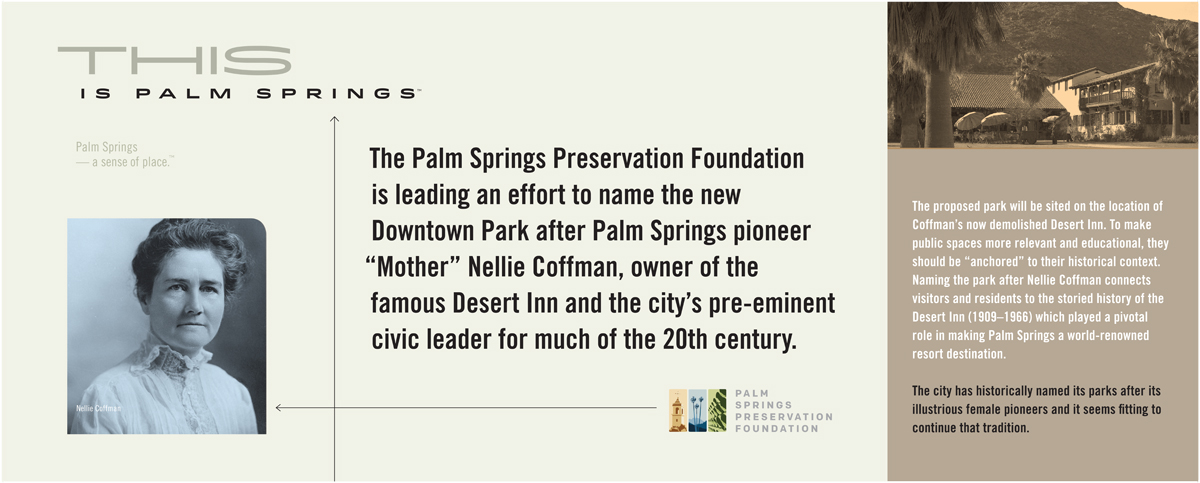
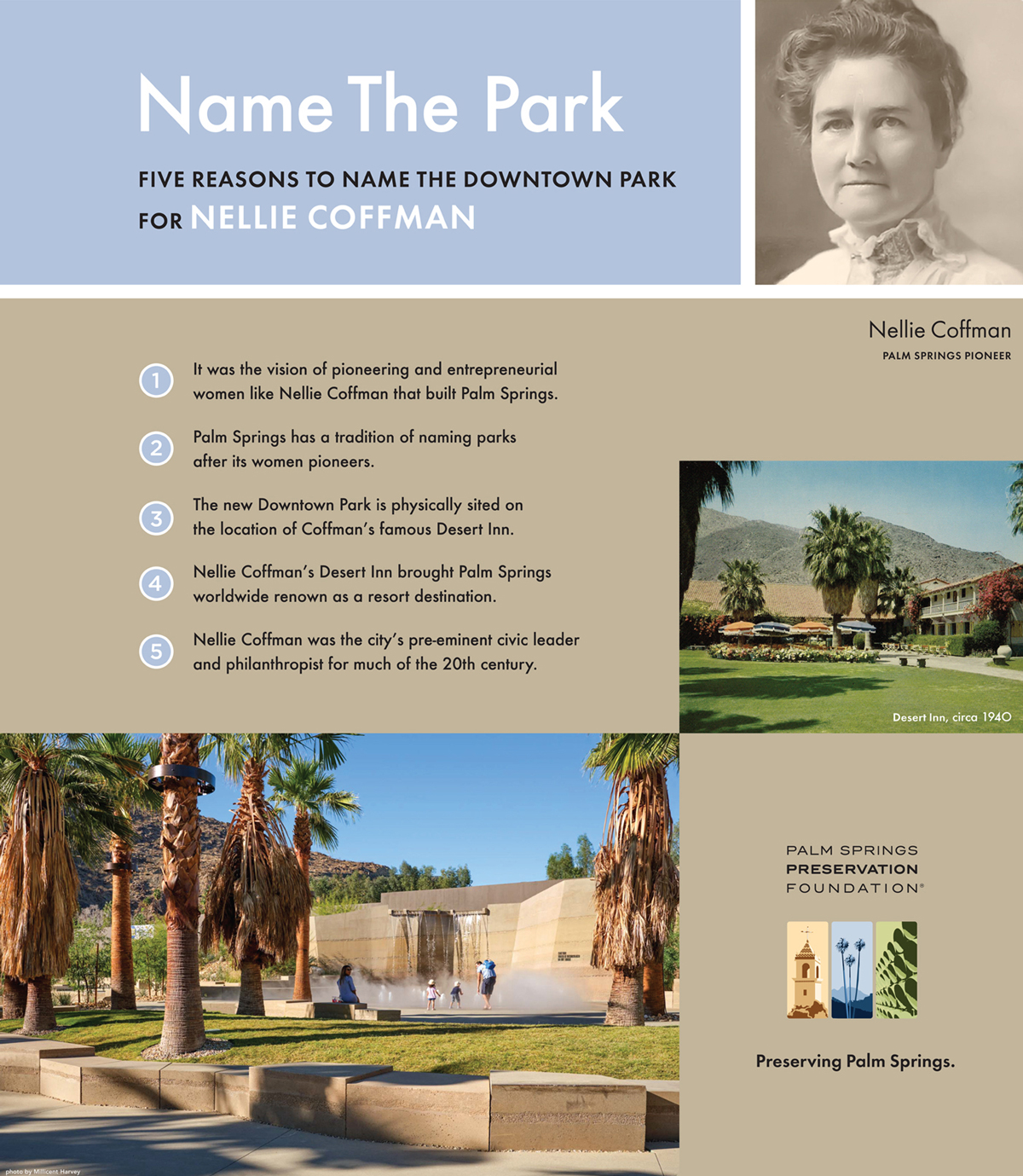
PSPF is leading an effort to name the new Downtown Park after Palm Springs pioneer “Mother” Nellie Coffman, owner of the Desert Inn and one of the city’s leading philanthropists. The city has historically named its parks after its illustrious female pioneers (e.g., Ruth Hardy Park and Frances Stevens Park) and it seems fitting to continue that tradition.

On February 26, 2024 PSPF board members Gary Johns, Ron Marshall, and Barbara Marshall met with Palm Springs city manager Scott Stiles to discuss the importance of scheduling a public hearing on naming the Downtown Park after Nellie Coffman.

On May 18, 2023 PSPF president Gary Johns met with Palm Springs city councilmember Jeffrey Bernstein to discuss the merits of naming the Downtown Park after Nellie Coffman. Johns also provided Bernstein with copies of PSPF’s educational products on this important advocacy.

PSPF continued its advocacy to name the Downtown Park for Nellie Coffman by posting informational banners on the topic at PSPF’s Modernism Show & Sale booth in October 2022 and February 2023. PSPF’s booth was seen by thousands of show attendees and PSPF board members, and volunteers, engaged members of the public in discussion about Coffman’s many contributions to the city of Palm Springs.

On June 27, 2022 PSPF sent a letter to the newly-appointed city of Palm Springs’ Director of Parks and Recreation. In the letter PSPF informed the new director that our November 4, 2021 letter was still awaiting a response and asked that she become a “supporter of this important community advocacy.” To read the letter click here.

On November 4, 2021 PSPF sent a letter to the city of Palm Springs’ Parks and Recreation Commission asking that the commission agendize and hold public hearings on the topic of naming the new Downtown Park. To read the letter click here.

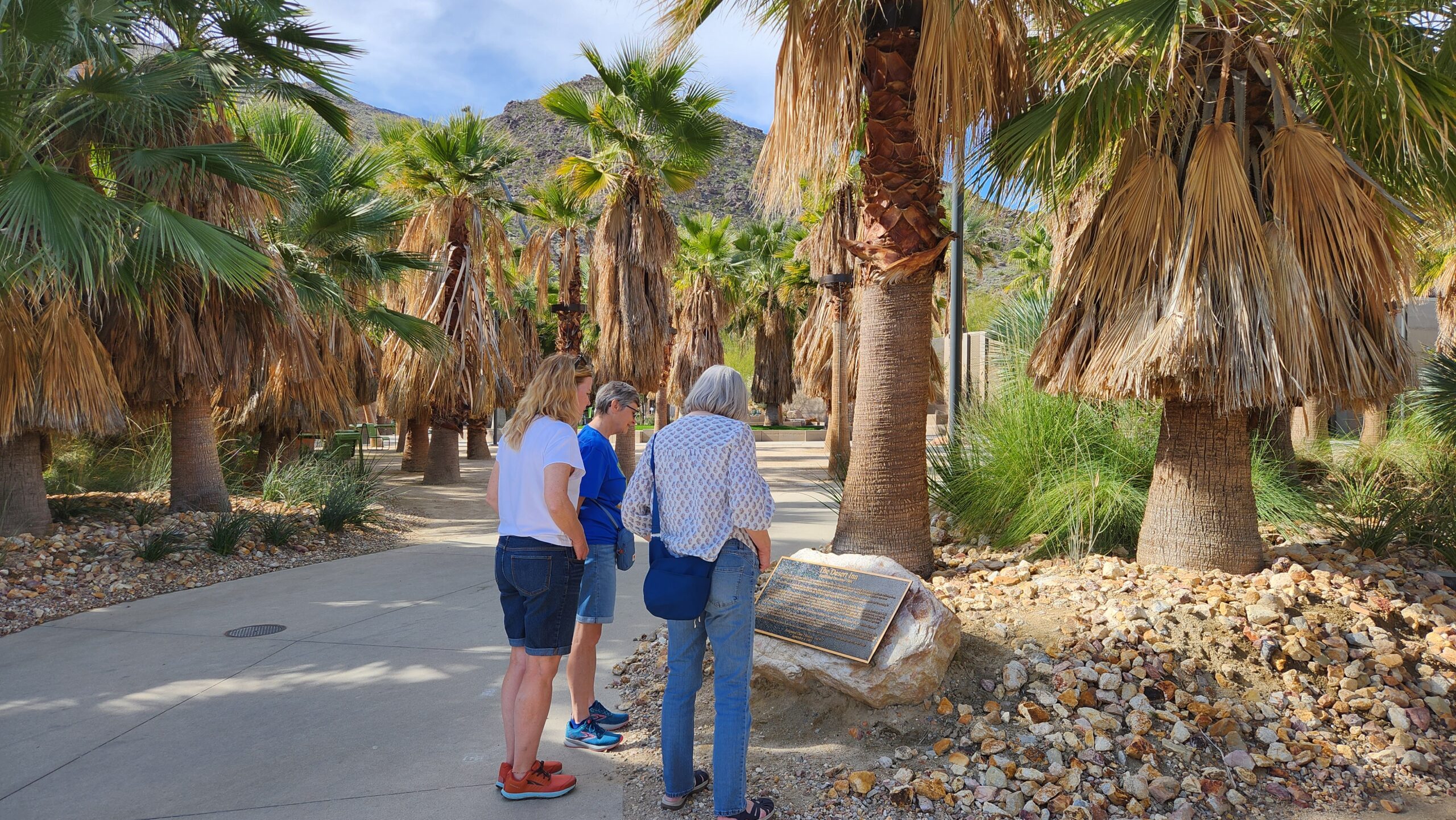
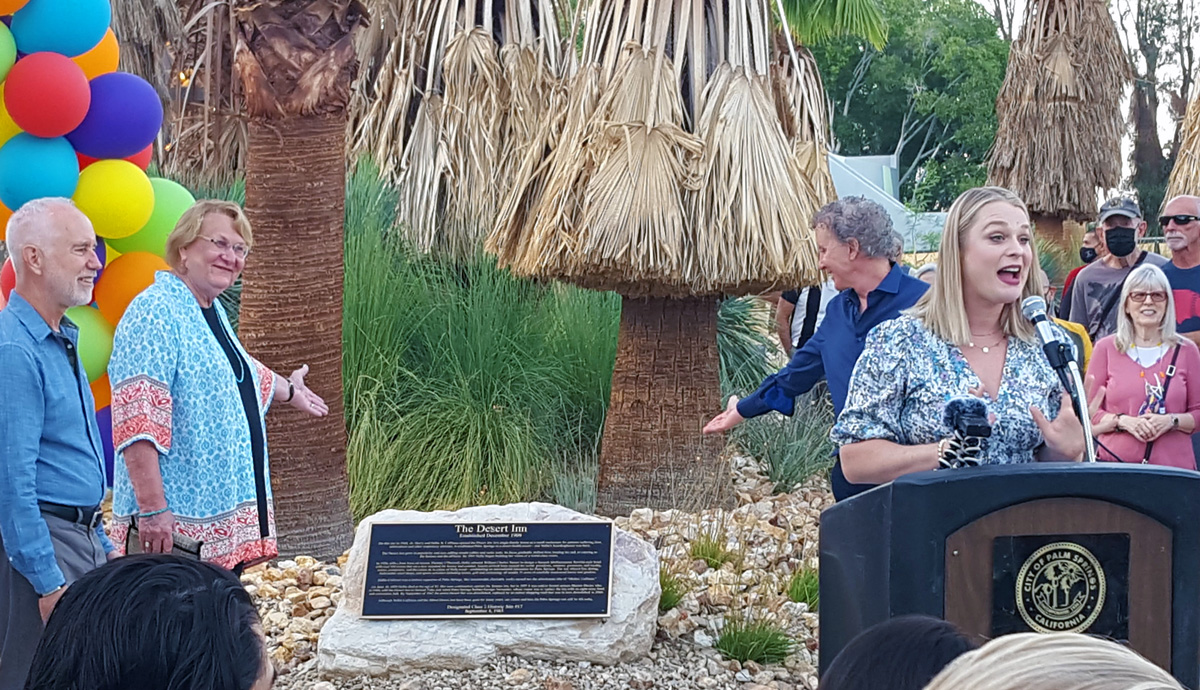
On October 21, 2021 PSPF board members and volunteers attended the city’s ribbon-cutting ceremony for the new Downtown Park. PSPF took the opportunity to pass out educational materials (including Nellie Coffman “face fans”) and engage with city council members, city staff, the press, and the public, on the merits of naming the Downtown Park for Coffman. Additionally, PSPF was recognized for donating the impressive bronze plaque that welcomes visitors to the park. To read the plaque text click here.

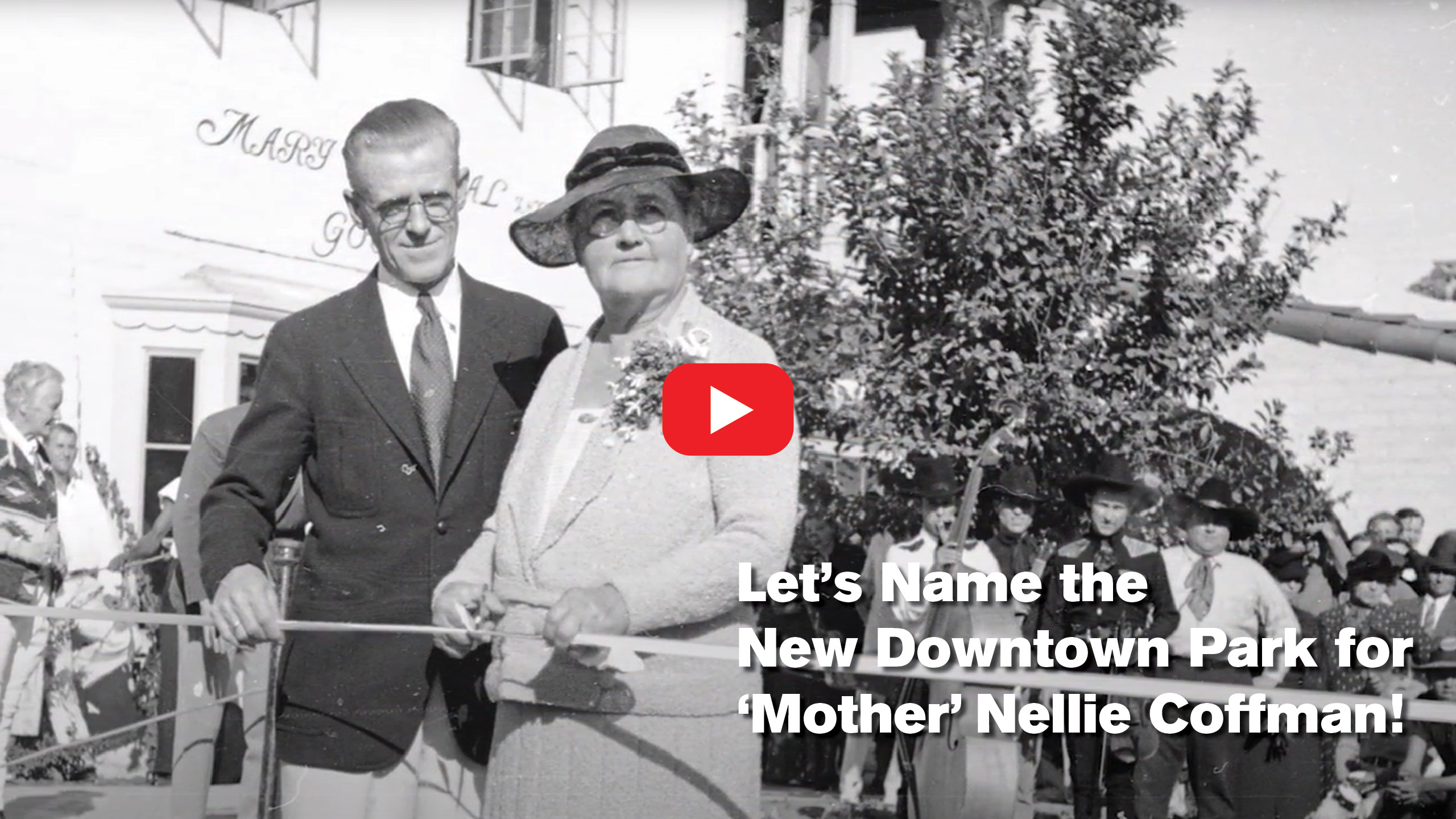
PSPF premiered a 10-minute film entitled “Let’s Name the New Downtown Park for ‘Mother’ Nellie Coffman!” during Modernism Week in April 2021. Watch the Film

On October 28, 2020 PSPF sent a letter to the city of Palm Springs’ City Manager asking that the topic of the “formal naming” of the Downtown Park be placed on a future city council meeting agenda as soon as possible. To read the letter click here.

On August 6, 2020 PSPF president Gary Johns made compelling public comment during a “virtual” Palm Springs city council meeting and encouraged the council members to name the new Downtown Park after Nellie Coffman.

In November and December of 2018, PSPF president Gary Johns (accompanied by various PSPF board members) met with Palm Springs city councilmembers to discuss the merits of naming the Downtown Park after Nellie Coffman.

On November 28, 2018 the Palm Springs Modern Committee endorsed the idea of naming the Downtown Park for Palm Springs pioneer Nellie Coffman. To read the PSModCom letter click here.

On November 15, 2018 PSPF honorary board member William Kleindienst gave a riveting lecture on the life of Nellie Coffman for the Palm Springs Historical Society (PSHS). Speaking to a full house at the Palm Springs Cultural Center, Kleindienst concluded his lecture by making a compelling case for the naming of the Downtown Park after Nellie Coffman. Kleindienst opined, “She [Coffman] did more for Palm Springs than anyone else, period,” concluding with, “Let’s get this park named for Nellie!” After the event, PSPF board members Steven Keylon and Gary Johns distributed more than 250 copies of PSPF’s eight-page Coffman advocacy booklet to the departing lecture attendees.

On November 11, 2018 PSPF board member Steven Price made public comment before the city of Palm Springs’ Historic Site Preservation Board describing the foundation’s advocacy to name the Downtown Park after early pioneer Nellie Coffman. Price also distributed copies of PSPF’s eight-page advocacy booklet on the topic to the board members and city staff.

From October 19-21, 2018 PSPF′s advocacy effort to have the downtown park named after Nellie Coffman was the primary focus of PSPF′s booth at the Modernism Show & Sale. PSPF board members and volunteers talked with hundreds of show attendees about this initiative. A special eight-page advocacy booklet (which included “five reasons” to name the downtown park after Coffman) was distributed. To read the booklet click here.

On September 10, 2018 PSPF sent a letter to the Palm Springs city manager asking that the city have Rios Design Studio “identify an area for an historic element in the Downtown Park…to create…[an] area of the park that pays respect to the Desert Inn and Nellie Coffman.” Further, the letter committed PSPF to “providing up to $10,000 towards costs associated with the physical elements, which may still include the famed Desert Inn gates.” To read the letter click here.

On July 23, 2018 PSPF board members Jan Harper, Gary Johns and Steven Price made public comment before the Palm Springs city council’s subcommittee on the downtown park. Harper, Johns and Price all emphasized the importance of including an historical element in the park and reiterated PSPF’s view that the park should be named after Palm Springs pioneer “Mother” Nellie Coffman.

On February 21, 2018, as part of PSPF’s free lecture series, former Palm Springs mayor Will Kleindienst gave a riveting presentation about the life of pioneer and philanthropist Nellie Coffman. During the talk, given to a full house at the Palm Springs Woman’s Club, Kleindienst described Coffman as “one of the women who built Palm Springs.”

PSPF and Modernism Week partnered to produce and display an oversized storyboard celebrating Nellie Coffman’s Desert Inn. The display at “CAMP” was seen by thousands of Modernism Week 2018 attendees.

On October 18, 2017 PSPF board member Steven Keylon made compelling public comment before the Palm Springs city council in support of the naming the Downtown Park for pioneer Nellie Coffman.

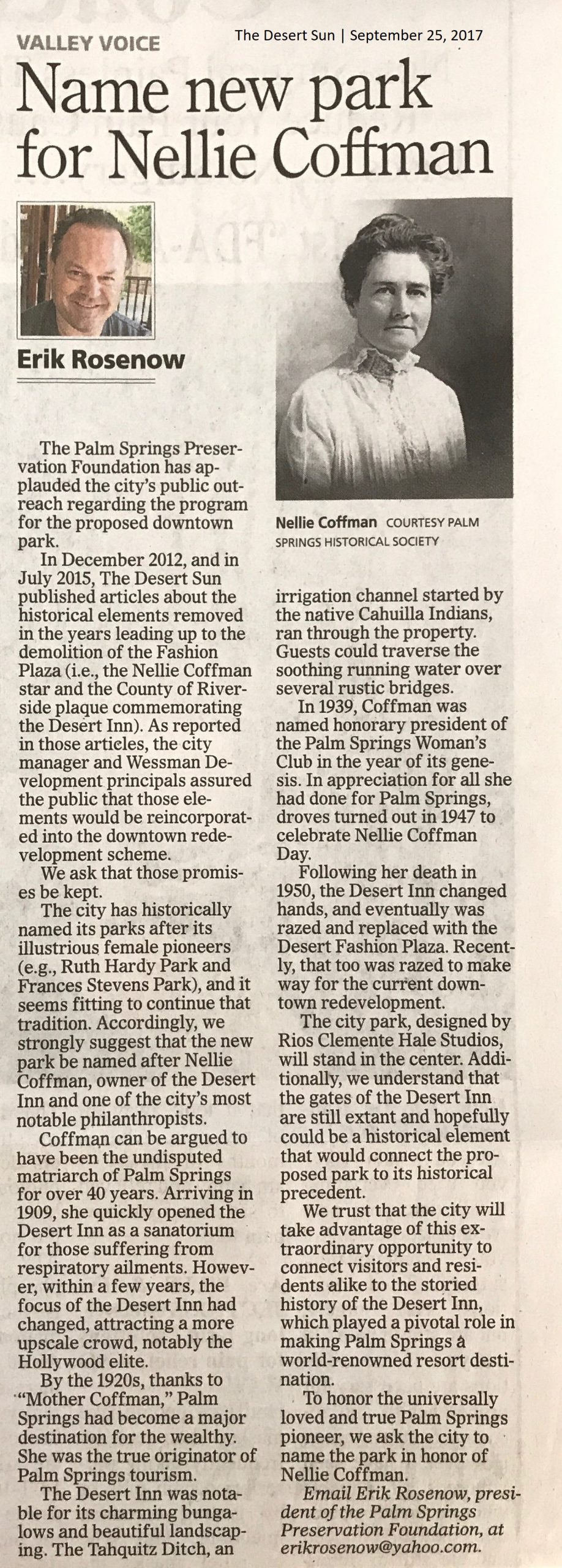
On September 25, 2017 an insightful opinion piece written by PSPF president Erik Rosenow entitled “Name New Park for Nellie Coffman” appeared in the Desert Sun. To read the Op-Ed piece click here.

On June 9, 2017 PSPF sent a letter to the mayor of Palm Springs recommending the city name the new Downtown Park in honor of Nellie Coffman and opining, “We trust that the city will take advantage of this extraordinary opportunity to connect visitors and residents alike to the storied history of the Desert Inn which played a pivotal role in making Palm Springs a world-renowned resort destination.” To read the letter click here.

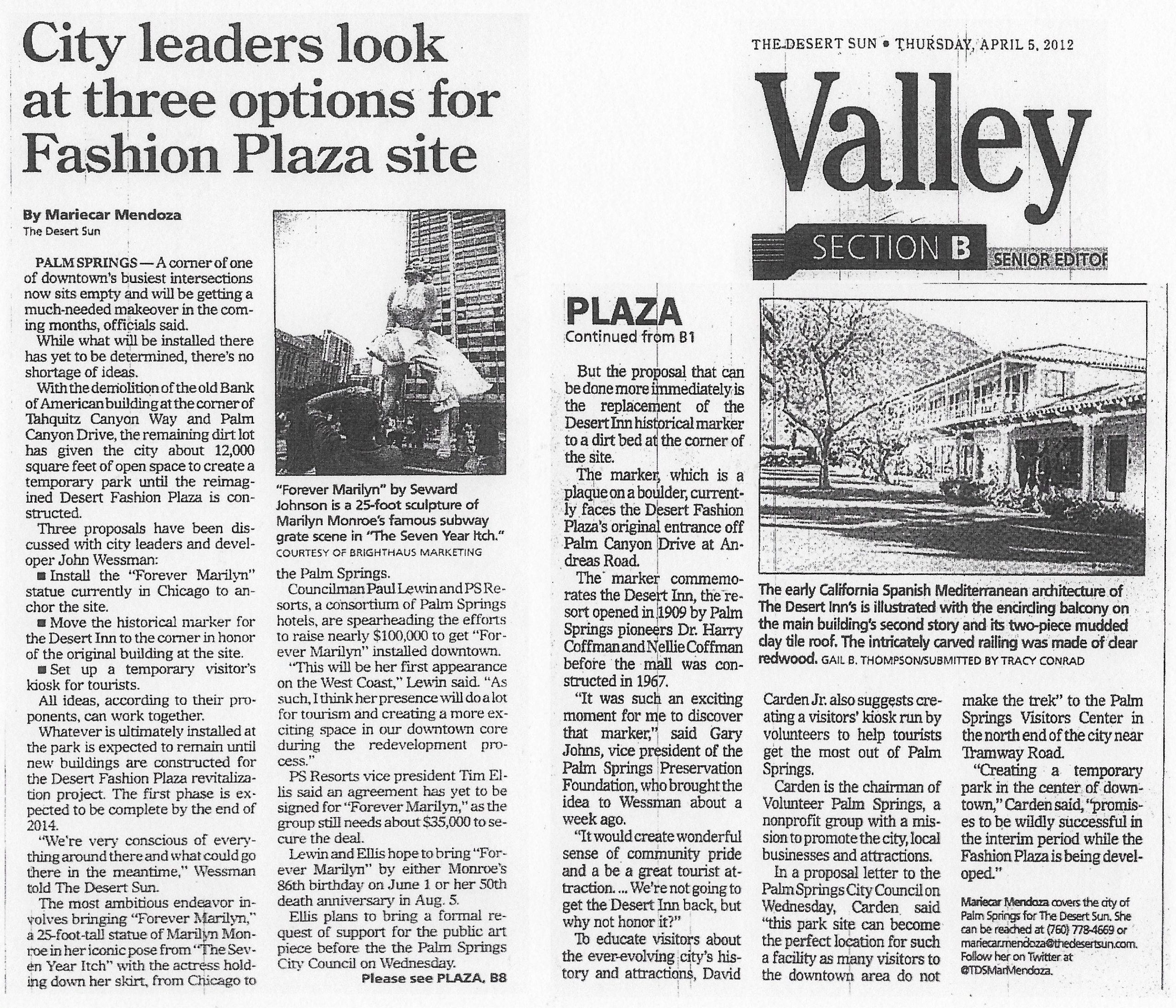
In December of 2012, and in July of 2015, the Desert Sun newspaper published articles about the historical elements removed in the years leading up to the demolition of the Fashion Plaza (i.e., the Nellie Coffman star and the County of Riverside plaque commemorating the Desert Inn). As reported in those articles, the city manager and Wessman Development principals assured the public that those elements would be re-incorporated into the downtown redevelopment scheme.

Continue Reading

DowntownParkMAKEFILESMALLER
Watch the Film
Visitors to the Downtown Park read the bronze plaque, donated by PSPF, which provides a brief history of the Desert Inn. (PSPF, February 2024)
PSPF-NameThePark-2023-w
October 21, 2021 ribbon-cutting ceremony
Original art by PSPF board member Steven Price
Categories
Successes and Setbacks

Chart House Restaurant

Chart House Restaurant - 69-934 on Hwy. 111, Rancho Mirage SETBACK

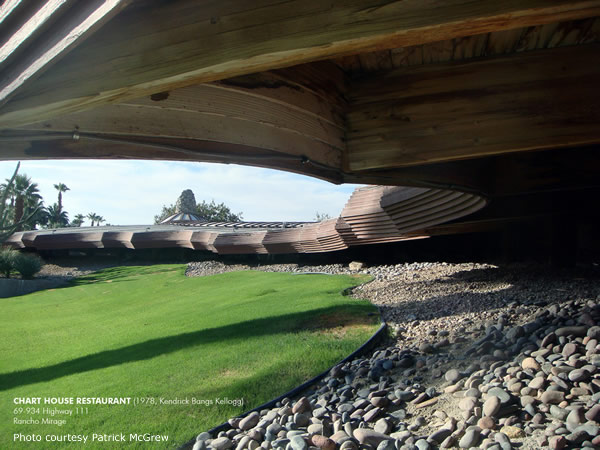
The Chart House Restaurant (1978) made clever use of a difficult site and was a spectacular example of “organic modernism.” Designed by architect Kendrick Bangs Kellogg, the low, scalloped and laminated roof combined with incredibly deep eaves and gave the building the appearance of a giant sea creature washed up on some ancient shore. The building won numerous awards and was designated a historic landmark by the city of Rancho Mirage.

On March 19, 2013 the Chart House Restaurant was demolished and an important historic resource of the city of Rancho Mirage was lost forever.

On February 7, 2013 the Rancho Mirage city council voted unanimously (5-0) to uphold the city’s decision to demolish the historic Chart House Restaurant (Kendrick Kellogg, 1978). PSPF board member Ron Marshall made public comment asking that the council demonstrate “true leadership” and find a way to rebuild the historic structure. After the Rancho Mirage city council’s decision to proceed with the demolition, Marshall opined to a Desert Sun newspaper reporter that the council had failed in its duty to protect this cultural resource and had “allowed an anonymous arsonist to write the city’s history.”

On January 17, 2013 the Rancho Mirage city council decided to delay a decision on the fate of the Chart House Restaurant until they could “digest” the considerable amount of public comment they received. Making public comment were PSPF board members Ron Duby and Babs Marshall. Both Nancy Sinatra and actor Gavin MacLeod were on-hand to make passionate pleas for the preservation of the historic building.

On December 24, 2012 PSPF sent a letter to the mayor of Rancho Mirage strongly endorsing the city’s conclusion that the Chart House Restaurant could be reconstructed or rebuilt from the extant portions of the partially-burned building. PSPF’s letter also asked that the city “not delay in leveraging all of the legal and administrative tools at its disposal to motivate the owner to proceed with the immediate reconstruction of this important historic resource.”

On December 6, 2012 PSPF received a letter from the city of Rancho Mirage (dated December 3, 2012) which stated that the city’s consultants had concluded “that demolition [of the Chart House Restaurant] will have a less than significant impact on the historic resource if reconstruction of the building replicates or recreates the significant architectural elements of the current structure, using federal standards.” The city’s letter went on to opine that, “If any portions of the existing building, such as the less damaged northern wing or fieldstone components, can be saved, the building should be restored to its original appearance around these elements.”

On October 10, 2012 PSPF received the following email response to PSPF’s October 3, 2012 letter sent to the city of Rancho Mirage and the consultants hired to study the feasibility of rehabilitating or reconstructing the Chart House: “Dear [PSPF]…We are writing to thank you again for the thoughtful contribution you provided for the recent historic building study on the former Chart House restaurant. The goal of the study was to determine if the building retained sufficient integrity to still be a significant historical resource, and considering community sentiment was essential to insuring a comprehensive report. Your input helped achieve that goal, and we sincerely appreciate your time and effort. For your information, the study generally agreed with your assessment regarding the historical significance and proper treatment of the Chart House building. Sincerely, Bai ‘Tom’ Tang and Terri Jacquemain [of] CRM TECH [consultants].”

On October 3, 2012 PSPF responded to a request for written comment from a city of Rancho Mirage consultant preparing a “study…intended to address…questions regarding the historic value of the [Chart House Restaurant] building in [the] future planning process in order to ensure compliance with pertinent sections of the California Environmental Quality Act.” The consultant’s questions inquired about the feasibility of rehabilitating or reconstructing the historic Chart House Restaurant.

On September 23, 2012 the Desert Sun newspaper reported that the city of Rancho Mirage had “ordered the suspension of the demolition permit [for the Chart House Restaurant]…pending the results of a public hearing on the building’s future.” No date was given for the public hearing.

On September 6, 2012 PSPF sent a letter to the mayor of Rancho Mirage asking that the city “explore other alternatives to include the rehabilitation and partial reconstruction or the complete reconstruction of the [Chart House Restaurant] building.” To read the PSPF letter click here.

On August 31, 2012 PSPF board member Ron Marshall asked city of Rancho Mirage Mayor Scott Hines to meet with the representatives of preservation organizations to discuss the future of the Chart House Restaurant.

On August 29, 2012 the Desert Sun newspaper reported that, according to city of Rancho Mirage City officials, “Wessman Development Company of Palm Springs, which owns the building, plans to demolish the charred structure.”

On August 23, 2012 the city of Rancho Mirage responded to PSPF’s public records act request. The response indicated that the owner of the Chart House Restaurant building is pursuing a demolition permit.

On August 16, 2012 PSPF sent a California Public Records Act request to the city of Rancho Mirage asking for all documents “regarding the investigation into the fire that occurred at the Chart House Restaurant…and any correspondence with the owner…regarding the building’s disposition (including demolition).”

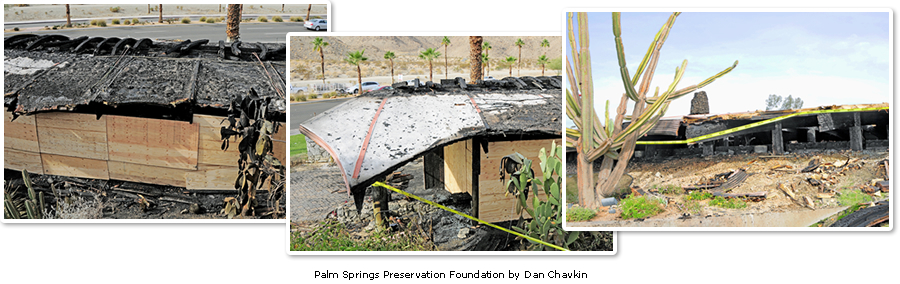
On Tuesday, January 10, 2012 at approximately 3:44AM, a fire swept through one of Rancho Mirage’s most important architectural resources, the Chart House Restaurant (1978) designed by architect Kendrick Kellogg. The quirky but much admired modernist building has been home to a revolving door of restaurants in the last few years and was, at the time of the fire, GG’s Island restaurant. The fire is under investigation. These photographs were taken immediately after the fire and document the extent of the damage.

Continue Reading

Chart House Restaurant

IN THE MEDIA

February 8, 2013, Desert Sun (Chart House Restaurant)

Categories
Successes and Setbacks

Tribal Preservation Claims

ACBCI (Tribal) Claims Regarding Historic Preservation SUCCESS

On January 24, 2018 the Palm Springs city council unanimously approved (4-0) the Class 1 Historic Site designation of the Schwartz Residence thereby setting an important legal precedent and rendering the PSPF legal action moot. The city had previously refused to process the Schwartz nomination as the structure was located on formerly tribal land. PSPF’s August 2017 legal action argued the land was now privately-owned and that the tribe’s desire to assume State Historic Preservation Office duties did not relieve the city of its obligation to process local Class 1 Historic Site nominations. PSPF deemed this legal action critical to the health of historic preservation as the city’s policy disenfranchised thousands of property owners from the benefits of historic designation. As a direct result of PSPF’s pro-active legal action, owners who found themselves in this common property status (i.e., private ownership of formerly tribal land) can now proceed with their historic nominations.

In an October 11, 2017 letter from the ACBCI attorney to the Palm Springs city attorney, the tribe stated that they have “no objection to the City exercising jurisdiction over fee parcels when dealing with a Local Register historic designation…” The tribal opinion aligns with PSPF’s opinion. It also supports PSPF’s contention that the city of Palm Springs has misinterpreted the scope of the tribe’s assumption of State Historic Preservation Officer (SHPO) duties for tribal lands. To read the tribal attorney’s letter click here.

On August 17, 2017 PSPF’s attorney filed a 12-page “Petition for Peremptory Writ of Mandate and Complaint for Declaratory and Injunctive Relief” with the Superior Court of California for the County of Riverside. In the complaint PSPF argues that the city has an obligation to process the Schwartz Class 1 Historic Site nomination and that the city has misinterpreted recent tribal assertions of historic preservation authority over formerly tribal land and, further, that the tribe’s desire to take on State Historic Preservation Office (SHPO) duties does not impact the city’s obligation to process local designations. To read the entire petition click here.

On August 11, 2017 PSPF’s attorney filed a “Notice of Intent to Commence Litigation Against the City of Palm Springs” with the Palm Springs city council. To read the notice click here.

On April 26, 2017, PSPF’s attorney sent a follow-up letter to the Palm Springs city attorney again asserting that the city was obligated to process the Class 1 Historic Site nomination of the Schwartz Residence. The letter concludes with, “Should the City continue to insist that the Tribe has properly assumed the responsibility to evaluate PSPF’s application, we see no alternative but to bring suit in the Superior Court to compel the City to officially commence the process of evaluating PSPF’s Class 1 Historic Site application for the Schwartz Residence forthwith.” To read the PSPF attorney’s letter click here.

On March 31, 2017, the Palm Springs Modern Committee’s attorney sent a letter to city of Palm Springs’ Director of Planning Services supporting the processing of PSPF’s Schwartz Class 1 Historic Site nomination. The seven-page letter, entitled “Tribal Jurisdiction Over Historic Resources on Fee Simple Land,” expounded on the legal status of formerly tribal land stating that tribal land sold to non-Indians “terminated the Tribe’s plenary jurisdiction over the property.” The PSModCom attorney’s letter is thoughtful and compelling and cites relevant case law.

On March 14, 2017, the tribe enacted Interim Ordinance No. 49, formally entitled “An Interim Ordinance of the Tribal Council of the Agua Caliente Band of Cahuilla Indians Adopting a Moratorium on the Filing and Submission of Applications for the Nomination of Historic Properties to be Listed in the National Register and for the Listing of Tribal Historical and Cultural Resources in a Tribal Register.” The interim tribal ordinance unilaterally asserts that in addition to National Register duties the tribe desires a “separate Tribal Register.” The tribe’s interim ordinance uses the phrase “Tribal and allotted trust lands” but has previously asserted this phrase includes land that has been sold to private parties if it falls within the tribe’s “historic boundaries.” Finally, the tribe’s interim ordinance purports to shut down the processing of historic nominations for a full year while the “Tribal staff…develop[s] appropriate regulations.” The interim ordinance, which is to expire in a year, also provides for the adoption of an extension ordinance. This interim ordinance’s assertion of new tribal historic preservation duties and responsibilities brings into question the sincerity of the tribe’s commitment as they have yet to create a process to handle historic nominations. To read Tribal Interim Ordinance No. 49
click here.

On February 14, 2017 the city of Palm Springs finally responded to PSPF’s FOIA request but withheld an unknown number of documents “protected by the attorney-client privilege and the attorney work product doctrine.” The documents that were provided by the city gave little insight into the city’s position on the tribal preservation claims. However, the documents may show that the city is operating largely on verbal guidance from the city attorney.

On February 8, 2017 PSPF board member Barbara Marshall contacted the Palm Springs city manager by email asking that he look into the unacceptably long delay in processing PSPF’s public records request (i.e., FOIA) of December 17, 2016.

On February 6, 2017 PSPF sent a letter to the Palm Springs city manager forwarding a three-page legal opinion regarding the city’s handling of the Abe & Marion Schwartz Class 1 Historic Site nomination. In the cover letter, PSPF asserts that “our attorney has advised us that he believes, pursuant to the Palm Springs municipal code, only the city is authorized to process the Schwartz nomination. He believes the tribe has no authority to process and act on a nomination in the first instance, unless the 1977 Land Use Agreement between the city and the ACBCI is amended.”  Read the PSPF Letter and Legal Opinion

On January 30, 2017 PSPF sent a letter to the Palm Springs city clerk stating that “Despite two extension notifications by the city (dated December 29, 2016 and January 12, 2017), we have still not received a response to our December 17, 2016 Freedom of Information Act (FOIA) request,” and further, “Please provide us with either a response to our FOIA request, or provide us with an estimated date of response.”

On January 12, 2017 PSPF received a second letter from the city of Palm Springs informing PSPF that the response to the foundation’s December 17, 2016 FOIA request was “still in the process of being assembled” and that the city “will notify you [PSPF] of the estimated date of production.” To read the city’s letter click here.

On January 10, 2017 PSPF board member Ron Marshall made public comment before the Palm Springs Historic Site Preservation Board. Marshall’s comments addressed recent jurisdictional claims regarding historic preservation by the ACBCI and concluded with, “This is a complex and nuanced issue and not as straightforward and simple as expounded upon at the December HSPB meeting.”

On January 4, 2017 PSPF board member Ron Marshall made public comment before the Palm Springs city council regarding recent tribal claims of historic preservation jurisdiction over “historically tribal land” even if that land is currently privately owned. Marshall told the council that this “creates the real possibility that decades of preservation work could be undone and new preservation efforts obstructed.”

On December 29, 2016 PSPF received a notification from the city of Palm Springs informing PSPF that the response to the foundation’s December 17, 2016 FOIA request would be delayed until January 12, 2017. To read the city’s letter click here.

On December 17, 2016 PSPF sent a Freedom of Information Act (FOIA) request to the city of Palm Springs asking for copies of all public records regarding “tribal historic preservation policy and procedures.” The scope of the FOIA request includes correspondence produced by city council members, the city manager, the city attorney and the Planning Services Department staff. PSPF opined that, “the disclosure of the requested information is in the public interest and will contribute significantly to the public’s understanding of the Tribe’s influence on city government operations.” To read PSPF’s FOIA request click here.

On December 13, 2016 PSPF sent a letter to the city of Palm Springs pointing out that the Schwartz Residence was on land that had been “privately owned for more than 50 years,” and that many of the city’s important historical resources were likewise located on privately owned but also located on historically tribal land. The PSPF letter further went on to say that, “even as the future role of the tribe in historic preservation within the city is being clarified, it would be appropriate for the city to continue with its established historic preservation process by acting on PSPF’s nomination of the Abe & Marion Schwartz Residence” and that, “it is poor public policy to indefinitely stall the proper administration of city processes, especially those specifically directed by the city’s municipal code (i.e., PSMC Chapter 8.05).” Finally, the letter asked that the city “immediately resume” the processing of the Schwartz Residence nomination.  Read the PSPF Letter

On November 2, 2016 PSPF received an email from the city of Palm Springs Planning Services Department, stating that the Schwartz Residence nomination was “on hold” pending the city attorney’s review of recent correspondence from the ACBCI.

On October 24, 2016 PSPF delivered the Class 1 Historic Site nomination of the Abe & Marion Schwartz Residence (1964, Hal Levitt) to the city of Palm Springs. PSPF expected the nomination, which had the unqualified support of the owners, to be processed quickly and without controversy.

On December 2, 2015 the ACBCI sent a letter to the city of Palm Springs asking that the city consider and approve a “supplement” to the current “Tribal/City Land Use Agreement” of July 26, 1977. That supplement was the tribe’s “Policy Statement Regarding Historic Preservation” of May 8, 2015.  Read the ACBCI Letter

On June 29, 2015 the ACBCI sent a letter to the city of Palm Springs forwarding the tribe’s “Policy Statement Regarding Historic Preservation” of May 8, 2015. Essentially, the tribe asserts themselves as the “designated steward” of “historic and cultural resources on all lands within the exterior boundaries of the Agua Caliente Indian Reservation, regardless of land status, as well as the Tribe’s Traditional Use Area” (emphasis added).  Read the ACBCI Letter and Policy Statement

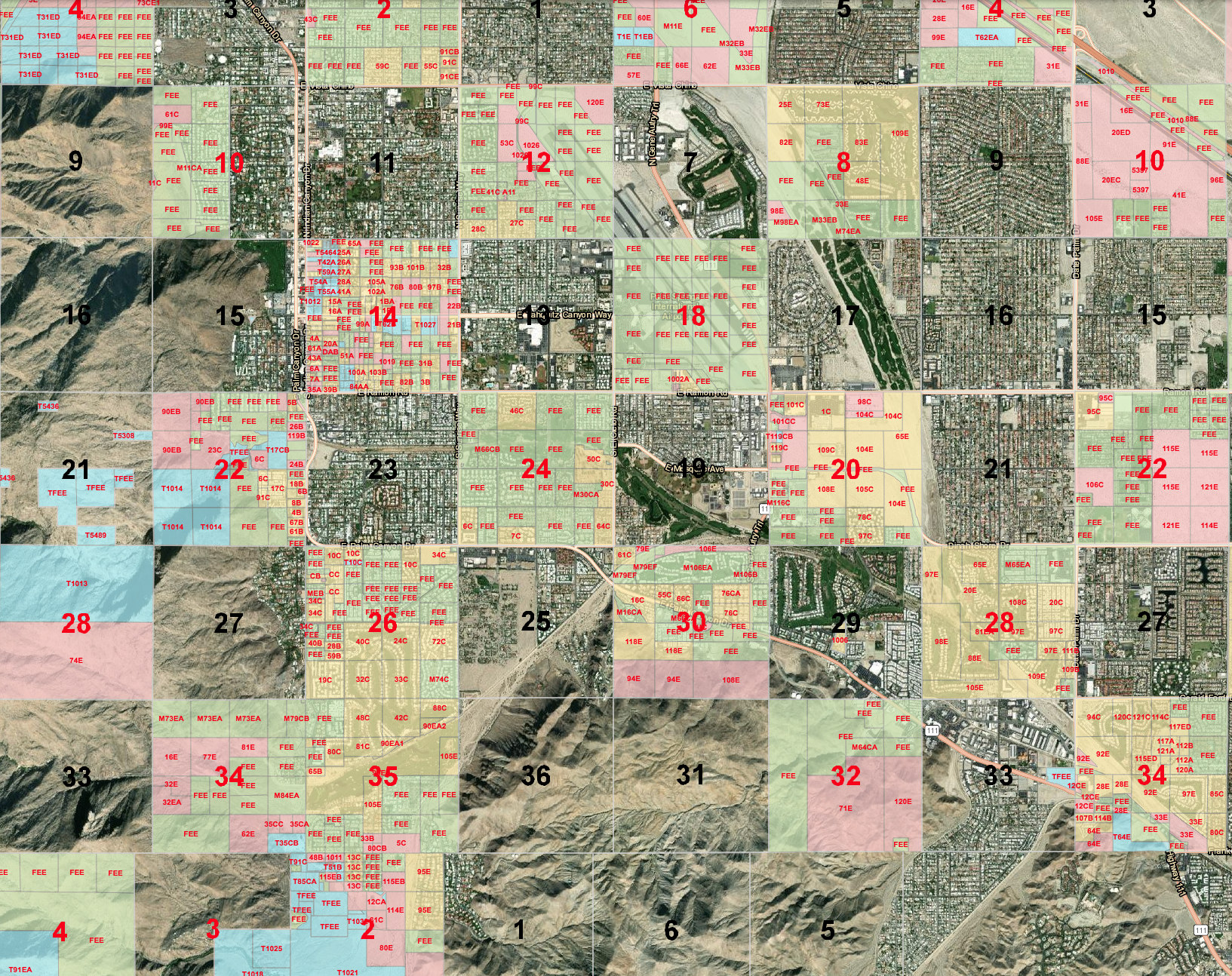
To see the “Land Status” map produced by the Agua Caliente Band of Cahuilla Indians (ACBCI) (as of December 2016) click here. Areas of the tribal map colored light beige are not directly affected by the ACBCI’s recent claims (e.g., Sections 3, 11 and 13).

Continue Reading
Categories
Successes and Setbacks

Tahquitz Plaza

Tahquitz Plaza - 600-700 East Tahquitz Canyon Way SUCCESS

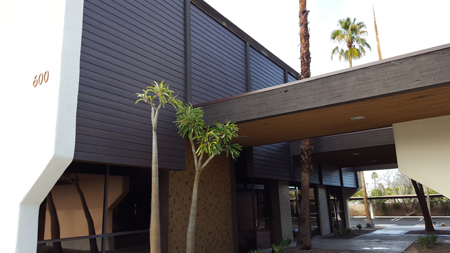
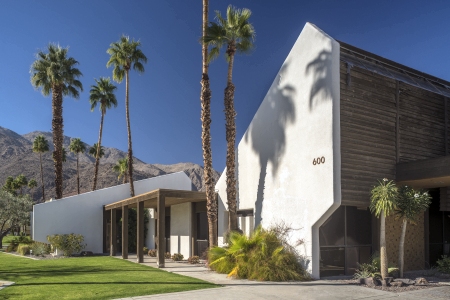
Tahquitz Plaza was constructed in two phases with Tahquitz Plaza I (at 600 and 650 East Tahquitz Canyon Way) designed by Kaptur-Lapham & Associates built in 1974 and Tahquitz Plaza II (at 700 and 750 East Tahquitz Canyon Way) designed by Hugh M. Kaptur, A.I.A. built in 1977. Tahquitz Plaza is an elegantly sited complex of modernist buildings located on one of the city’s major thoroughfares. The two “duplex” buildings house 32,000 square feet of office space. The architecture of the complex has been effusively described as “pueblo-influenced romantic form-giving.” Architect Hugh Kaptur designed many prominent modernist buildings including the Steve McQueen Residence on Southridge.

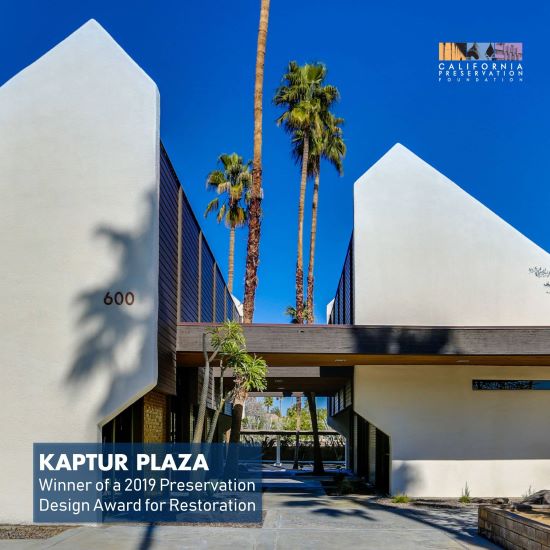
On October 18, 2019 PSPF honorary board member Hugh Kaptur and PSPF advisor Susan Secoy Jensen were recognized for their preservation efforts on Kaptur Plaza with a 2019 Preservation Design Award for Restoration by the California Preservation Foundation. Award recipients were selected by a jury of top professionals in the fields of architecture, engineering, planning, and history, as well as renowned architecture critics and journalists. In making their decision the jury made note not only of the workmanship, but of the tremendous community involvement, stating, “this exemplifies a distinct moment in architectural time…The community rallied to save it, and it’s great that people in Palm Springs are really putting their money where their mouth is, preserving their heritage.” To read more click here.

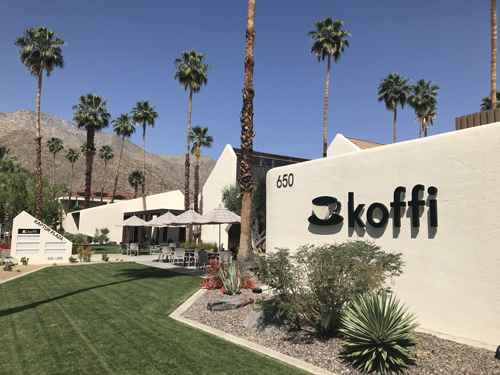
By March of 2018, there were several successful businesses occupying Tahquitz Plaza (renamed Kaptur Plaza) including the locally popular Koffi coffee shop. On their website, Palm Springs Koffi Central informs customers that, “We are located next to the Convention Center and surrounding hotels in Kaptur Plaza, a Class 1 historic property designed by master architect Hugh Kaptur and constructed in the mid-1970s.”

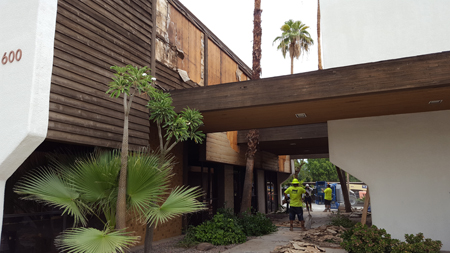
By January of 2017 the rehabilitation of the exterior of the Tahquitz Plaza complex was largely completed under the competent supervision of preservation architect and PSPF advisor Susan Secoy Jensen and architect Hugh Kaptur. As the Tahquitz Plaza complex had come extremely close to demolition, the stunning historic preservation result is a testament to the continuing relevance of aggressive and proactive preservation advocacy in Palm Springs.

In October of 2016 work on the exterior of the Tahquitz Plaza complex had started in earnest.

On April 10, 2016 PSPF was informed that a rehabilitation plan for the exterior repair of the entire Tahquitz Plaza complex had been prepared by preservation architect and PSPF advisor Susan Secoy-Jensen and architect Hugh Kaptur.

On December 2, 2015 the Palm Springs city council voted unanimously (5-0) to approve the Class 1 Historic Site designation of Tahquitz Plaza. Making compelling public comment in support of the nomination were PSPF board members Erik Rosenow, Steven Price, Tracy Beckmann and honorary PSPF board member and architect Hugh Kaptur. Also making persuasive public comment in support of the nomination were Peter Moruzzi (PSModCom) and Cory Alder (Nexus). Dozens of PSPF members sent emails to the city of Palm Springs in support of the Tahquitz Plaza designation.

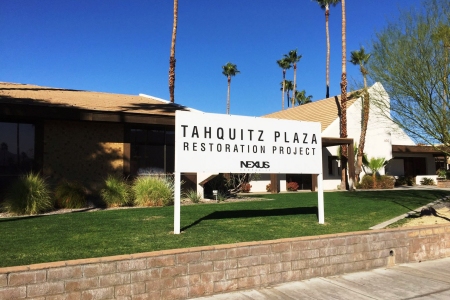
On November 30, 2015 Nexus, the Palm Springs Preservation Foundation and the Palm Springs Modern Committee issued a press release announcing Nexus’ support of the Class 1 Historic Site designation of the entire Tahquitz Plaza complex and Nexus’ promise commitment to do a rehabilitation of the complex in accordance with Department of Interior standards. To read the press release click here. To read the Memorandum of Understanding between Nexus, PSPF and PSModCom click here.

On November 23, 2015 PSPF board members Erik Rosenow, Steven Price, Gary Johns and PSPF advisor Susan Secoy Jensen and PSModCom representatives Peter Moruzzi, Chris Menrad and Nickie McLaughlin met with senior representatives of Nexus (the owner of Tahquitz Plaza) to discuss various issues surrounding Tahquitz Plaza. The ensuing discussion between PSPF, PSModCom and Nexus representatives revealed many areas of consensus.

On October 13, 2015 the Palm Springs Historic Site Preservation Board (HSPB) unanimously recommended approval of the Tahquitz Plaza Class 1 Historic Site nomination to the city council. Making public comment in support of the Class 1 designation were PSPF board members Ron and Barbara Marshall and architect Hugh Kaptur. Just minutes after the HSPB vote, PSPF submitted a letter to the city manager asking him to schedule the city council hearing on Tahquitz Plaza for December 2, 2015. To read the PSPF letter click here.

On September 23, 2015 the Building Code Appeals Board met again to hear the PSPF appeal (submitted on June 1, 2015) of the demolition permit drawn by O&M HR (Nexus Development) for Tahquitz Plaza. Despite expressing reservations about denying the appeal, the board members could find no improper action on the part of the city in issuing the demolition permit and ultimately voted to deny the appeal.

On September 6, 2015 the city’s Historic Site Preservation Board met to discuss the Tahquitz Plaza Class 1 Historic Site nomination. PSPF board members Erik Rosenow and Tracy Beckmann and PSPF members David Keens and Danny Heller made public comment in support of the nomination. Enthusiastic comments in support of the nomination were also made by PSModCom representatives. Due to irregularities in the Tahquitz Plaza site visits, the Tahquitz Plaza nomination was “continued” until the October HSPB meeting. The HSPB also approved a 60-day extension of the previously approved 120-day stay of demolition for Tahquitz Plaza.

On August 11, 2015 the Building Code Appeals Board met to hear the PSPF appeal (submitted on June 1, 2015) of the demolition permit drawn by O&M HR (Nexus Development) for Tahquitz Plaza. Due to two unfilled vacancies on the board, an unexcused absence and a board member conflict of interest, there was no quorum available to hear the appeal and the item was continued to a “date uncertain.”

On August 7, 2015 PSPF’s attorney wrote to the Palm Springs Building Code Appeals board asserting that the city’s issuance of a demolition permit for Tahquitz Plaza “was unlawful because the City had failed to comply with the California Environmental Quality Act (“CEQA”).” The letter further asserted that the city staff report “fails to consider the Developers’…purpose for demolishing Tahquitz Plaza.” To read the PSPF attorney’s letter click here.

On July 14, 2015 PSPF was notified by the city of Palm Springs that O&M HR, LLC (Nexus) had “withdrawn” their appeal of the city Historic Site Preservation Board’s actions of June 9, 2015 (including the HSPB’s 120-day stay of demolition for the Tahquitz Plaza).

On July, 10, 2015 PSPF’s attorney sent a letter to the Palm Springs city council encouraging them to deny the O&M HR/Nexus appeal of the HSPB actions of June 9, 2015. In the letter PSPF’s attorney asserts that “O&M does not raise any issues or cite any evidence that compel a finding that the HSPB should not follow its established procedure.” The letter also goes on to say, “Allowing the premature demolition of Tahquitz Plaza before the city has meaningfully evaluated its historic significance would be a tragic mistake.” To read the PSPF attorney’s letter click here.

On July 6, 2015 PSPF sent a letter to the Palm Springs city council rebutting the appeal by O&M HR, LLC (Nexus) of the HSPB actions of June 9, 2015. In the letter PSPF asserts that, “In view of the burgeoning appreciation of the work of architect Hugh Kaptur…it would be unconscionable of the City Council to condone the demolition of Tahquitz Plaza before an evaluation of its historic merit by the HSPB.” To read the PSPF letter click here.

On June 24, 2015 O&M HR, LLC (whose address is care of Nexus Companies) appealed the HSPB actions of June 9, 2015 “on the grounds that the studies and investigations purportedly initiated by the HSPB are unwarranted, unnecessary, and an inappropriate use of taxpayer money.” Effectively appealing both the 120-day stay of demolition initiated by the HSPB and the city board’s “studies and investigations” of the historicity of the Tahquitz Plaza complex. To read the Nexus letter click here.

On June 9, 2015 the city of Palm Springs’ Historic Site Preservation Board voted unanimously to initiate proceedings for the historic designation of Tahquitz Plaza. The HSPB then issued a 120-day stay of demolition for the complex in order “to afford time for necessary studies [and] hearings” to determine if Tahquitz Plaza should be designated a Class 1 Historic Site. The HSPB decisions were based on the scholarly nomination submitted by PSPF in conjunction with a strong letter of endorsement from the Palm Springs Modern Committee. Later that day the Palm Springs city manager wrote to PSPF in an email stating, in part, “I received your letter [of June 8, 2015], and wanted to let you know that we have included this vacant building in our nightly security service patrol.”  

On June 8, 2015 PSPF sent a letter to the Palm Springs city manager asking that he direct the fire and police departments to “focus special attention” on the Tahquitz Plaza property in view of “the recent spate of suspicious fires throughout the city in unoccupied buildings.” The letter attached photographs of what appeared to be evidence of a recent small fire in the 600 and 650 Tahquitz Canyon Way breezeway and raised the issue of the “serious and persistent vagrancy problem” on the property. To read the PSPF letter click here.

On June 1, 2015 PSPF submitted the Class 1 Historic Site nomination for Tahquitz Plaza. The 50-page nomination, written pro bono by PSPF board members Ron and Barbara Marshall, provides compelling rationale for the historic designation of this important 1970s era commercial complex designed by architect Hugh Kaptur. Earlier in the day the demolition permit for Tahquitz Plaza was issued by the city but the standing Palm Springs Modern Committee appeal to the city’s Building Code Appeals Board took effect to stay the demolition. Simultaneously with the submission of the Class 1 Historic Site nomination, PSPF’s attorney submitted a letter to the city’s Historic Site Preservation Board asking that the HSPB also stay the aforementioned demolition permit until the HSPB could “conduct the necessary analysis to determine whether Tahquitz Plaza should be designated as an historic site.” To read the PSPF attorney’s letter click here.

On May 28, 2015, after withdrawing the Aberdeen project, the owner of Tahquitz Plaza submitted a demolition permit request to the city of Palm Springs.

On April 16, 2015 PSPF was informed that Nexus Development had withdrawn the Aberdeen project. PSPF immediately made a records request for the document. To read the letter click here. Shortly thereafter, Nexus Development representatives attempted to draw a demolition permit for Tahquitz Plaza which was rebuffed as PSModCom’s attorney had recently submitted an appeal of any demolition permits for the Tahquitz Plaza addresses. Nexus Development then “rescinded” their withdrawal of the Aberdeen project effectively placing it back on the city council’s meeting docket.

On April 15, 2015 just hours before the Aberdeen project was to be heard by the Palm Springs city council, the city announced that the project would not be heard due to a “lack of quorum” (i.e., not enough council members available to vote on the project).

On April 14, 2015 the attorney representing PSPF and the citizen’s group “Advocates for Better Community Development” (ABCD) sent a letter to the Palm Springs city council which stated in part, “We strongly believe you may not lawfully approve this Project at this time because as proposed, the Project is inadequately reviewed under CEQA and violates a great many development standards set forth in the Section 14 Specific Plan.” To read the entire letter click here.

On April 9, 2015 the National Trust for Historic Preservation (San Francisco Field Office) sent a letter to the Palm Springs city council expressing their “concern with the proposed demolition of the Tahquitz Plaza on Tahquitz Canyon Way in the heart of the City of Palm Springs.” The letter went on to say that “We urge the City to develop an Environmental Impact Report in light of the very serious consequences to [a] historic resource that would result from the project as proposed.” To read the National Trust letter click here.

On April 9, 2015 PSPF board member Gary Johns’ letter to the editor regarding the Aberdeen project was published in the Desert Sun newspaper. The letter states (in part) that, “The approval of the Aberdeen project and the demolition of Hugh Kaptur’s Tahquitz Plaza is 100 percent within the council’s authority. They have the power to save these buildings. Will they do what is best for the city or what is best for the developer?” The letter concludes with, “I hope their relationship to their constituency is stronger than their relationship to the developer.”

On April 8, 2015 PSPF sent a 13-page letter to the Palm Springs city council which states (in part), “In view of a burgeoning appreciation of the work of architect Hugh Kaptur, the foundation believes it would be unconscionable of the city council to allow the demolition of any portion of the award-winning Tahquitz Plaza complex.” The letter also attached an evaluation of the Tahquitz Plaza complex for designation as a Class 1 historic site and a 2012 PSPF letter which forwarded a legal opinion that the city was failing to follow the requirements of the California Environmental Quality Act.

On April 8, 2015 the Desert Sun newspaper ran a “Valley Voice” opinion piece by architect Hugh Kaptur entitled “Architect Hugh Kaptur Speaks out on Aberdeen Project.” In the editorial Kaptur describes the latitude he was given in the design of Tahquitz Plaza and says, “I had the opportunity to make an architectural statement. With this creative freedom I designed the architecture to “grow” from the desert floor. I feel these buildings are some of my best work from that period.”
To read the Kaptur editorial click here.

On March 31, 2015 Nexus Development filed an appeal of the March 25, 2015 Planning Commission decision denying the Aberdeen project.

On March 27, 2015 the California Office of Historic Preservation wrote to the city of Palm Springs challenging the city “to exercise its discretion under §15064.5(4) of the CEQA Guidelines and treat the Tahquitz plaza office complex as a historic resource.” The letter was copied to the entire Palm Springs City Council and PSPF.  To read the OHP letter click here.

On March 26, 2015 PSPF board member Ron Marshall discussed the status of the Aberdeen project and the proposed demolition of the Tahquitz Plaza complex with a representative of the Local Government & Environmental Compliance Unit in the California Office of Historic Preservation.

On March 25, 2015 PSPF president Erik Rosenow and PSPF board members Barbara Marshall, Gary Johns and Ron Marshall made public comment to the city’s Planning Commission regarding the Aberdeen project. Nexus Development presented a revised Aberdeen project which proposed to retain one (of the four) buildings of the Tahquitz Plaza. The new plan would entirely demolish the Kaptur duplex on the 700 block of Tahquitz Canyon Way and demolish half of the duplex on the 600 block. During public comment PSPF emphasized the need to retain the entire Tahquitz Plaza complex and further recommended that the high-density Aberdeen project be placed behind the architecturally-significant buildings. The Planning Commission denied the Aberdeen project 4-3 but recommended that the 600 block of Tahquitz Plaza (50% of the complex) be retained.

On March 22, 2015 PSPF sent a letter to the California Office of Historic Preservation endorsing the Hess letter of March 20, 2015. To read the PSPF endorsement click here.

On March 20, 2015 architectural historian Alan Hess wrote to the CA OHP stating “I am writing at the request of the Palm Springs Preservation Foundation to ask you to consider writing a letter to the city of Palm Springs encouraging them to conduct an EIR for the Tahquitz Plaza office buildings…” The letter went on to describe the architectural importance of the Tahquitz Plaza complex and the importance of architect Hugh Kaptur’s work. To read the Hess letter click here.

On March 13, 2015 PSPF asked architectural historian Alan Hess to provide an expert opinion to the California Office of Historic Preservation (CA OHP) petitioning them to provide an opinion regarding the need for the city of Palm Springs to conduct an Environmental Impact Review (EIR) of the Aberdeen project. An EIR would require that the city weigh the impact of demolishing the Tahquitz Plaza.

On February 25, 2015 the city′s Planning Commission heard the Aberdeen project. About a dozen members of the public condemned the proposed demolition of the Tahquitz Plaza complex including PSPF board members Gary Johns, Barbara Marshall and Ron Marshall. Architect High Kaptur eloquently defended the preservation of the award-winning Tahquitz Plaza. The commissioners found significant flaws in the project and many stated their serious concerns about the demolition of the Tahquitz Plaza complex. The Planning Commission ultimately voted to “continue” discussion of the Aberdeen project to a future meeting to give the developer an opportunity to make improvements to the project.

On February 19, 2015 architectural historian and author Alan Hess wrote to the Planning Commission expressing his concern that “the demolition of a major Kaptur design would be a loss to history and the city′s urban quality.” To read the Hess letter click here.

On February 22, 2015, PSPF sent a letter to the Palm Springs Planning Commission decrying the proposed demolition of the architecturally significant Tahquitz Plaza complex and pointing out that the historic preservation of this complex would be consistent with the city’s general plan. Additionally, the PSPF letter discussed the lack of merit of the Aberdeen project itself, most notably its high density.  To read the PSPF letter click here.

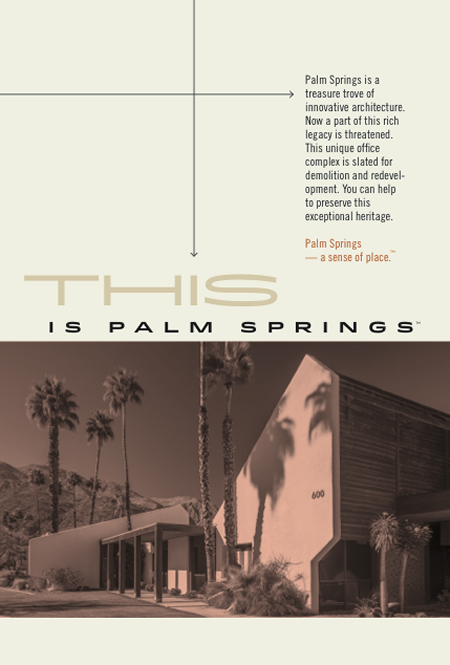
During Modernism Week 2015 (February 12-22) a series of five “preservation postcards” totaling more than 7,500 copies were distributed. The postcards reinforced the theme that Palm Springs’ unique architecture defines the city using the phrase “THIS is Palm Springs” and “Palm Springs – a sense of place.” One of the postcards in the series featured the Tahquitz Plaza complex with the message Palm Springs is a treasure trove of innovative architecture. Now a part of this rich legacy is threatened. This unique office complex is slated for demolition and redevelopment. You can help to preserve this exceptional heritage.

On January 26, 2015 the city’s Architectural Advisory Committee met again to discuss the Aberdeen project. At the meeting, the Palm Springs city attorney lauded the AAC for their service to the community, and then scolded the committee for exceeding their purview. The city attorney cited the AAC’s actions at their previous meeting (January 12, 2015) when some AAC members voiced their distaste over the proposed demolition of the Tahquitz Plaza buildings. PSPF board members Ron Marshall, Barbara Marshall and PSPF member Beth Edwards Harris made public comment commending the AAC for their earlier thoughtful actions on this issue. During the ensuing discussion, one AAC member opined that the Aberdeen project was just “not good enough.” The AAC then voted unanimously to deny the project.

On January 13, 2015 PSPF board member Gary Johns updated architect Hugh Kaptur on the results of the January 12, 2015 AAC meeting.

On January 12, 2015 PSPF board members Gary Johns, Barbara Marshall and Ron Marshall made public comment before the city’s Architectural Advisory Committee (AAC) strenuously objecting to the proposed demolition of the Tahquitz Plaza complex. The two-building complex was designed by the architectural firm of Kaptur-Lapham & Associates in 1974 (with Hugh Kaptur, AIA completing the second phase in 1977). Fortunately, PSPF’s public comment dramatically swayed the opinion of at least one of the AAC members who was quoted as saying, “I didn’t start out convinced. But now I’m absolutely convinced that I would not approve a project demoing those Kaptur buildings.” The AAC voted unanimously to “table” (i.e., suspend consideration of) the project. The proposed demolition is part of a densification scheme by Nexus Development Corporation that intends to construct a mixed-use complex (called “Aberdeen”) of 74 residential units, 17 live-work units and a 1,600-square-foot cafe space, all on eight acres.

On February 14, 2014, during Modernism Week, architect Hugh Kaptur, AIA was honored with a “star” on the Palm Springs Walk of Stars. Appropriately, the star was installed immediately adjacent to the new Palm Springs Art Museum Architecture and Design Center, Edwards Harris Pavilion (300 South Palm Canyon Drive). PSPF was a proud sponsor of the event. The event included a proclamation from the city presented by councilmember Ginny Foat and remarks by architect James Cioffi and PSPF board member Gary Johns among others. The star dedication event program included a brief biography of Kaptur and a map of some of his significant architectural commissions (courtesy Modernism Week).

On June 4, 2010 in a blog article entitled “#2 On Palm Springs Most Endangered List,” PSPF board member and architect Patrick McGrew opined:

“In the heyday of unbridled real estate development that was Palm Springs before the global financial meltdown, this remarkable building complex was deemed expendable by local decision-makers. The site was “needed” to develop East Tahquitz Canyon Way into an upscale hotel zone, so arrangements were made to relocate the tenants of these buildings as a prelude to their demolition. Essentially “saved” by the bad market…they survive at least temporarily, until the economy revives.

In a town that loves Modernism, designs that show the influence of Pueblo Architecture are often discredited. Oddly, early modernists such as Irving Gill and Albert Frey paid homage to the style of this continent’s oldest structures, but somehow, when Hugh Kaptur does the same thing, he gets no respect. Go figure…

So, while time allows, do yourself a favor and pay a visit to these singularly important and beautiful buildings. You’ll thank me later…”

Continue Reading
Categories
Successes and Setbacks

Steel Development Houses

Steel Development Houses - North Sunnyview Drive, Simms Road & East Molino Road SUCCESS

After many months of intensive efforts by the homeowners of the Wexler Steel Development Houses, on February 25, 2011 the city of Palm Springs sent a letter to Community Dynamics informing them that the city had decided not to renew the “Exclusive Agreement to Negotiate” (EAN) between the city′s Redevelopment Agency and Community Dynamics (the EAN had expired on February 16, 2011). This ended the relationship between the city and Community Dynamics and with it the 51-unit affordable townhouse project adjacent to the Wexler steel houses. PSPF salutes the homeowner′s successful efforts to ensure that nearby development is sensitive to the character of the historic steel houses.

On May 19, 2010, the Palm Springs city council heard a parade of citizens, including PSPF President Ron Marshall, voice their objections to the proposed Community Dynamics project. While two council members eloquently argued to deny the flawed project outright, ultimately the decision was made to “continue” the item pending an opinion from the city council′s Housing Committee (i.e., council members Mills and Hutcheson). The Housing Committee was directed to provide specific recommendations to improve the project which will be discussed by the council at a future date. The hope is that this specific guidance can be given to the city′s Planning Commission to help hammer out a “compromise” proposal that addresses the concerns of Community Dynamics, local homeowners and the commission itself. That said, the developer′s track record of intransigence on the primary issue of density (housing units per acre) makes such an outcome doubtful, and may very well signal an end to this project.

On May 8, 2010, PSPF sent a letter to the Mayor and city council asking that they deny a development proposed by Community Dynamics (Case No. 3.3333 MAJ/7.1231 AMM). The proposed Community Dynamics moderate-income town-home development consists of 51 housing units and associated parking on a 3.6 acre site. The site is of great interest to preservationists because it abuts the historic Class 1 Wexler Steel Development Houses (1961) at the southeast corner of North Indian Canyon Drive and San Rafael Road. While PSPF (and local residents) support the sensitive development of the land adjacent to these historic homes, PSPF argues that the city committed an error of omission by failing to re-evaluate the zoning of the land as the historic and architectural importance of the Steel Development Houses has emerged. Particularly disturbing is that the developer has repeatedly ignored recommendations by the city′s Architectural Advisory Committee, the Planning Commission and the Steel House homeowners to improve the proposed development. PSPF shares many of these groups concerns including high-density, multiple setback variances, lack of architectural creativity, light and noise pollution, intrusion on the privacy of the adjacent residential units and a host of other quality-of-life considerations. Many of these concerns impact not only the local homeowners but the prospective residents of the proposed complex.

SteelBAM_new

IN THE MEDIA

May 19, 2010, Desert Sun (Steel Development Houses)