Categories
Buildings to Watch

University Baptist Church

University Baptist Church 72700 Fred Waring Drive, Palm Desert, CA 92260

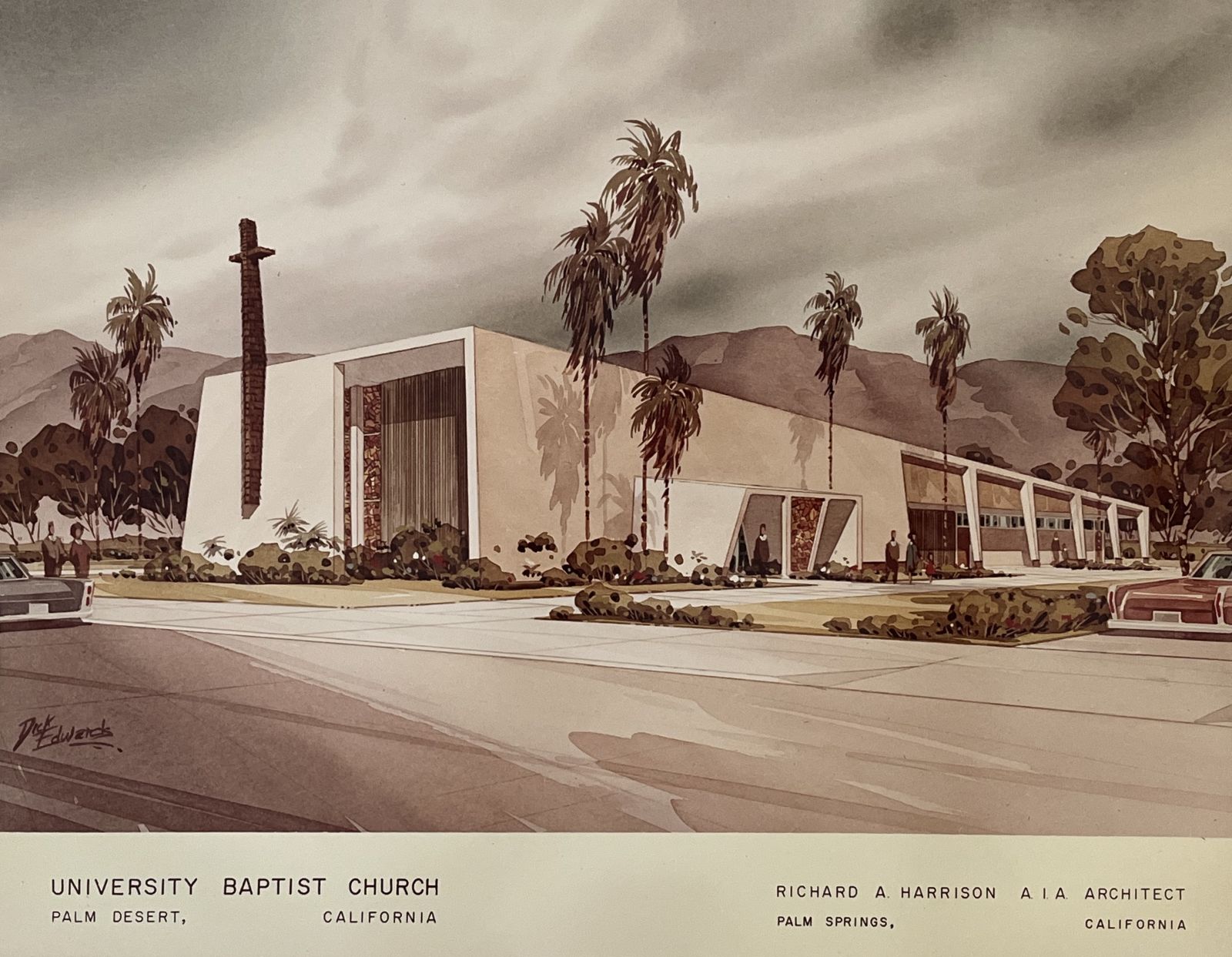
With a design described as “elegant” by one local architect, the University Baptist Church was designed by modernist architect Richard A. Harrison, AIA, in 1966.  Located at 72700 Fred Waring Drive in Palm Desert, the church is especially notable for its projecting “prow” accentuated by architecturally sophisticated recessed elements.  Harrison is only recently being appreciated in his own right and not just as the less famous portion of the “Wexler & Harrison” firm.  Harrison’s work in Palm Desert includes the Shadow Mountain Fairway Cottages and the Marrakesh Country Club.  In 2015, Harrison received an honorary “star” in front of the Palm Springs Art Museum Architecture and Design Center.

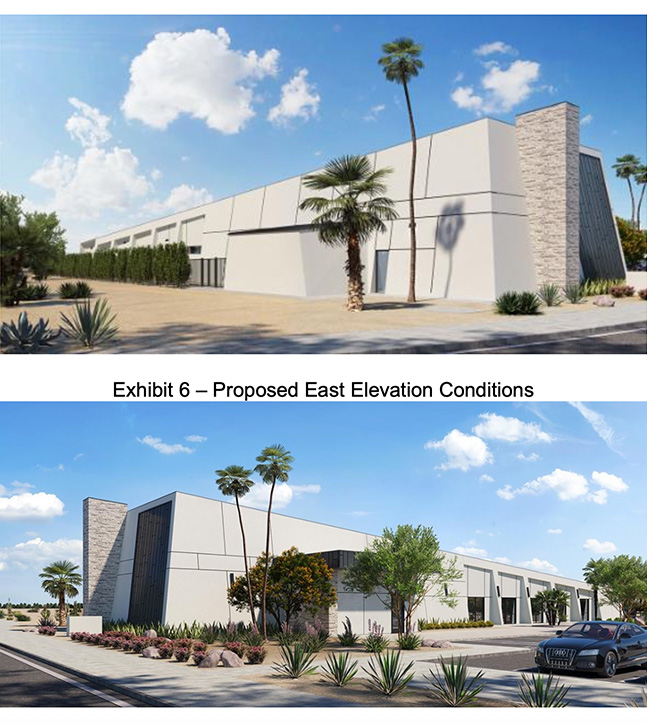
On September 3, 2026, PSPF sent a letter to the city of Palm Desert’s Architectural Review Commission. In the letter, PSPF stated that the proposed owner changes to the building (intended to convert it from a church into medical offices), “will dramatically compromise architect Richard Harrison’s original design, denude it of many of its character-defining features, and destroy its historical integrity.” In closing, PSPF’s letter opined, “We fully appreciate the need for buildings, even historic ones, to be repurposed. However, we would strongly suggest that the owner of the subject property consult a preservation architect and/or pursue a remodel of the building more sympathetic to the original architecture. This will not only make the owner’s future clients happy, but will preserve an important piece of Palm Desert’s architecture.” To read the PSPF letter (which includes a brief biography of Harrison) click here.

On August 25, 2026, the Palm Desert Architectural Review Commission (ARC) met to discuss proposed changes to the University Baptist Church intended to convert the church into medical offices. The hour-long discussion resulted in significant “push back” from some of the ARC members regarding these changes and the item was ultimately “continued.” Especially alarming was an apparent lack of understanding of the architecture on the part of the applicant with some of the architecturally important recessed elements of the building being viewed as spaces to be “filled-in” for extra square footage.
 

Categories
Historic Sites

Martin Residence

The Martin Residence 1000 West Via Vadera, Palm Springs, CA 92262

The Martin Residence is an unsympathetically modified “folded-plate” design (1960, Palmer & Krisel) located in the Vista Las Palmas neighborhood.  The new, preservation-minded owners recognized that the house was special and engaged PSPF to consult on a strategy to restore the house to a condition worthy of historic designation.    

On June 17, 2026, a consulting report (informed by the historic resource nomination format) was shared with the homeowners and the city’s Historic Preservation Officer.  The consulting report lays out a proposed roadmap to restore the architectural integrity of the house.  Once the house is restored the report will be updated.  The intended goal is for the house to qualify for historic designation. 

In May of 2026, the Palm Springs Preservation Foundation board of directors assigned the task of writing a historic resource consulting report for the Martin Residence to PSPF board member Steven Keylon.

Courtesy The Getty Research Institute
Categories
Historic Sites

Arthur Elrod Residence

Arthur Elrod Residence 350 West Via Lola, Palm Springs, CA 92262

A modest stucco ranch house, built in 1946 for film producer Bryan Foy, survives within the residence that interior designer Arthur Elrod made his own in 1961. Elrod did not tear the Foy house down. He kept its walls, its splayed plan, and many of its steel casement windows, raised the roof over a new living room, gave the house a new façade, and rebuilt it into a residence of his own design. The remodeled house was published three times within roughly a year, twice nationally: in Palm Springs Life (August 1962), in Interior Design (August 1963), and on the cover of The Architectural Digest (Winter 1963).

REFERENCES

On August 12, 2026, the Palm Springs Preservation Foundation (acting as agent for the owners) submitted the 154-page Class 1 Historic Resource nomination for the Elrod Residence to the city of Palm Springs.

In November of 2025, the Palm Springs Preservation Foundation board of directors assigned the task of writing the Class 1 Historic Resource nomination for the Arthur Elrod Residence to PSPF board member Steven Keylon.

Courtesy Arthur Elrod, Ltd. Archives at the Palm Springs Art Museum, Architecture and Design Center
Categories
Uncategorized

Palm Canyon Drive Palm Allée

Palm Canyon Drive Palm Allée

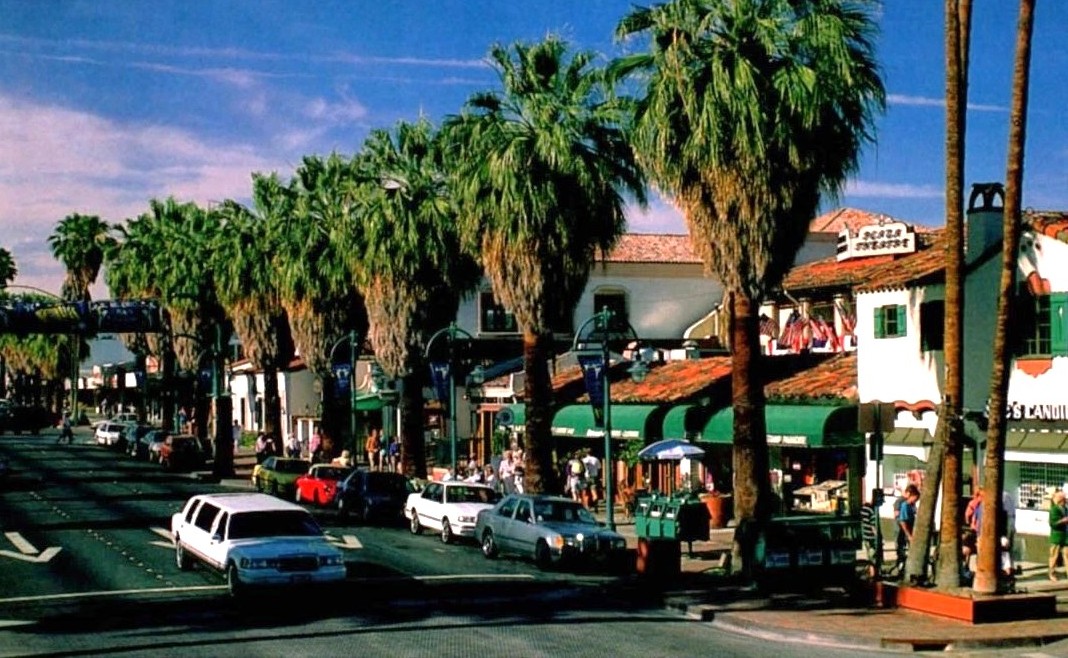
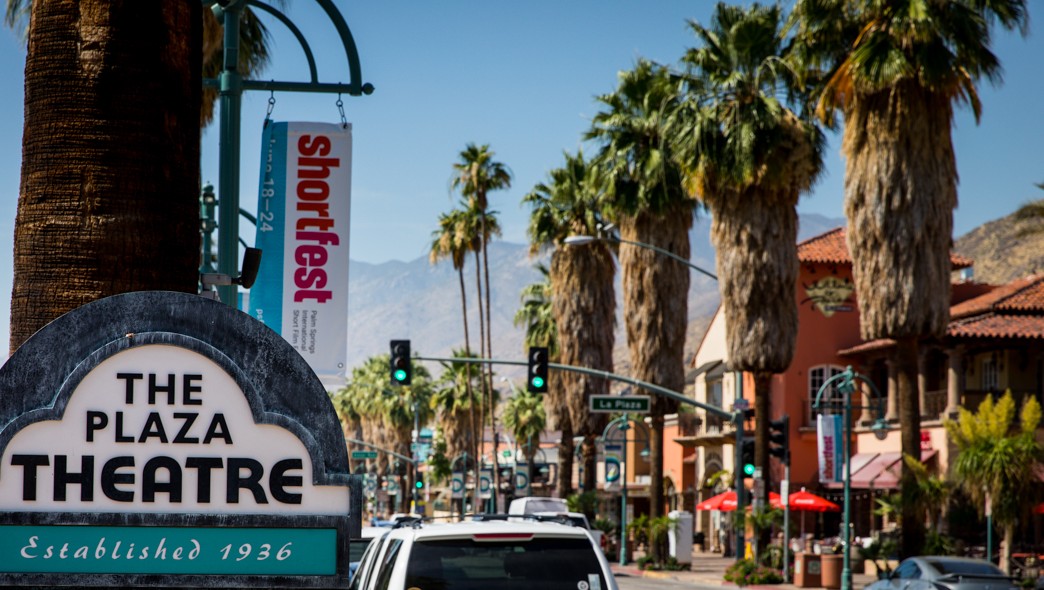
In 1949, Palm Springs’ first Councilwoman, Ruth Hardy, spearheaded an effort to get more than 300 palm trees planted along Palm Canyon Drive, from Tamarisk to Alejo.  Planted 35-feet apart, these palms formed a stately allée through the main business district.  Over the years these California Palm trees (and their distinctive skirts) have become an essential part of the “look” of the city of Palm Springs rising to become part of our “cultural landscape.”  Additionally, California Palm tree skirts provide much-needed shade in the harsh desert environment and serve as a habitat for a host of beneficial creatures including birds, bats, lizards, etc.

REFERENCES

On September 10, 2026, PSPF sent a letter to the chair of the city of Palm Springs’ Historic Site Preservation Board (HSPB) asking that the HSPB unilaterally take up the Palm Canyon Drive Palm Allée Class 1 Historic Resource nomination to circumvent the “administrative obstruction” caused by the aforementioned HPO decision. In the letter, PSPF specifically asks the HSPB to, “place this matter on a future HSPB agenda for discussion [because] in doing so you, as the relevant city board…can determine if it is in the best interests of the city to deliberate this matter.” The PSPF letter also attached the 116-page Palm Allée nomination. To read the PSPF letter click here.

On August 20, 2026, PSPF received an email notification from the city’s Historic Preservation Officer (HPO), via PSPF board member Steven Keylon, that the city would not process the Palm Allée historic resource nomination. The HPO’s email stated that, “Section 8.05.070.A [of the city’s municipal code] provides that an application for historic designation may only be initiated by the property owner or by the City. Because the subject property is City-owned right-of-way, and the City did not initiate the designation request, the submitted application does not meet the procedural requirements for an application to the Historic Site Preservation Board (HSPB).”

On August 2, 2026, the Palm Springs Preservation Foundation submitted the 115-page Class 1 Historic Resource nomination for the Palm Canyon Drive Palm Allée to the city of Palm Springs.

At the July 9, 2026 PSPF board meeting, it was unanimously agreed that it might be prudent to take an “educational approach” to the palm skirt issue, i.e., one that would inform both councilmembers and the public at large.  To that end, PSPF board member Steven Keylon was tasked with writing a Class 1 Historic Resource nomination regarding the rich history of the city’s Palm Allée.

At the July 8, 2026 Palm Springs city council meeting, PSPF board member Barbara Marshall made public comment on the topic stating, “While disappointed with the tribe’s ‘no opinion’ response to [this] issue…the tribe’s policy is on display at their downtown museum, headquarters building, casinos, and even their gas stations, where you see big, beautiful palm tree skirts,” and further, “the city’s emphasis on the risk to the public created by the tree skirts seems overly exaggerated.”  Unfortunately, despite numerous public comments in support of NOT trimming the California Palm tree skirts, the council voted 4-1 to proceed with the staff recommendation to start a systematic, city-wide trimming plan.  The city councilmembers seemed painfully unaware of the history of “Palm Allée” and spent most of their deliberations focusing on ways to protect locals and visitors alike from the mounting menace falling palm skirts were suddenly posing.

On July 7, 2026, PSPF sent a letter to the Palm Springs mayor and city councilmembers on a public hearing item entitled, “Item 3B. Adopt a Resolution Approving a Palm Tree Trimming Policy, and Superseding All Previous Palm Tree Trimming Procedures and Policies.”  The PSPF letter stated, in part, that “[PSPF] wholeheartedly concur[s] with the many compelling arguments made by the Oswit Land Trust in their July 3, 2026 letter.  We likewise support their view that a ‘balanced, tree-by-tree management plan’ be developed and that such a plan recognizes the ecological importance of native California fan palms which need to be managed differently from non-native Mexican fan palms.”  To read the Oswit Land Trust letter click here.  To read the PSPF letter click here.

For about two years this issue laid dormant.  During that time PSPF was not aware of any outreach to the public by the city.

On July 9, 2024, PSPF sent a letter to the Palm Springs city manager regarding “Consent Calendar Item 1.E.” which was entitled “Adopt a Resolution Approving Palm Tree Trimming Policy and Superseding All Previous…Procedures and Policies.”  The PSPF letter stated, in part, “it might be prudent to receive input from the city’s Historic Site Preservation Board to evaluate if significant changes to these trees are impacting a legitimate cultural resource.”  PSPF also recommended the matter be elevated to a public hearing item to allow for broader community input.  To read the PSPF letter click here.

Vintage Postcard
Courtesy Mood Creative
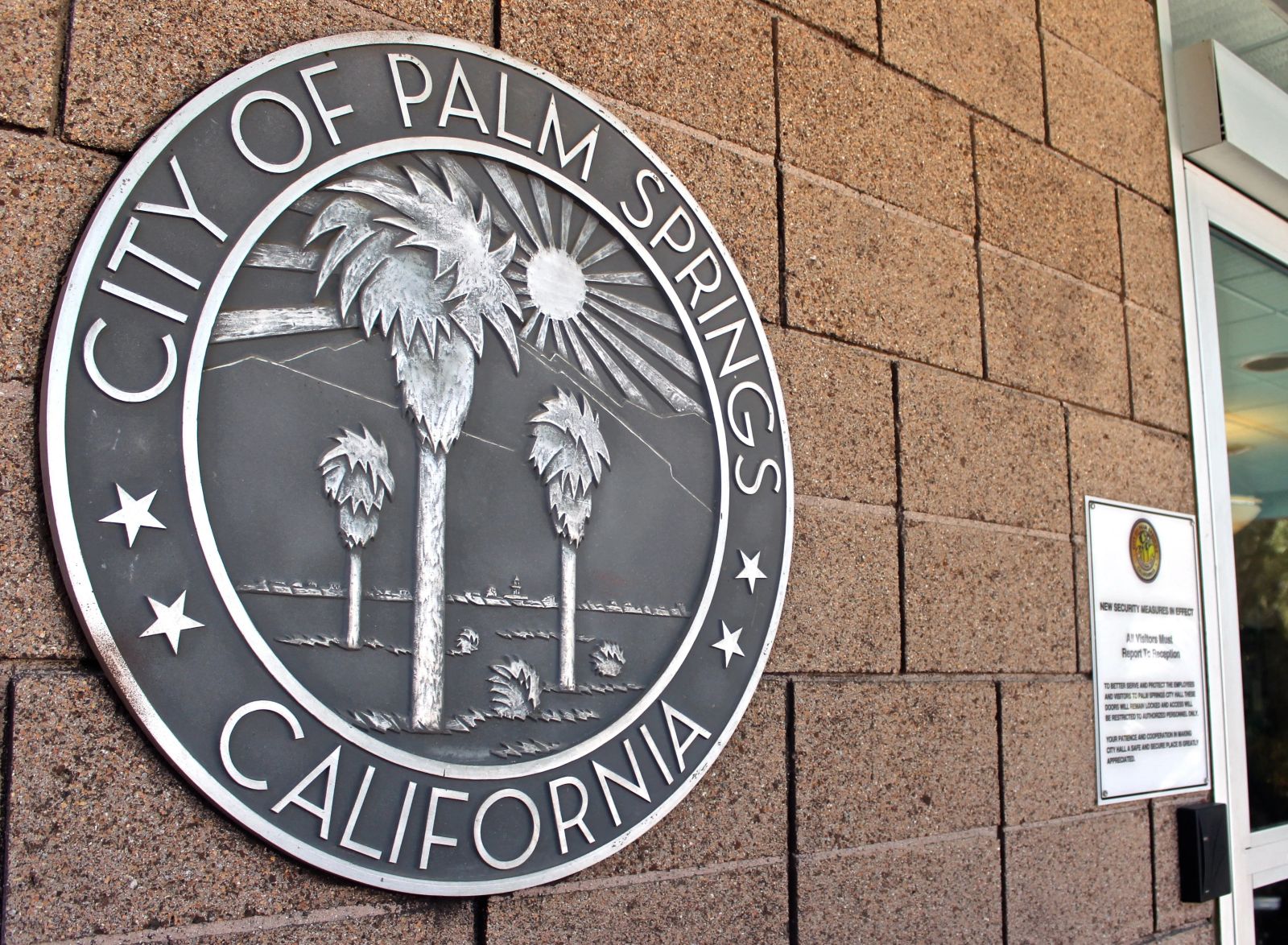
California palm trees (with skirts) figure prominently in Palm Springs’ city seal.

IN THE MEDIA

August 13, 2026, Desert Oasis Insider (Palm Springs’ Palm Allée: The 1949 Palms That Defined a City)
August 11, 2026, Palm Springs Post (Preservation group seeks historic status for Palm Canyon Drive’s palm trees)
August 9, 2026, Desert Sun (Palm Canyon Drive Palm Allée)

Categories
Historic Sites

Tamarisk Gardens #5

Tamarisk Gardens #5 70-152 Frank Sinatra Drive, Rancho Mirage, CA 92270

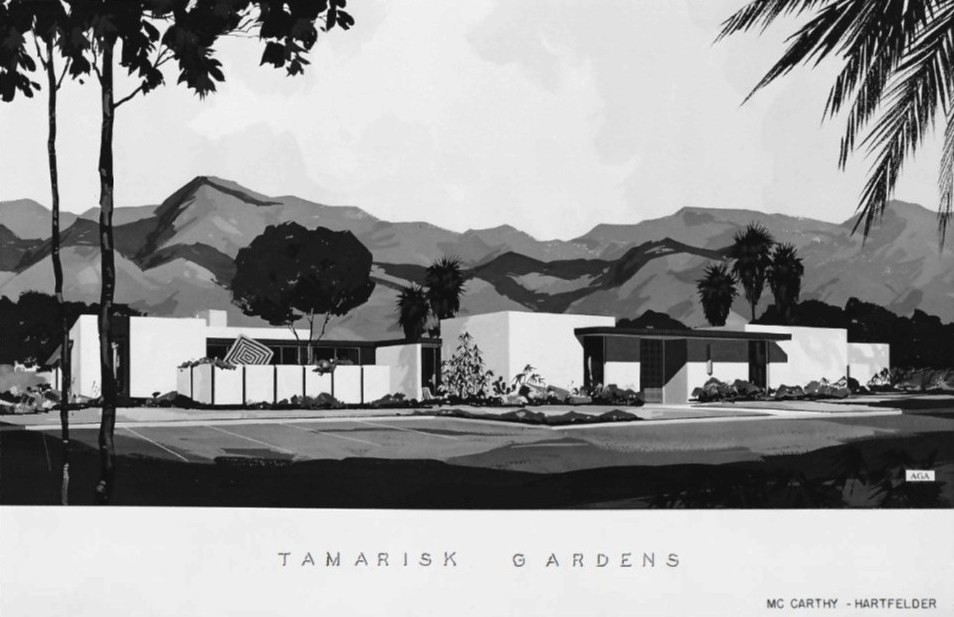
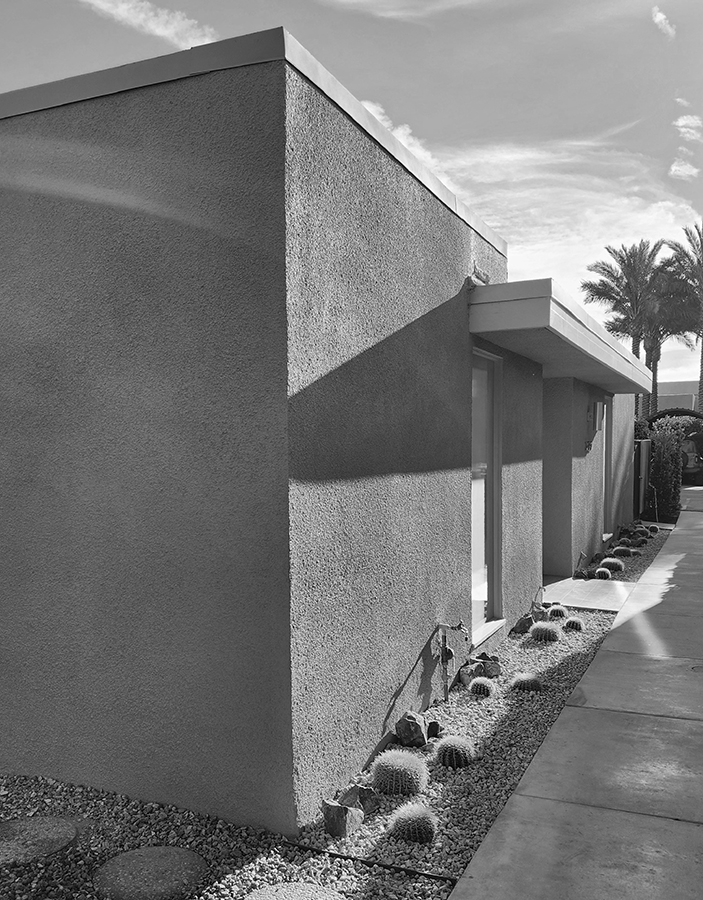
A collaboration between builder Richard F. McCarthy, Jr. and architect J. Don Hartfelder, AIA, Tamarisk Gardens #5 is an example of modernist architecture expressed in a residential condominium complex.  Constructed in 1965, Tamarisk Gardens #5 displays many of the characteristics of the Desert Modernist style including overall horizontality, massed geometric volumes, a flat roof, deep eaves, floor-to-ceiling glass, and a blurring of the indoor-outdoor transition.  The #5 unit is one-quarter of a multi-family housing structure with the units of the fourplex fitting together like “puzzle pieces.”  The entire Tamarisk Gardens complex consists of a total of 28 units (i.e., seven “fourplexes”) and includes a community pool.

REFERENCES

On September 9, 2026, the Rancho Mirage Historic Preservation Commission (HPC) met to hear the nomination for Tamarisk Gardens #5 and unanimously voted (5-0) to forward it to city council recommending historic designation.  The commissioners applauded the thoroughness of the nomination and one commissioner commented that it was refreshing that “a new architect” (i.e., Hartfelder) was being recognized for his contribution to the city’s built environment.  PSPF board member Ron Marshall made public comment citing Hartfelder’s “clever and creative design” for the fourplex building format.

On July 29, 2026, PSPF submitted the historic resource nomination for Tamarisk Gardens #5 (1965, J. Don Hartfelder, AIA) to the city of Rancho Mirage.  The 76-page nomination was prepared by PSPF board members Ron and Barbara Marshall.

Categories
Grants and Sponsorships

Palm Desert Cody-designed Sign

Palm Desert Cody-designed Sign Grant

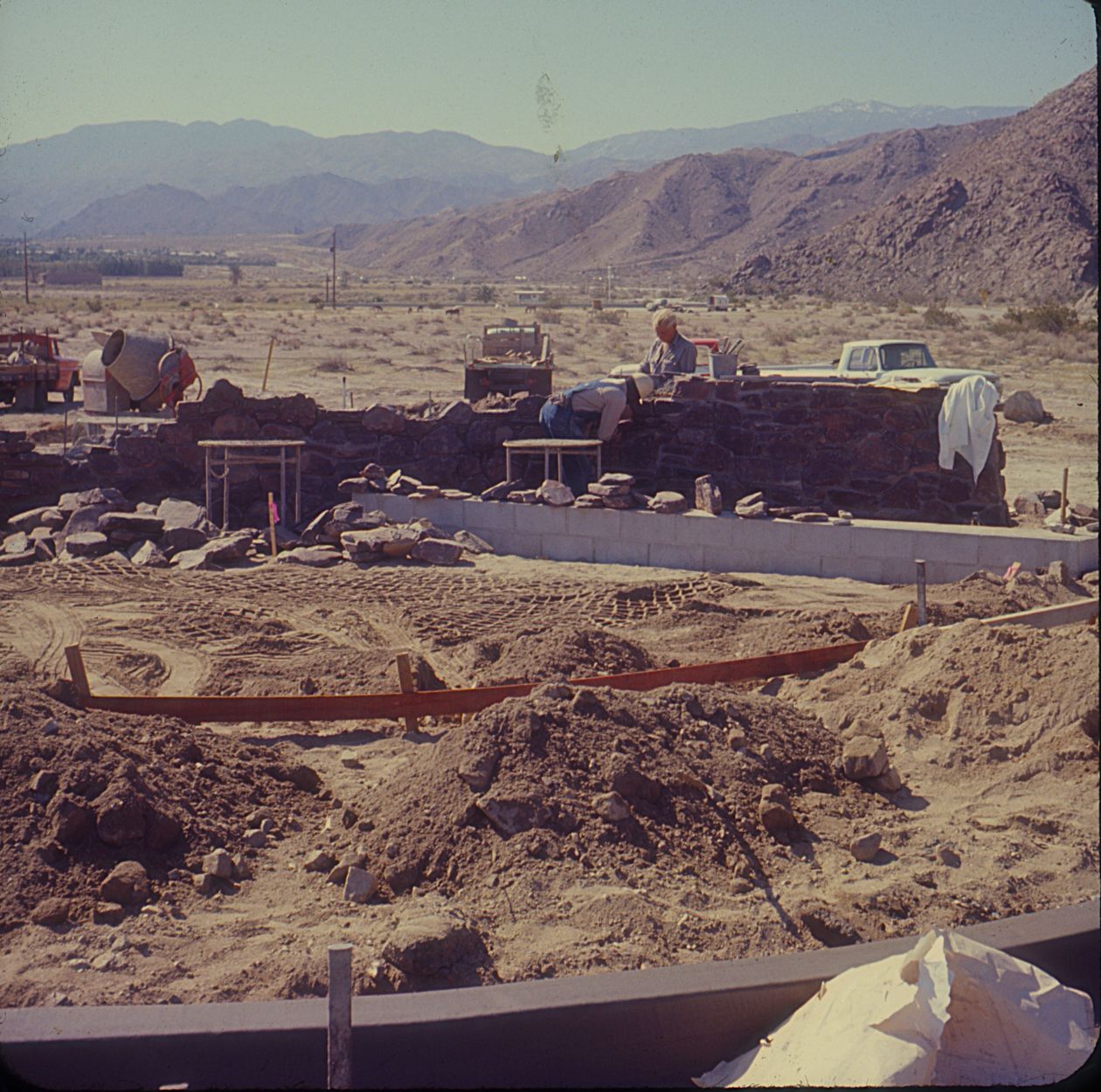
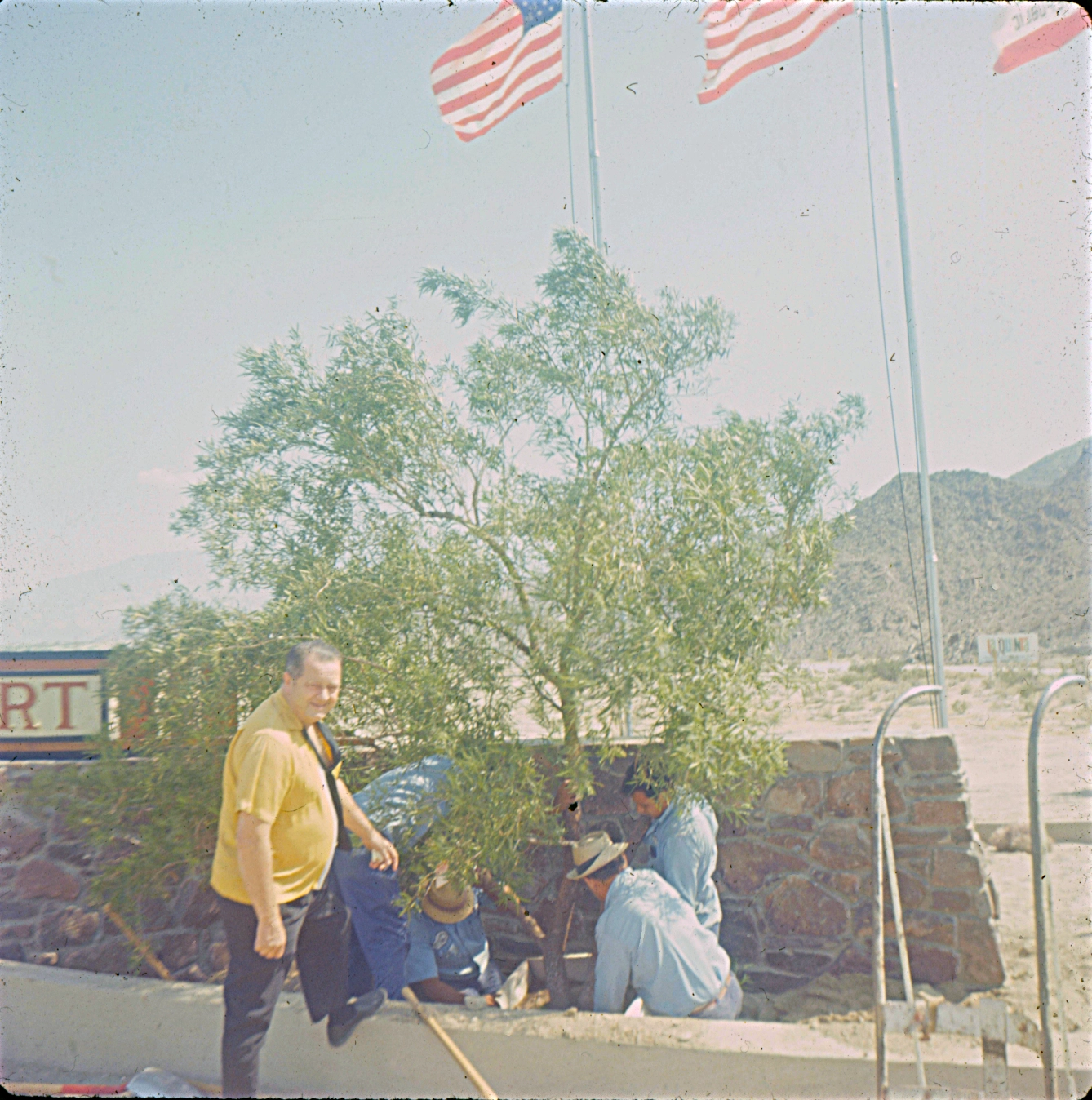
On September 10, 2026, the Palm Desert city council met to discuss PSPF’s offer to provide $30,000 in grant monies to fund the “conceptual design” of the Cody-designed entryway sign. There was some council discussion about whether the proposed monument sign was compatible with the city’s ongoing efforts to update its “wayfinding” sign program and whether or not the project might conflict with other city priorities (e.g., library funding). PSPF board member Ron Marshall made public comment and also answered questions from the council. Marshall opined that signs of this type “proclaim the city” and that it would send the public a message that “architecture is important to Palm Desert.” Marshall further stated that the city’s great midcentury architecture has been for too long “underappreciated.” Ultimately, the Palm Desert city council voted 4-1 to accept the PSPF offer. The grant will also fund recommendations for possible sign locations. City staff estimated the total cost of the sign to be about $330,000.

On June 26, 2026, PSPF received an email from Palm Desert Mayor Trubee that read, in part, “This is great news and thank you! I am very excited and grateful for your offer and look forward to working with PSPF moving forward. I am a big proponent of preserving and honoring a community’s history.”

On June 9, 2026, a letter was sent to Palm Desert Mayor Evan Trubee proposing that PSPF “reimburse the city up to $30,000…for the preparation of architectural documentation and conceptual design drawings for the historic Cody-designed entry sign….in accordance with applicable city procurement requirements.” The letter further clarified that, “The intended outcome of this effort would be a professionally prepared conceptual design package that accurately documents the historic sign and serves as a foundation for future engineering, site-specific design, permitting, and preparation of plans, specifications, and estimates (PS&E), should the city elect to pursue construction.” PSPF’s letter also clarified that completion of the design drawings, “would not obligate the city to construct or otherwise implement the project to replicate the sign, and that “future decisions regarding the sign would remain solely at the discretion of the city.” To read the PSPF grant letter, click here.

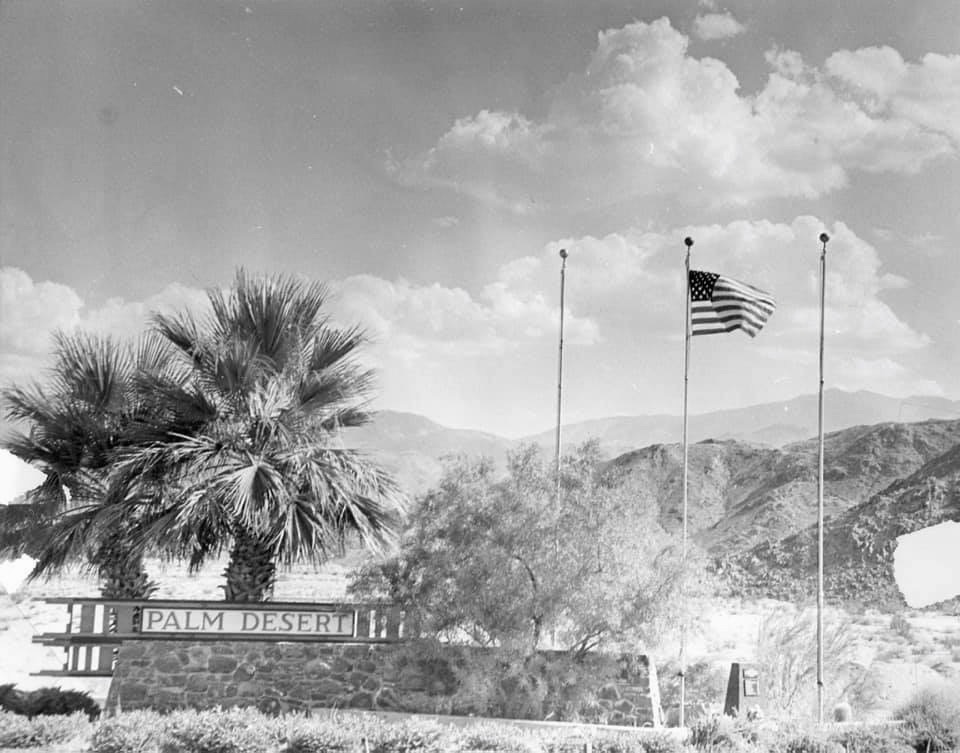
At the February 2026 PSPF board meeting, PSPF member Luke Leuschner briefed the board about the city of Palm Desert’s possible interest in replicating the architect William F. Cody-designed entry sign that once delimited the boundary between the cities of Palm Desert and Rancho Mirage. There was enthusiastic board consensus that PSPF should support such a project through the foundation’s grant program. PSPF board member Ron Marshall was tasked with writing a letter that would outline such a proposal.

Historical Society of Palm Desert
William F. Cody in yellow. Historical Society of Palm Desert

IN THE MEDIA

September 13, 2026, The Palm Springs Post (Palm Springs preservation group steps in to help revive a piece of Palm Desert history)

Categories
Grants and Sponsorships

Marvin Rand Archives

Marvin Rand Archives GRANT

On May 20, 2026, PSPF sent a grant letter to Ms. Shannon Jenkins (Sr. Director of Development, Cal Poly Pomona) outlining the various conditions of the $5,000 grant. The letter states, in part, that “…Mr. Rand’s archive is an important historical artifact that will aid students and researchers in continuing to document the rich architectural heritage of our region.” To read the grant letter click here.

On May 5, 2026, the PSPF board of directors unanimously voted to fund a $5,000 grant to support the Cal Poly Pomona Marvin Rand photography collection digitization project.

On April 11, 2026, PSPF board members Steve Treinen and Todd Hays attended “Rand Fest,” a celebration of architectural photographer Marvin Rand’s work hosted by Cal Poly Pomona. The goal of the event was to raise awareness and funds to support digitization of Rand’s archives which were recently donated to Cal Poly Pomona. The event included an exhibit of rare photographs and a sale of vintage images that were printed and signed by Rand with proceeds benefiting digitization efforts. The goal is to have the archive be accessible to students and researchers through the Online Archive of California.

Courtesy Gary Friedman, Los Angeles Times
Courtesy Cal Poly Pomona
Categories
Historic Sites

Morrill-Hearst Residence

Harry R. Morrill Residence (aka George R. Hearst, Sr. Residence) 701 West Panorama Road, Palm Springs, CA 92262

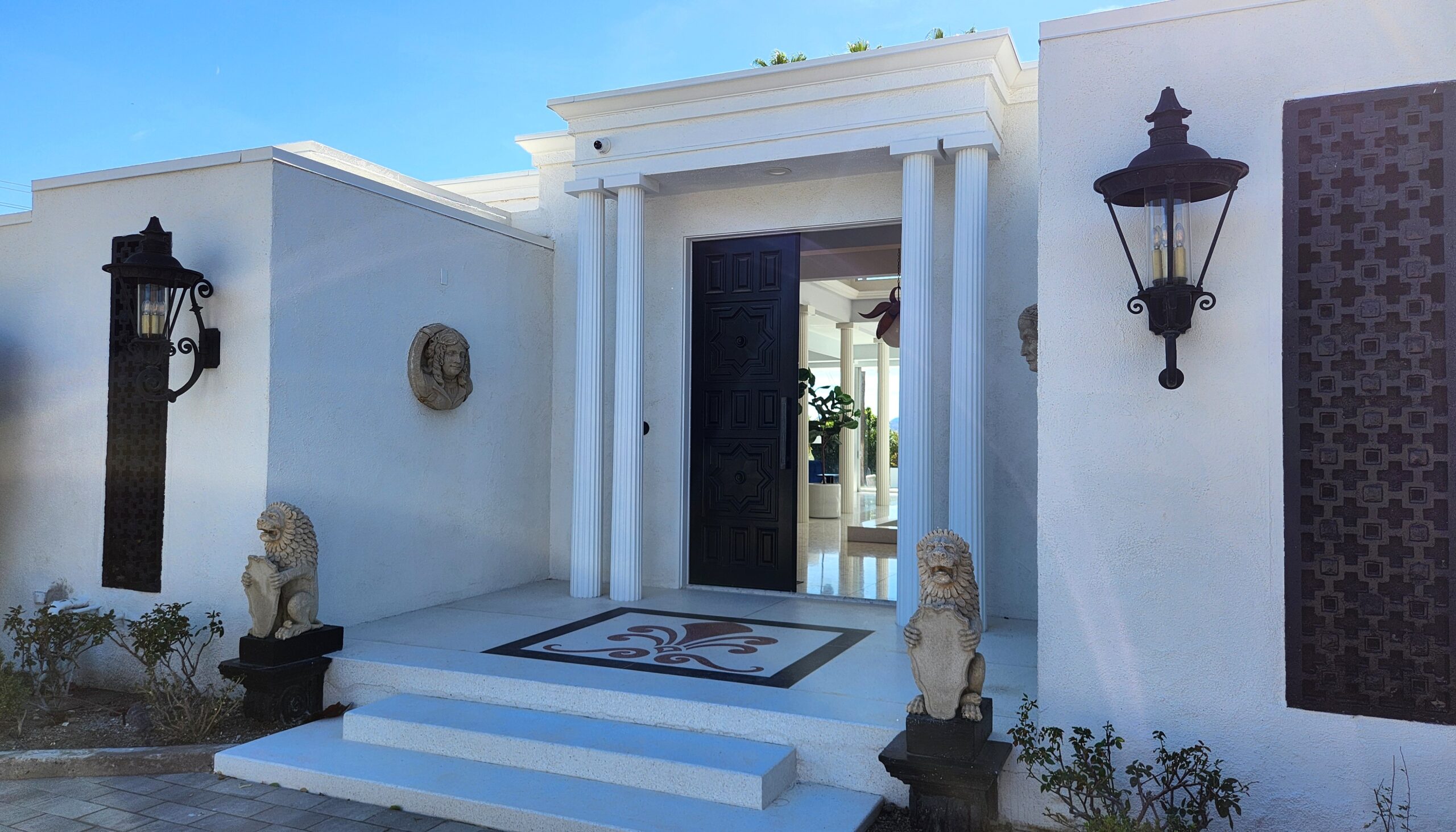
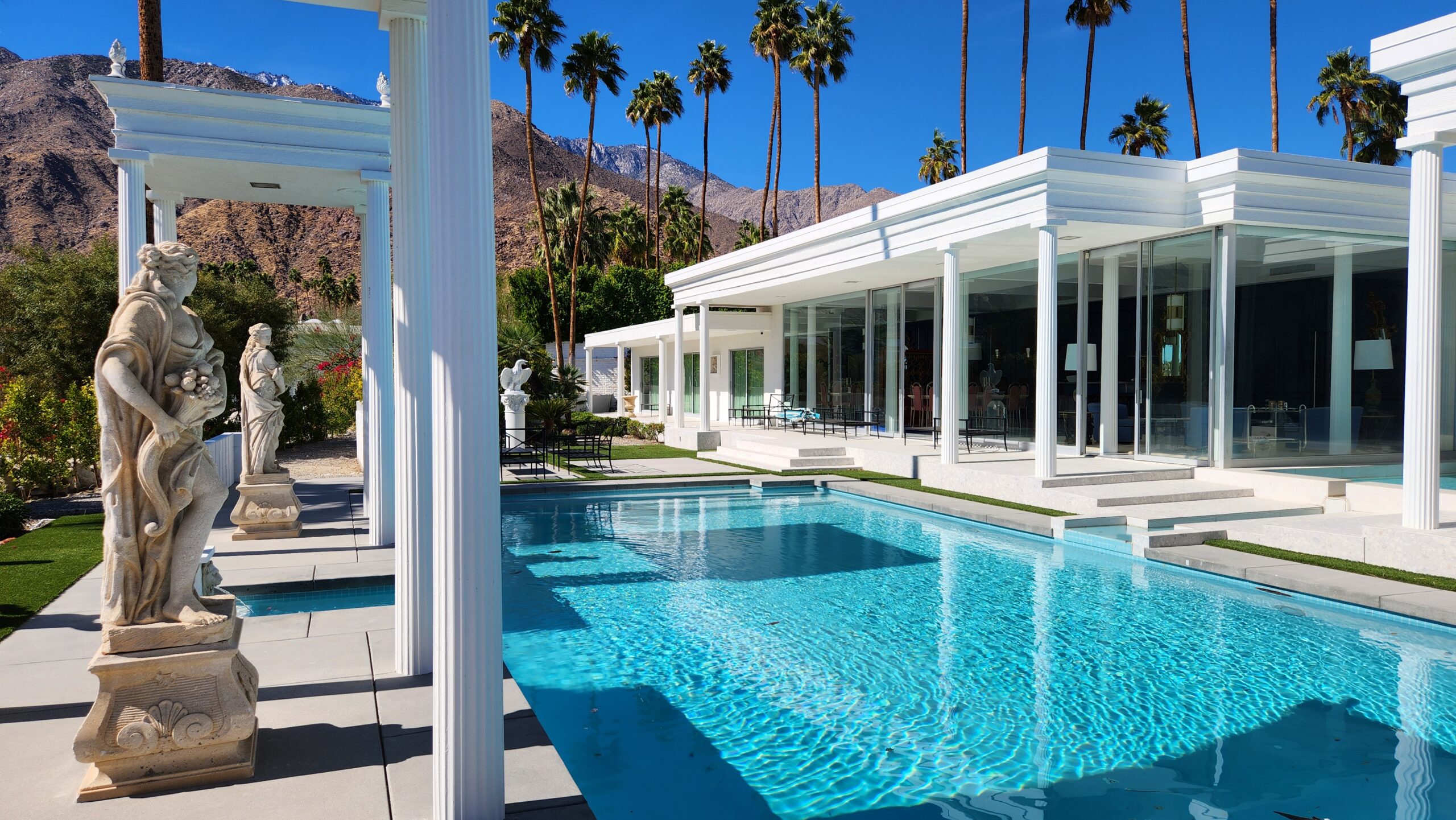
Featured in a glowing nine-page article in the Spring 1963 issue of Architectural Digest, the Morrill-Hearst Residence is a rare “Roman-inspired” villa by architectural designer James H. McNaughton.  An accomplished pioneering set designer for early television, McNaughton knew how to create impressive visual features and how to do so on a budget.  The Roman columns seen throughout the property are discarded Los Angeles city streetlamps that McNaughton purchased from a salvage yard.  The house was built in 1962 for Harry R. (Rufus) and Willa Pearl Morrill and was purchased by George Randolph Hearst, Sr. and his wife Rosalie in March of 1964.  The land was originally owned by famed film star Adolph Menjou who had wanted to build a grand desert home for himself and his wife, actress Veree Teesdale (those plans ultimately fell through).    

In May of 2025, the Palm Springs Preservation Foundation board of directors assigned the task of writing the Class 1 Historic Resource nomination for the Harry R. Morrill-George Randolph Hearst, Sr. Residence to PSPF board advisor Steve Vaught.

Categories
Grants and Sponsorships

Arthur Elrod Film Project

Arthur Elrod Film Project GRANT

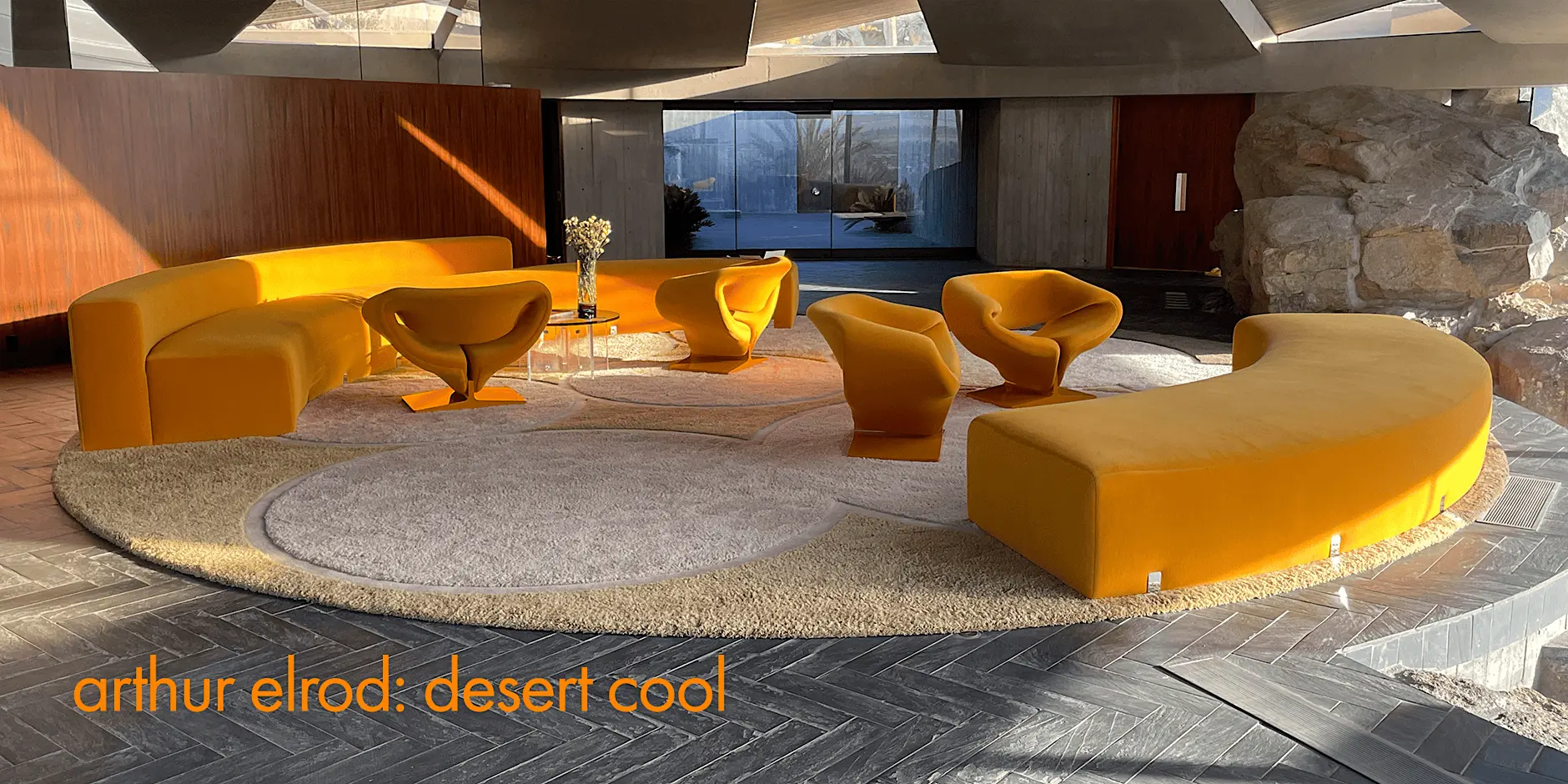
On February 25, 2026, the 90-minute documentary film “Arthur Elrod: Desert Cool” premiered during Modernism Week 2026.

On March 10, 2025, PSPF awarded a $2,500 grant to author Adele Cygelman to support her efforts to develop a documentary film chronicling the life and career of noted Palm Springs interior designer Arthur Elrod.  To read the letter click here

On July 3, 2025, in response to a solicitation from author Adele Cygelman, the Palm Springs Preservation Foundation board of directors voted unanimously to support her film efforts chronicling the life and career of noted Palm Springs interior designer Arthur Elrod.  To read the letter click here.

Courtesy Alan Kramer
Categories
Historic Sites Nominated

Lloyd and “Tootsie” Simon Residence

Lloyd and “Tootsie” Simon Residence 388 East Valmonte Norte, Palm Springs, CA 92262

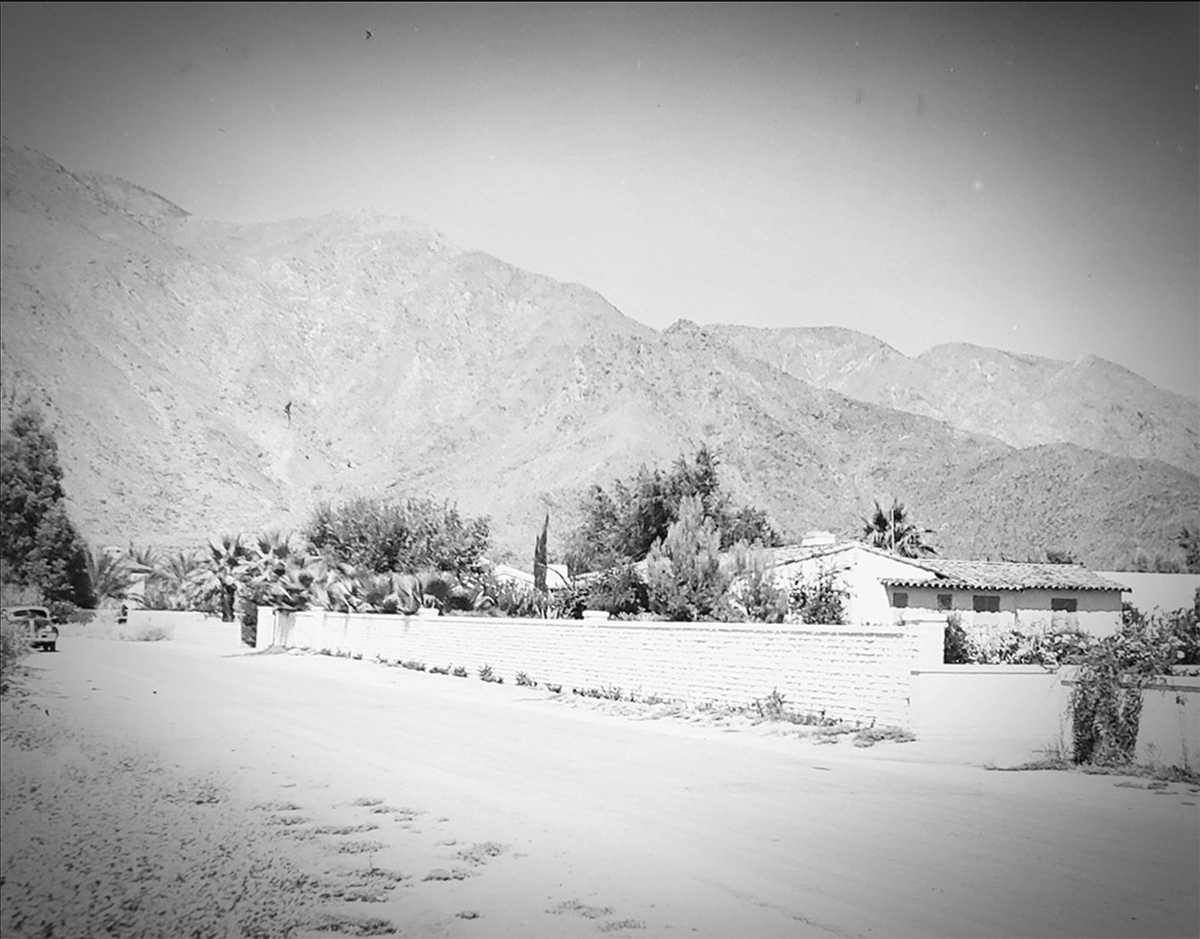
Built in 1936 and designed by the architectural firm of Brewster & Benedict, the Lloyd and “Tootsie” Simon Residence marks a critical moment when Palm Springs was transforming from seasonal resort to permanent residential community, and when Spanish Colonial Revival architecture had evolved from ornamental historicism toward restrained, climate-responsive design.  Because the house remained in the Simon family from 1936 through 2021, it is largely unaltered making it an exceptional document of interwar domestic architecture.

REFERENCES

On February 7, 2026, the Palm Springs Preservation Foundation (acting as agent for the owners) submitted the 113-page Class 1 Historic Resource nomination for the Simon Residence to the city of Palm Springs.

In October of 2025, the Palm Springs Preservation Foundation board of directors assigned the task of writing the Class 1 Historic Resource nomination for the Lloyd and “Tootsie” Simon Residence to PSPF board member Steven Keylon.

The Simon Residence circa 1940. Courtesy Bryan Mayo