Categories
Successes and Setbacks

Spa Hotel Complex

Palm Springs Spa Hotel Complex - 100 North Indian Canyon Drive SETBACK

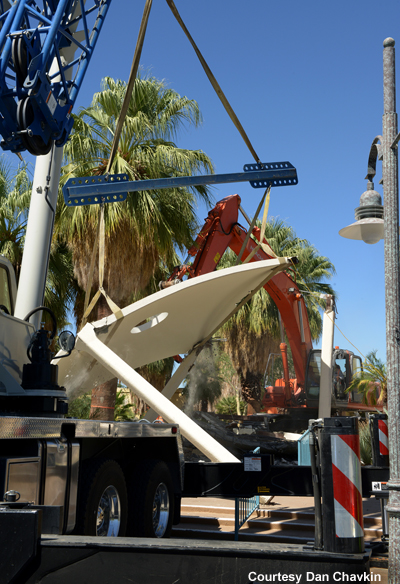
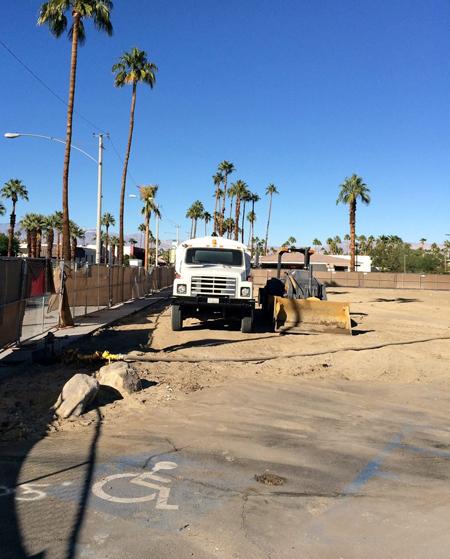
On September 3, 2014 the historic Spa Bath House and colonnade was demolished by the Agua Caliente Band of Cahuilla Indians before a crowd of stunned onlookers. As of September 3, 2014 a total of 1,024 letters supporting the rehabilitation of Spa Hotel complex had been sent to Tribal Council Chair Jeff Grubbe. To see the letter click here. Later that evening PSPF board member Gary Johns made eloquent public comment before the Palm Springs city council decrying the demolition of the Spa Hotel colonnade. Johns compared the colonnade’s demolition to the “disastrous loss” of Richard Neutra’s Maslon House in nearby Rancho Mirage in 2002.

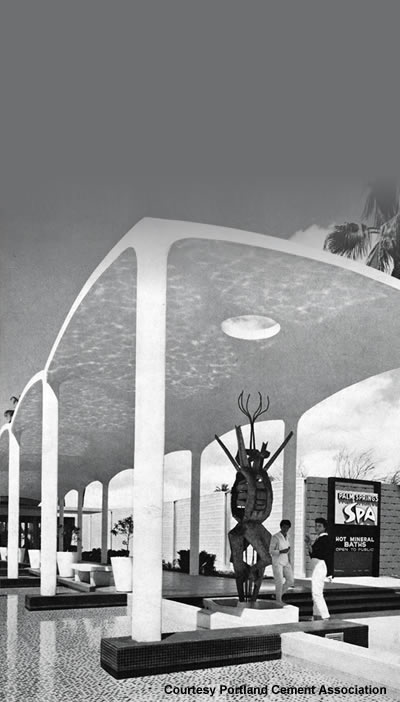
In the September 2014 issue of Desert Magazine, PSPF board advisor Tracy Conrad authored an article entitled “Spa Hotel: Swellegance.” Conrad’s article, which features rare vintage photographs of the Spa Hotel complex, concludes with the insightful observation: “Alterations and additions made to the buildings over the years since have covered up their sublime midcentury heritage. Beneath remains an incomparable work of modern architecture that has immense allure half a century later.” To read the article click here.

On August 13, 2014 the Palm Springs Modernism Committee delivered a “detailed marketing plan and tax credit package” to the tribe which consisted of an explanation of the potential for historic tax credits and a copy of the marketing plan produced by the Hotel Valley Ho in Scottsdale, Arizona. The Hotel Valley Ho is a hotel of similar vintage and size to the Spa Hotel complex. To read the PSModCom package click here.

On August 10, 2014 the Desert Sun newspaper published a “Valley Voice” editorial by singer-actress Nancy Sinatra. The well-received editorial opined that, “Architects such as Cody, Williams, Frey, Wexler and many others put their indelible stamp on our neighborhoods. As our city grew, so did our reputation for beautiful midcentury iconic buildings and homes. The preservation and sometimes the rehabilitation of those buildings and neighborhoods have transformed Palm Springs into a global destination in recent years. This is a wonderful blessing for our city and for us. My hope is that we can continue to enjoy and celebrate these places forever.” To read Ms. Sinatra’s entire editorial click here.

On August 5, 2014 the “Save the Spa” online letter writing campaign asking the tribe to preserve and rehabilitate the Spa Hotel complex collected its 1,000th signature.

On August 4, 2014 PSPF sent a letter to the White House making an appeal to First Lady Michelle Obama (in her capacity as the Honorary Chair of the “Preserve America” program) for “any efforts [she] might make on behalf of this important advocacy.” Copies of the PSPF letter were sent to senior administration officials in the Department of the Interior, California’s national and state elected leadership, and to national and state preservation organizations. To read the PSPF cover letter click here.

On July 28, 2014 PSPF board member Gary Johns was a guest on radio station KPTR AM 1450 for host Steve Kelly’s “Kelly’s Corner.” The show discussed the proposed demolition of the Spa Hotel complex. Johns made a compelling case for the rehabilitation of the architecturally important complex and asked that the tribal leaders embrace a more “community-oriented” vision for the site.

On July 24, 2014 the Desert Sun newspaper featured an article entitled “Report: Demolishing Hotel Bad for Environment.” The article summarized the salient points of the sustainability report provided to the tribe on July 18, 2014.

On July 19, 2914 PSPF board members Gary Johns and Jim Harlan provided “Save the Spa” signs to various businesses in the city’s Uptown Design District. The large majority of business owners enthusiastically applauded and prominently posted the signs in their respective businesses.

On July 18, 2014 PSPF delivered to Tribal Council Chair Jeff Grubbe a study entitled Sustainability Assessment of the Palm Springs Spa Resort Hotel. The study, conducted by Ecotype Consulting (Redlands, CA), was commissioned by PSPF prior to the July 8th closing of the Spa Hotel complex. Accordingly, Ecotype Consulting was able to visit the Spa Hotel site before it was shuttered and record a number of important metrics. In a cover letter to the Tribal Chair, PSPF’s letter asserted that the study “leads one to the inescapable conclusion that the demolition of the Spa Hotel complex is bad for the environment and that the very idea of a “green” demolition is fundamentally flawed.” Further, the PSPF letter opined that, “While we have the utmost respect for the Tribe’s planning staff, sometimes divergent views that provide new information can lead to better conclusions.” To read the PSPF cover letter click here.


On July 16, 2014 singer-actress Ms. Nancy Sinatra sent a personal letter to Tribal Council Chair Jeff Grubbe. In her letter Ms. Sinatra says, “The current and recent owners of my father’s home [Frank Sinatra’s Twin Palms Estate] have invested in its restoration, returning it to its near original condition. They had faith in the future of Palm Springs and understood that cultural tourism is an important, emerging component of our local economy. The Spa Hotel complex (including my favorite portion, the “Colonnade”) needs a similar investment in restoration so that future generations of Palm Springs residents and tourists can enjoy the architecture of William Cody and Wexler & Harrison.” Ms. Sinatra also mentions PSPF’s on-line “Save the Spa” letter campaign. To read Ms. Sinatra’s letter click here.

On July 14, 2014 the Desert Sun newspaper reported on the early success of PSPF’s “Save the Spa” letter-writing campaign to the tribe.

On July 12, 2014 the Desert Sun newspaper published a “Valley Voice” editorial by PSPF board member Barbara Marshall. The editorial, which received an overwhelmingly positive response, challenged the tribal council “to embrace a community-oriented vision by preserving and investing in the rehabilitation of the Spa Hotel complex.”  Read the Valley Voice Editorial

On the evening of July 11, 2014 PSPF kicked-off an on-line letter-writing campaign to persuade the tribe to reconsider their demolition plans. In the first hour of the campaign 114 letters were electronically signed and sent to the tribe. By the following Monday morning (July 14th) that number had climbed to 646. In part, the advocacy letter asks Agua Caliente Band of Cahuilla Indians Tribal Council Chairman “to reconsider the Tribe’s proposed demolition of the Spa Hotel & Spa Bath House,” and further that the tribe support “the community’s efforts to preserve and rehabilitate this important architectural and cultural resource.”

On July 9, 2014 PSPF informed the membership of the results of the July 8, 2014 meeting with tribal planning representatives. Notably, the advocacy email announced the start of a “more public” campaign regarding the Spa Hotel complex.

On July 8, 2014 PSPF board members Erik Rosenow, Susan Secoy-Jensen, Gary Johns and Ron Marshall met with tribal planning representatives (and tribal council Vice Chairman Larry Olinger) to discuss the proposed demolition of the Spa Hotel complex (William Cody and Wexler & Harrison, 1959-1962). Also attending the meeting were representatives from the Palm Springs Modern Committee (PSModCom) and the Palm Springs Historical Society (PSHS). The meeting, which had been requested by PSPF in early June, resulted in a far-ranging discussion which focused on the intrinsic cultural and economic value of the Spa Hotel complex. It was repeatedly emphasized to the tribe that the 2,000-plus PSPF membership fervently believes the Spa Hotel complex should be preserved and celebrated, not demolished and disposed of. Specific comments to the tribe included PSPF representatives talking about the inherent “greenness” of preserving the building and PSModCom representatives talking about tax credit opportunities. The PSHS representative provided a small collection of vintage historical items and photographs of the Spa Hotel complex. At the conclusion of the meeting the tribal representatives said that they “welcomed” any input from the PSPF membership and the public at-large.

On June 24, 2014 PSPF sent out an advocacy email informing the membership of the proposed demolition of the Spa Hotel complex and apprising them of the scheduled July 8, 2014 meeting with tribal representatives.

On June 19, 2014 during a joint meeting with the Palm Springs city council, Agua Caliente Band of Cahuilla Indians tribal council chairman Jeff Grubbe announced the “tear-down” of the Spa Hotel complex (1959-62, William Cody and Wexler & Harrison). Tribal leaders said the Spa Hotel’s scheduled closure on July 8th would be followed by a “six to nine month” structural evaluation (for hazardous materials, etc.) of the complex. The results of that evaluation “may” impact timelines but later mention was made of the “entire process” being a “15-18 month” “green” tear-down. Although this important joint session (held at the Convention Center) was not televised, PSPF recorded the relevant portions of the meeting. During the discussions specific mention was made of the tribal staff’s scheduled July 8th meeting with PSPF and other local preservation organizations (the day the hotel closes). The tribe asserted that they currently “don’t have a plan in place yet” for the site.

On June 3, 2014 PSPF sent a letter to ACBCI Tribal Chairman Jeff Grubbe asking for a meeting to discuss the concepts and points raised in PSPF’s letter of May 8, 2014. To read the PSPF letter click here.

On May 8, 2014 PSPF sent a letter to ACBCI Tribal Chairman Jeff Grubbe which stated in part, “We were encouraged by an article in the May 6, 2014 issue of the Desert Sun newspaper about the Spa Hotel complex, wherein you were quoted that it was the tribe’s intent to “preserve this key landmark”….Of course it is the foundation’s view that the Spa Hotel itself is an integral part of that landmark–not to mention an important part of the history and legacy of the Agua Caliente Band of Cahuilla Indians and the city of Palm Springs.” The PSPF letter attached the 7-page information sheet (slightly updated) that was previously provided in the joint letter sent to the tribe on May 30, 2008. The PSPF letter also asked that Tribal Chairman Grubbe be “transparent” concerning the tribe’s plans for the Spa Hotel complex.  Read the PDPF Letter and 7-page Information Sheet

Despite the March 28, 2010 assertion in the Desert Sun newspaper that the Agua Caliente Band of Cahuilla Indians “plans to eventually demolish” the William Cody-designed Spa Hotel, on March 30th the tribe’s Chief Planning and Development Officer, Mr. Tom Davis, assured PSPF President Ron Marshall that pending the completion of a formal environmental review no decision on the future of the Spa Hotel has been made. Further, with regard to the specific issue of demolition, Mr. Davis reasserted that the “Tribal Council does not hold that position or any other” at this time.

On May 30, 2008 PSPF and a coalition of preservation organizations and interested parties sent a letter to Tribal Chairman Milanovich. The letter attached a 7-page information sheet, produced by PSPF member Ron Marshall, which contained “a consolidated set of recommendations regarding the potential for renovation and restoration of the internationally-renowned Palm Springs Spa and Hotel.” The signatories to the letter suggested that the 7-page attachment be included in any Request for Proposal (RFP) for the development of the Spa Hotel site. While the tribe considers our and other external recommendations we have been asked not to make our detailed recommendations publicly available. To read the joint letter click here.

On March 20, 2008 ACBCI representatives met with PSPF President William Kopelk and PSPF board members Doug Hudson and Ron Marshall to discuss the tribe’s plans for the colonnade. At the meeting, which was cordial and collegial, the coalition of preservation organizations offered to send the tribe a letter outlining the historic and cultural importance of the entire Spa Hotel complex to include recommendations regarding the hotel’s restoration.

On January 17, 2008 the ACBCI agreed to meet with PSPF and other interested parties. In their response the tribe’s Chief Planning & Development Officer, Mr. Thomas J. Davis stated, “Please be assured that the Tribal Council presently has no plans to demolish the colonnade at the entry to the existing Spa Resort Casino Spa. Although the current ‘Notice of Intent’ to prepare an Environmental Impact Statement for the Spa Resort Casino Master Plan considers the ‘demolition’ of the hotel, it does not specifically address the colonnade, and an Environmental Review document, in itself, does not cause any action, but merely analyzes potential actions and their effects.”

On January 5, 2008 PSPF President William Kopelk and the heads of other local preservation organizations, expressed their concerns about an architectural rendering that appeared in the October 2007 issue of Palm Springs Life magazine. The rendering showed a proposed building in place of the Spa Bath House colonnade designed by architect William Cody and the firm of Wexler & Harrison. The letter also requested a meeting with representatives of the Agua Caliente Band of Cahuilla Indians (ACBCI). To read the joint letter click hereRead the ACBCI Response

Continue Reading
spa3

IN THE MEDIA

November 26, 2014, Desert Sun (Palm Springs Spa Hotel Complex)
September 5, 2014, Desert Sun (Palm Springs Spa Hotel Complex) 
September 4, 2014, Desert Sun (Palm Springs Spa Hotel Complex) 
July 24, 2014, Desert Sun (Palm Springs Spa Hotel Complex) 
July 14, 2014, Desert Sun (Palm Springs Spa Hotel Complex) 
June 28, 2014, Desert Sun (Palm Springs Spa Hotel Complex)
Categories
Successes and Setbacks

Santa Fe Federal Savings & Loan

Santa Fe Federal Savings & Loan - 300 South Palm Canyon Drive SUCCESS

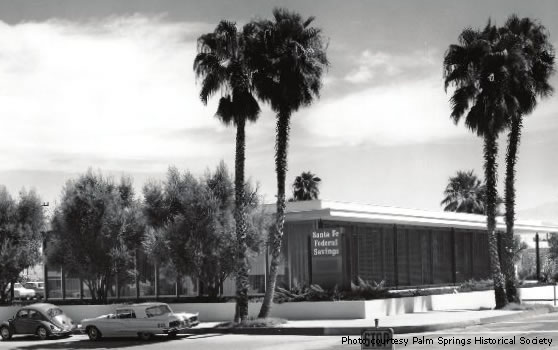
On June 24, 2011 the Palm Springs Art Museum announced that it had purchased the Santa Fe Federal Savings & Loan building from Wessman Holdings LLC. The new museum building will house “architecture and design exhibitions and programs.” The PSPF membership should be proud of the critical role it played in preserving this important historic asset.

On May 6, 2009 the city council voted 3 to 2 (Pougnet, Foat and Hutcheson supporting) to designate the Santa Fe Federal Savings & Loan building a Class 1 historic site. Making public comment were Erik Williams (son of E. Stewart Williams) who called the Santa Fe Federal building one of his father’s “best designs” and PSPF board members Richard Serafin and Patrick McGrew. McGrew emphasized the need to protect the entire site, lauding Williams’ modernist bank building as an “object in space” similar to other important buildings (e.g., Le Corbusier’s Villa Savoye) and their sites.

On March 16, 2009 PSPF submitted a public records request to the city of Palm Springs asking for all documents related to the Baristo Lofts project and the Class 1 historic site designation of the Santa Fe Federal Savings & Loan building. The city response showed that 99 citizens had written to the city in support of the historic designation and in opposition to the Baristo Lofts project.

On February 18, 2009 just hours before the project was to be heard by the city council, the Baristo Lofts project was withdrawn from the agenda at the request of the applicant (Wessman Development) and rescheduled for some “future date.” This action was unfortunate because about 80 concerned citizens had made a special effort to attend the week night meeting to voice their opposition to the project. During his public comment, PSPF president Ron Marshall asked a “sea” of preservation-minded citizens (most wearing red “NO BARISTO LOFTS” buttons provided by PSPF volunteers) to stand and be recognized before the city council.

On February 17, 2009 PSPF sent a letter to the city council asking the council to reject the Baristo Lofts project. In the letter, PSPF reiterated earlier concerns but added that the proposed project, (1) demanded “outrageous deviations from the present zoning code,” (2) “would reduce the architectural capital” of the city, and (3) would “negatively affect [Palm Springs’] burgeoning architectural tourism industry.” Also that day, PSPF emailed another preservation alert to the membership entitled “A Call for Voices” which asked for members to attend the next evening’s city council meeting and/or to send an email to one of the city council members voicing their opposition to the Baristo Lofts project.  To read the letter, click here.

From February 13-15, 2009 (during the Palm Springs Modernism Show) PSPF board member Gary Johns and PSPF volunteers distributed over 200 PSPF-produced informational fliers from our booth addressing the flawed Baristo Lofts project and encouraging citizens to write to the Palm Springs city council voicing their concerns.

On February 3, 2009 PSPF emailed a preservation alert to the membership about the proposed Baristo Lofts project and an explanation regarding the negative impact the project would have on the Santa Fe Federal Savings & Loan building. Included in the email was a diagram that vividly illustrated the tiny separation between the Santa Fe bank building and the proposed condominium project.

On January 28, 2009 the Desert Sun newspaper published a Valley Voice column by PSPF President Ron Marshall strongly condemning the Baristo Lofts project. In the op-ed piece the Baristo Lofts project was described as “overbuilt” and looming over the Santa Fe bank building like “a hulking monster.” Click here to read the Op-Ed piece.

On January 14, 2009 the Planning Commission voted 4-1 (Scott opposing) to approve the Baristo Lofts project (less the outdoor seating around the Santa Fe Federal Savings & Loan building). During the public hearing PSPF board members Gary Johns and Ron Marshall both urged denial of the project. PSPF volunteer Barbara Marshall read a compelling letter from architect Sally Anne Smith, AIA (the principal of Smith Architectural Studio), that urged denial of the Baristo Lofts project. Fortunately, the Planning Commission’s final approval included a number of onerous conditions.

On August 12, 2008 PSPF sent a letter to the Planning Commission expressing “deep concern” about the Baristo Lofts project and the resulting negative impact the proposed development would have on the Santa Fe Federal Savings & Loan building. The proposed project includes a four-story mixed use development (with first floor commercial and retail), 19 residential condominium units and the “adaptive reuse of the existing building” (i.e., the Santa Fe bank building) for retail/restaurant use. PSPF pointed out that the proposed Baristo Lofts would “loom” over the Santa Fe Federal Savings & Loan building and that the proposed outdoor restaurant addition would compromise the “floating” appearance of the building (perhaps the building’s most notable architectural feature). Finally, PSPF asked that the Planning Commission recommend to the city council that the Class 1 historic site designation of the Santa Fe bank building “be allowed to proceed unfettered on its’ own merits,” as it was PSPF’s view that the historical designation had been effectively held “hostage” to the “changing whims of the developer.”  Read the PSPF Letter

On October 10, 2007 the Planning Commission heard the Baristo Lofts project and recommended that the developer revise the project (by increasing distance between the proposed and existing buildings and making the project “greener”) and then resubmit the project.

On March 12, 2007 the Architectural Advisory Committee again reviewed the Baristo Lofts project and recommended a restudy and major revisions to the proposed project.

On January 22, 2007 the Architectural Advisory Committee reviewed the Baristo Lofts project and recommended a restudy and asked that the project be revised “such that the new building does not crowd the existing one” (i.e., the Santa Fe Federal Savings & Loan Building).

On January 9, 2007 the Historic Site Preservation Board (HSPB) reviewed (as a “pre-application”) the Baristo Lofts project, “a 4-story L-shaped mixed use tower wrapping around the east and south side of the present structure” (the “present structure” being the Santa Fe Federal Savings & Loan building). The HSPB recommended various improvements to the proposed project that would reduce the size and scale of the design including the option “not to construct anything more on the site.” Concurrently, the HSPB initiated “the study and investigation” of the Santa Fe Federal Savings & Loan building site “for possible recommendation to city council for Class 1 designation.”

Continue Reading
santa_fe2

REFERENCES

Categories
Successes and Setbacks

Preservation Officer

Preservation Officer SUCCESS

On October 24, 2022 Sarah Yoon became the city of Palm Springs’ second Historic Preservation Officer.

On October 18, 2018 the city of Palm Springs appointed Ken Lyon to be the city’s first Historic Preservation Officer (HPO). PSPF applauds the city’s creation of this position and we are confident it will pay dividends for historic preservation for many years to come.

On January 12, 2016 PSPF delivered a letter to the Palm Springs city manager forwarding the foundation’s letter of June 27, 2008. In part, the letter reads, “As you may recall, several years ago we recommended the creation of a new Planning Department position for a city ‘Preservation Officer.’ In recent years the need for such a position has been well-validated.” Later that day, PSPF board member Ron Marshall briefed the city’s Historic Site Preservation Board on the recommendation. The HSPB appeared enthusiastic about the idea and asked that it be placed on their February 2016 meeting agenda.

On June 27, 2008, PSPF President William Kopelk recommended to David Ready, Palm Springs City Manager, that the City of Palm Springs consider creating a full-time Preservation Officer position on the city staff.

Categories
Successes and Setbacks

Ramon Drug Building

Ramon Drug Building (Barracks Alteration) - 440-454 South Indian Canyon Drive SETBACK

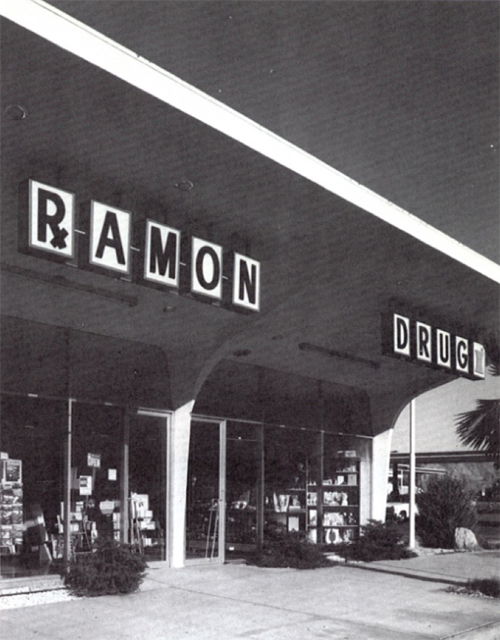
Originally a military barracks, architect Don Wexler’s 1956 modification to the structure transformed the building into an important piece of the city’s modernist architecture. The building’s most notable feature is the concrete and ornamental plaster arcade which is a “fluid form” rarely used by Wexler who is better known for his rectilinear work in steel.

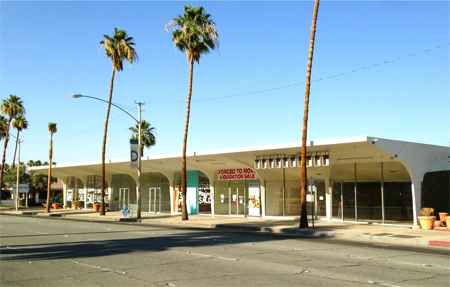
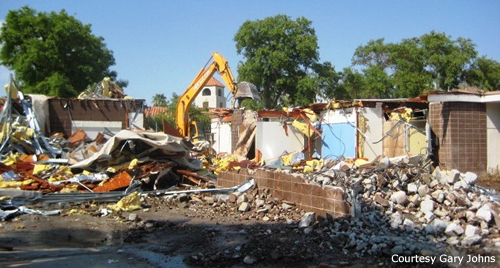
On November 9, 2015 the Wexler & Harrison-designed Ramon Drug Building fell victim to demolition. The tribal allottees’ rush to demolish this building (without a project in place) was shortsighted and failed to appreciate the full context of tribal history in Palm Springs. Moreover, the demolition action injured the community at-large because it failed to understand the economic importance of preserving the city’s modernist architecture.

On November 4, 2015 the Palm Springs city council upheld the appeal of the tribal allottees 4-1 (Foat opposing) paving the way for the demolition of the Ramon Drug Building. PSPF board member Steven Price made public comment in support of the HSPB’s decision to levy the stay of demolition.

On October 31, 2015 PSPF sent a letter to Palm Springs Mayor Steve Pougnet stating, “we strongly recommend that you support the city staff recommendation to deny…[the tribal allottees’] appeal and allow for an investigation into the historic merits of all, or part of, the Ramon Drug Building.” To read the PSPF letter click here.

On October 14, 2015 PSPF was informed that the tribal allottee property owners of the Ramon Drug Building had appealed (through G&M Construction) the 120-day stay of demolition of the building.

On October 13, 2015 the Palm Springs Historic Site Preservation Board (HSPB) voted 5-1 to impose a 120-day stay of demolition on the Ramon Drug Building and tasked city staff to “investigate” the possibility of making the complex a Class 1 Historic Site. PSPF board member Barbara Marshall made public comment in support of the 120-day stay of demolition.

On October 8, 2015 PSPF sent a letter to the Palm Springs Planning Director recommending that a stay of demolition be imposed on the Ramon Drug Building “pending an investigation into the merits of potential Class 1 designation.” To read the PSPF letter click here.

On August 11, 2015, in an email response to a PSPF inquiry concerning the applicability of city codes on tribal “allottee” land, the city of Palm Springs stated, “The property [i.e., the Ramon Drug Building at 440-454 South Indian Canyon Drive] is subject to the City’s land use regulations and permits pursuant to a Land Use Contract approved by the Tribe and City in 1977 (included as Appendix 2 to the City’s Zoning Code), as subsequently amended. All Indian trust lands, with the exception of certain parcels of land directly acquired by the Tribe itself, are subject to the City’s land use review and permitting process as identified in the agreement. However, any decision by the City on Indian trust lands is appealable to the Tribal Council, who retain[s] the right to overturn any action taken by the City (see Zoning Code 94.11.00).”

On August 10, 2015 the Desert Sun newspaper reported that construction fencing had been erected around the Ramon Drug Building, “presumably to keep the building safe.” In the Desert Sun article, PSPF president Erik Rosenow was extensively quoted about the architectural importance of the building. 

On April 6, 2015 the Desert Sun newspaper ran an article entitled “Palm Springs Modernism Fans Fear Losing Another Wexler,” which again reported on the controversy and “the potential destruction” of the Ramon Drug Building. PSPF board member Ron Marshall was extensively quoted in the article commenting that “the fluidity of the concrete creates that deep eave,” one of the Ramon Drug Building’s most notable features. Marshall went on to emphasize the architectural significance of the structure citing the building’s appearance in the 2004 city-wide architectural survey.

On April 1, 2015 a Desert Sun newspaper article later clarified the ownership of the property stating that “a spokeswoman for the Agua Caliente tribe said the property was not under the tribe’s direct control and was therefore a private real estate matter between a landlord and tenants.” The article further reported there were 22 landowners.

On March 30, 2015 local television station KESQ reported that “nearly a dozen…tenants” located in the Ramon Drug Building had been “slapped with an eviction notice.” Reportedly, the eviction notice required that the business owners vacate by May 31, 2015. KESQ further reported that the “building sits on Indian land owned by members of various tribes” (possibly meaning various families).

RamonDrugGJohns
ramon_drug81815
Ramon Drug

IN THE MEDIA

August 11, 2015, Desert Sun (Ramon Drug Building)
August 10, 2015, Desert Sun (Ramon Drug Building)
April 6, 2015, Desert Sun (Ramon Drug Building)

Categories
Successes and Setbacks

PSHS Admin. Building

Palm Springs High School Administration Building - 2248 East Ramon Road SETBACK

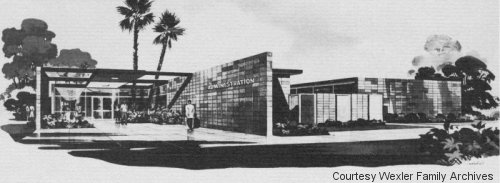
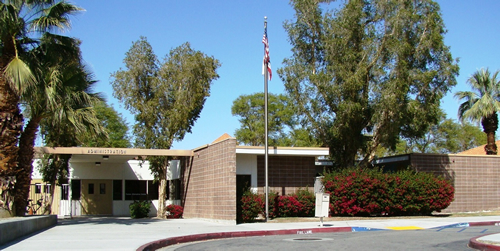
On August 18, 2012 heavy equipment commenced the demolition of the PSHS Administration Building. Despite this sad result, PSPF’s strong advocacy effort resulted in some positive developments. Firstly, the school board embraced PSPF’s recommendation to conduct a long overdue professional inventory and assessment of the historic resources under their stewardship. Secondly, PSPF raised awareness about the inherent economic sensibility of adaptively reusing older buildings by providing an alternative plan that showed how easily the PSHS Administration Building could have been reused to address the programmatic needs of the school’s performing arts program. Finally, this preservation advocacy served to educate many in the community to see that “being green” also includes the recycling of buildings and not just aluminum cans.

On August 2, 2012 the Desert Sun published a Valley Voice column by PSPF board member Gary Johns entitled “Tearing Down Historic Buildings Sends a Bad Message to Students.” In the column, Johns opines that the demolition of the PSHS Administration Building will be the “first willful demolition…in recent memory.” Johns also laments the poor lessons being taught the high school students. To read the Op-Ed piece click here.

On June 24, 2012 PSPF sent a letter to the PSUSD informing the superintendent that PSPF had reviewed “in detail” the Historic Resources Assessment Report prepared by Pamela Daly of Daly & Associates on the PSHS Administration Building (Wexler & Harrison, 1957) and had found the report “incomplete and rife with errors.” Along with the letter, PSPF attached a revised Primary Record (DPR 523A) prepared by PSPF board member Patrick McGrew. McGrew (who meets the professional qualification standards for evaluating historic resources as defined in 36 CFR Part 61) started a peer review of the assessment but found the task to be “prohibitively time-consuming due to the Daly report’s numerous errors.”  To read the letter click here.

On June 19, 2012 PSPF received a June 11, 2012 letter from the California State Allocation Board (SAB) that stated that while the SAB “understands your concern regarding the District’s intention to demolish the Administration Building that is of historical significance…the SAB is unable…to withhold funding,” and further that the “decision to proceed with the project was a local decision.” The SAB did not respond to PSPF’s view that the demolition was a waste of taxpayer money. To read the SAB letter click here.

At the June 12, 2012 Board of Education meeting, the PSUSD released a “Historic Resources Assessment” prepared by Daly & Associates, an outside paid consultant, which asserts that the PSHS Administration Building does not meet the criterion for historic designation. During public comment PSPF president Ron Marshall told the school board that the report was written “to give this board of education cover for their mistake…the mistake of not knowing what they were demolishing.” Marshall further asserted that this report was “a tactic typically relegated to developers who trot in paid “experts” to rationalize destroying something of importance to the community,” and not worthy of an elected school board responsible to the public. To read the entire consultant’s assessment click here.

On May 26, 2012 local radio station KPTR (1450 AM) aired “Progressive Talk with Elle K,” a far-ranging discussion about the scheduled demolition of the PSHS Administration Building. In the 45-minute interview, PSPF president Ron Marshall asserted that there had been “a collective evasion of responsibility” on the part of the school district staff and board of education and that financial calculations had failed to consider the intrinsic value of the historic Wexler-Harrison building.

On May 20, 2012 PSPF sent a letter to each of the nine members of the California State Allocation Board (which includes several state senators and state assembly members) asserting that “the demolition of the historic Administration Building is unnecessary, wasteful and deprives the city of Palm Springs of a valuable cultural resource.” The letter further stated that PSPF was confident “that not funding this project [in the amount of $874,416] will delay the project long enough to allow the school district time to pursue the adaptive reuse of the historic PSHS Administration Building.” To read the PSPF cover letter click here.

On May 16, 2012 the Agua Caliente Band of Cahuilla Indians sent a letter to the superintendent of the school district asking that “a comprehensive analysis be completed prior to demolition [of the PSHS Administration Building] to weigh the cost and benefits of using the existing building vs. demolishing the structure to make room for an entirely new building.” To read the tribe’s letter click here.

On May 8, 2012 despite a compelling 20-minute presentation by PSPF board members Johns, Jensen, McGrew and Marshall and more than a dozen eloquent speakers making public comment (including PSPF board member Rosenow) in support of the preservation of the PSHS Administration Building (1957, Wexler & Harrison), the Palm Springs Unified School District Board of Education was unable to muster the political courage to abandon its plans for the demolition of the historic building. During the PSPF presentation an alternative floor plan, which adds a band room, practice rooms and stage to the existing PSHS Administration Building was unveiled. The adaptive reuse scheme, designed by o2 Architecture (principal, architect Lance O’Donnell) in consultation with architect Don Wexler, is a far superior design to the current proposal and better addresses the needs of the performing arts program. During their deliberations, Board of Education members failed to address PSPF assertions that they had collectively failed to supervise staff actions on the project and skirted the question of the “value” of the PSHS Administration Building. Ultimately, the members of the Board of Education were loath to admit that they had committed approximately $1.2 million of taxpayer money to a mediocre design that will replace an important piece of architecture. One positive result of PSPF’s advocacy efforts has been the school district’s commitment to undertake an historic resources survey of the resources under the stewardship of the school district within the next month.

Also on May 8, 2012 PSPF board member Patrick McGrew’s article for KCET’s Artbound series entitled Destructing Modernism: Will Palm Springs School District Tear Down a Wexler Building? was published on-line. To read the article click here.

On May 2, 2012 PSPF delivered an informational letter to the Board of Education (BoE) of the Palm Springs Unified School District in anticipation of the May 8 BoE meeting. The letter asserts that it is PSPF’s view “that the demolition of the PSHS Administration Building is unnecessary, wasteful and deprives the city of a valuable cultural resource,” and that PSPF believes “that there are numerous ways to address the programmatic needs of the performing arts program that do not require the demolition of the PSHS Administration Building.” The letter explains that the planned demolition is flawed on many levels, fails to comport with the city’s general plan values and priorities, and dramatically reveals the PSUSD’s strategic shortcomings with regard to historic resources and sustainability planning. The 7-page letter (with 6 attachments) is an excellent overview of the issues surrounding the PSHS Administration Building controversy.  Read the PSPF Letter

On April 17, 2012 PSPF provided the local press with a news release which forwarded an “Architects’ Open Letter to the Palm Springs Unified School District.” The letter, signed by 22 local and California architects, asks school district officials to “abandon” their plans for the demolition of the Palm Springs High School Administration Building and also asks that they “pursue the adaptive reuse” of the building.  Read the Architects’ Open Letter

On April 14, 2012 PSPF received a letter from the Palm Springs Unified School District (PSUSD) superintendent stating that the issue of the scheduled demolition of the PSHS Administration Building could not be accommodated for the April 24, 2012 PSUSD Board meeting but had been approved for the May 8, 2012 meeting agenda.

On April 12, 2012 the Desert Sun published a Valley Voice column by PSPF board member Jim Harlan entitled “Historic Palm Springs school building should be restored – not demolished.” In the column, Harlan makes a compelling case for restoring the Palm Springs High School Administration Building and points out both the building’s architectural merits and the sustainability rationale for adaptively reusing the building. To read the Op-Ed piece click here.

On April 10, 2012 PSPF delivered a California Public Record Act request letter to the Palm Springs Unified School District. The letter asked for all documents related to “the proposed demolition of the PSHS Administration Building, the construction of the proposed Performing Arts Building… including site plan(s), floor plan(s), programmatic considerations and feasibility studies.”

On March 30, 2012 PSPF board members Johns, Harlan, Jensen, McGrew and Marshall, along with architect Don Wexler (and son Gary), met with PSUSD senior leadership to discuss concerns about the scheduled demolition of the PSHS Administration Building. While the meeting was cordial, PSUSD contended it has been duly diligent in pursuing the construction of a new Performing Arts building and is committed to a “timeline” which includes the demolition of the PSHS Administration Building. At the meeting PSPF asked for a copy of the 2008 analysis which is prominently referred to in a March 24, 2012 Desert Sun newspaper article. The analysis supposedly indicates that a “renovation” of the PSHS Administration Building is too costly. Incredibly, it was revealed that the analysis applied to the Music Building to the north of the PSHS Auditorium and that the conclusions of the 2008 analysis were being used to leap to similar conclusions about the PSHS Administration Building. In short, to date no specific analysis has been done on the economic feasibility of adaptively reusing the PSHS Administration Building. PSPF believes this might be readily accomplished by connecting a two-story addition to the north side of the PSHS Administration Building (PSUSD insists that a portion of the proposed Performing Arts building include a two-story volume). At the conclusion of the meeting, PSPF provided the Superintendent of PSUSD with a written request to place the demolition of the PSHS Administration Building on the Board of Education’s April 24, 2012 meeting agenda.

On March 28, 2012 PSPF board members McGrew and Marshall along with architects Don Wexler and Lance O’Donnell, made a site visit of the PSHS Administration Building. During the visit, Don’s son Gary briefed the PSHS principal and two Board of Education members on the architectural importance of the building. Don Wexler, O’Donnell and McGrew offered options for the adaptive reuse of the building.

On March 27, 2012 architect Don Wexler provided PSPF with important documentary information about the PSHS Administration Building from his personal archives. Included was an early architectural rendering of the building and vintage photographs.

On March 21, 2012 PSPF sent a letter to the superintendent of the Palm Springs Unified School District (PSUSD) reporting that additional research had revealed that the Palm Springs High School Administration Building (1957) had actually been designed by the firm of Wexler & Harrison. Discussions with various PSPF board members revealed that architect Wexler remembers the building “well” and that the misattribution was understandable given its similarity to the adjacent PSHS auditorium and the use of similar concrete block. To read the PSPF letter and more about this interesting architectural “detective story” click here.

On March 20, 2012 further PSPF research (underscoring the need for a systematic architectural survey of the campus) revealed that the PSHS Administration Building (1957) had actually been the design of the architectural firm of Wexler & Harrison. The building was originally misattributed due to its stylistic similarity to the adjacent auditorium by Williams, Williams & Williams and Clark, Frey & Chambers. According to architect Don Wexler the confusion is understandable as “similar block was used on buildings of that era throughout the campus including some Wexler & Harrison-designed buildings that have since been demolished.”

On March 19, 2012 PSPF sent out a preservation alert asking members to contact the Palm Springs Unified School District (at info@psusd.us) stating their objection to the proposed demolition of the PSHS Administration Building (1957). PSPF members were asked to copy PSPF (at info@pspreservationfoundation.org) on their emails to help track the progress of the advocacy effort. Within 24-hours of the alert, PSPF members had sent dozens of emails to PSUSD supporting preservation of the PSHS Administration Building.

On March 13, 2012 PSPF sent a letter to the superintendent of the PSUSD objecting to the proposed summer 2012 demolition of the PSHS Administration Building (1957). Initially believed to be designed by the architectural firms of Williams, Williams & Williams and Clark, Frey & Chambers (though later confirmed to be designed by Wexler & Harrison) the highly-intact modernist building is located at 2248 East Ramon Road. The PSPF letter asserts that the PSUSD should “immediately consult with an architectural historian…to better understand this historic resource.” The PSPF letter also emphasizes the “greenness” of adaptively reusing the PSHS Administration Building and includes a site plan of the other historic resources on the PSHS campus created by PSPF board member Patrick McGrew.  Read the PSPF Letter

The architectural firm of Williams, Williams & Williams was in charge of the master plan for the PSHS complex in the 1950s and even collaborated with the firm of Clark, Frey & Chambers in the design of the PSHS auditorium. The firm of Wexler & Harrison also designed other notable buildings on the campus. Over the years, the modernist architecture (which seamlessly complemented the original 1938 Mission Revival high school) was unfortunately supplemented in the 1980s with a banal “Mediterranean-style” design aesthetic which muddled the architectural clarity of the campus. Smaller, and more incremental, changes (like the stuccoing of modernist buildings on the campus) have occurred over the years. Fortunately, most of the changes to the PSHS Administration Building have been minor and could be easily reversed.

Continue Reading

pshs_building
pshs_1_500
PSHS AdminBldg BAMarshall
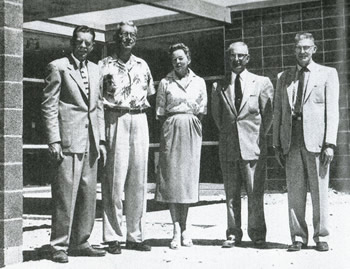
The PSHS 1957 “Chia” yearbook featured this photo of the board of education standing in front of the “newly constructed” administration building. From left to right are President Ray Sorum, Mr. Arnold Rumwell, Mrs. Helen Staley, Mr. Haig Harris, and Mr. Frank Muller. Courtesy Palm Springs Historical Society
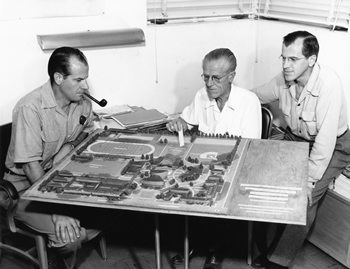
Harry, Roger and E. Stewart Williams study an architectural model of the PSHS campus during the late 1950s. The firm of Williams, Williams & Williams was in charge of the master plan for the complex. Courtesy Palm Springs Historical Society

IN THE MEDIA

October 2012, Palm Springs Life Annual Progress Issue (“a lesson for the future”)
August 21, 2012, Desert Sun (Palm Springs High School Administration Building)
August 20, 2012, Desert Sun (Palm Springs High School Administration Building)
August 7, 2012, Desert Sun (Palm Springs High School Administration Building)
July 2, 2012, Desert Sun (Palm Springs High School Administration Building)
June 16, 2012, Desert Sun (Palm Springs High School Administration Building)
June 10, 2012, Desert Sun (Palm Springs High School Administration Building)
June 5, 2012, Desert Sun (Palm Springs High School Administration Building)
May 9, 2012, Desert Sun (Palm Springs High School Administration Building)
May 6, 2012, Desert Sun (Palm Springs High School Administration Building)
April 25, 2012, Desert Sun (Palm Springs High School Administration Building)
April 19, 2012, Desert Sun (Palm Springs High School Administration Building)
March 29, 2012, Desert Sun (Palm Springs High School Administration Building)
March 24, 2012, Desert Sun (Palm Springs High School Administration Building)

Categories
Successes and Setbacks

La Serena Villas

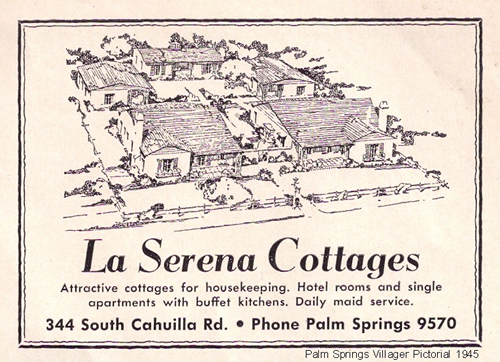
La Serena Villas - 339 South Belardo Road SUCCESS

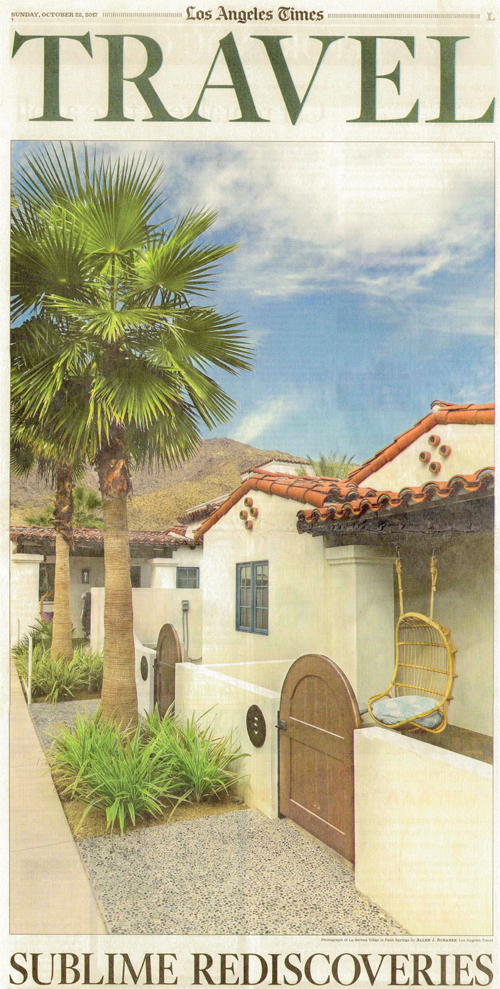
On October 22, 2017 La Serena Villas appeared on the front-page of the Los Angeles Times newspaper’s “Travel” section in an article entitled “Sublime Rediscoveries.”

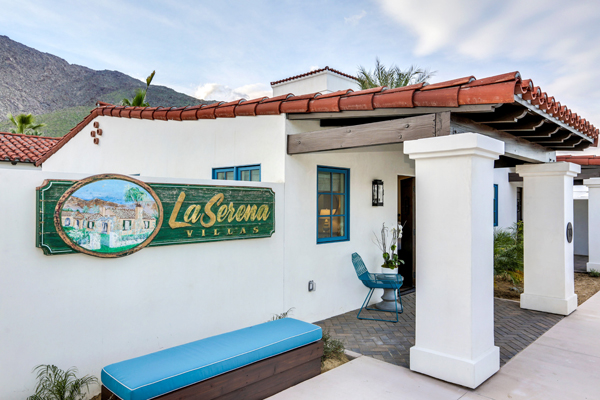
In October of 2017, La Serena Villas was featured as part of PSPF’s ongoing “THIS is Palm Springs” postcard series.

In 2016, after its purchase by a new preservation-minded owner, La Serena Villas was redeveloped into a luxury property with all the modern amenities of a 5-star hotel.

On March 14, 2014 the PSPF board of directors received a briefing from architect May Sung of SUBU Design, Pacific Palisades (currently representing the owners of La Serena Villas) regarding the proposed rehabilitation of the historic property.

On May 22, 2012 PSPF received an email from the general manager of the Del Marcos Hotel stating that the owners of the hotel had purchased the adjacent La Serena Villas with the intent of restoring the historic property.

On April 15, 2009 the city council voted 3-2 (Pougnet, Foat and Hutcheson supporting) to designate La Serena Villas a Class 1 Historic Site. PSPF board member Ron Marshall and Historic Tennis Club Neighborhood Organization chairman Frank Tysen made compelling public comment in support of the historic designation.

On April 14, 2009 the Historic Tennis Club Neighborhood Organization sent a letter to the city council supporting the historic designation of La Serena Villas. The HTCNO letter cited the PSPF-commissioned report by o2 Architecture. Also that day, PSPF board member Gary Johns’ Valley Voice column entitled “Save Neighborhood with Historic Designation’” was published by the Desert Sun newspaper. In his column, Johns chastises the owners of various important properties in the historic Tennis Club neighborhood (including La Serena Villas) concluding that “our community has been taken advantage of by developers and their failed promises long enough.” To read the Op Ed piece click here.

On April 8, 2009 PSPF sent a letter to the mayor asserting that it was abundantly clear that the only “sure path to the eventual restoration of La Serena Villas is the Class 1 historic designation of that property.” The letter also enclosed an assessment of the restorability of La Serena Villas by local architect Lance O’Donnell (principal, o2 Architecture).  Read the PSPF Letter

BACKGROUND

On December 16, 2008 the Palm Springs city council received a letter from a Los Angeles law firm representing the owners of La Serena Villas that claimed that a historic resources assessment “prepared by LSA Associates at our request…concludes that under current conditions the Structures do not qualify for Class 1 historic designation.” PSPF’s review of the LSA Associates assessment found numerous shortcomings in the report.

In 2004, the owners of La Serena Villas were granted permission to renovate the .9 acre property located at 339 South Belardo Road consisting of 11 Spanish Eclectic-style bungalows (27 units in total). Work was started but never completed as funding for the project eventually evaporated. In May 2008, the owners filed an application to demolish the hotel in response to complaints that the property had become a health and safety hazard. A stay of demolition was issued by the city council in July 2008 and in November 2008 the city’s Historic Site Preservation Board (HSPB) recommended Class 1 Historic Site designation. Unfortunately, the city staff ignored the direction of the HSPB because at the April 15, 2009 city council meeting the city planning staff unilaterally chose to recommend an anemic Class 2 Historic Site designation (which only creates a written and photographic record and would have allowed the demolition of the bungalows to proceed).

179LaSerenaLarsV
TravelNewsPaper
serena_villas

IN THE MEDIA

April 17, 2009, Desert Sun (La Serena Villas)

Categories
Successes and Setbacks

Kocher-Samson Building

Kocher-Samson Building - 766 North Palm Canyon Drive SUCCESS

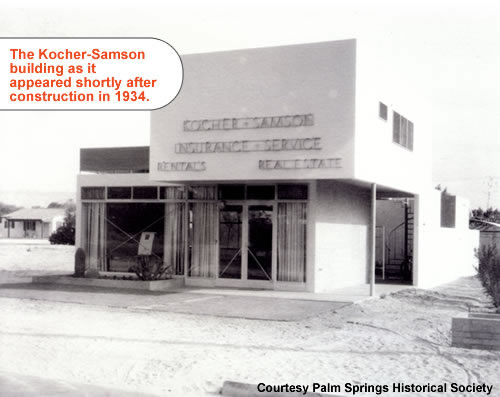
The Kocher-Samson Building (1934), designed by architects Albert Frey and A. Lawrence Kocher, is considered Palm Springs’ first modernist international-style building. The client, Dr. Jacob John Kocher, was an early physician in Palm Springs and the brother of A. Lawrence Kocher. In October of 1935, photographs of the Kocher-Samson Building were shown at the Museum of Modern Art’s exhibition Modern Architecture in California in New York City.

REFERENCES

On July 11, 2012 the Palm Springs city council unanimously approved the Class 1 historic site designation of the Kocher-Samson Building. During public comment PSPF board member Erik Rosenow opined that “the historic designation of this important modernist building is arguably long overdue,” a sentiment later echoed by a city council member.

On April 10, 2012 the city’s Historic Site Preservation Board voted 5-0 recommending that the city council designate the Kocher-Samson Building a Class 1 historic site. PSPF board members Patrick McGrew (who authored the scholarly nomination) and Ron Marshall made public comment in enthusiastic support of the nomination. The HSPB’s recommendation included the entire site in the scope of the nomination.

Background

On September 22, 2008 PSPF President Ron Marshall made public comment before the Palm Springs Architectural Advisory Committee (AAC) regarding a proposed unsympathetic addition to the historic Kocher-Samson building. The AAC voted unanimously to send the proposed addition back for “restudy” and recommended that the owner of the building consider restoring the historic property.  Read the PSPF Comments

The Class 1 Historic Site nomination of the Kocher-Samson Building was submitted in February 2008 by architect Patrick McGrew. The HSPB inexplicably held the nomination in abeyance and then deleted the building from its 2008-2009 priorities list because, according to the HSPB chair, the owner “does not desire to pursue designation at this time.”

samson2
Categories
Successes and Setbacks

Kenaston Residence

Kenaston Residence - 39767 Desert Sun Drive, Rancho Mirage, CA 92270 SUCCESS

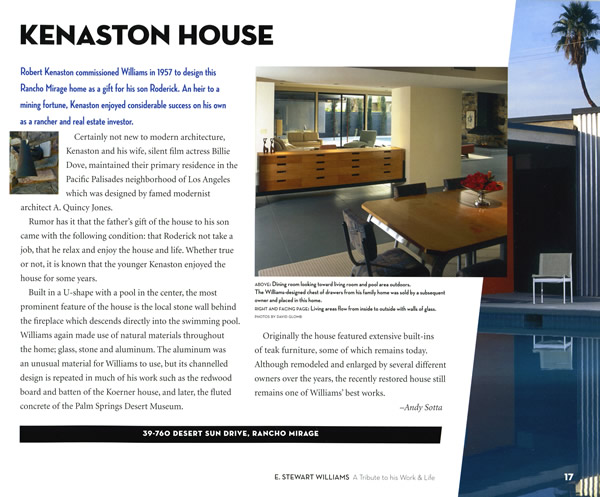
On September 9, 2012 PSPF board member Vincent Williams reported to the PSPF board that he viewed the proposed street-widening project as having a relatively “minimal impact” on the Kenaston Residence’s site and recommended that PSPF not oppose the project. The Kenaston Residence advocacy was initiated by PSPF due to concerns that a street-widening project could have a negative impact on the historic Kenaston Residence. More importantly, PSPF was concerned that the city of Rancho Mirage had failed to have the city’s Historic Resources Commission review the project. The advocacy was viewed as a success insofar as the city council did delay (i.e., “continue”) the matter until the Historic Resources Commission provided an assessment of the impact of the project. On August 14, 2012 PSPF board member Vincent Williams attended the Rancho Mirage Historic Resources Commission meeting. The meeting included an official site visit by the commissioners to the area around the Kenaston Residence most affected by the city’s street-widening project. After carefully reviewing the proposed construction plans, there seemed to be general consensus among the commissioners (and Williams) that the impact of the proposed project would be minimal. At the June 21, 2012 Rancho Mirage city council meeting PSPF board member Ron Marshall asked the council to delay a decision on the project to give the city’s Historic Resources Commission time to assess the impact the street widening project may have on the modernist residence. A street-widening project on Kaye Ballard Lane and Desert Sun Ranch Street in Rancho Mirage threatens to impact the street frontage and impact the site of the historic Kenaston Residence (E. Stewart Williams, 1957). The Kenaston Residence is prominently featured in PSPF’s 2005 tribute journal E. Stewart Williams: A Tribute to His Work and Life.
kenaston

IN THE MEDIA

Desert Sun, June 22, 2012 (Kenaston Residence)

Categories
Successes and Setbacks

Palm Springs City Hall

Palm Springs City Hall - 3200 East Tahquitz Canyon Way SUCCESS

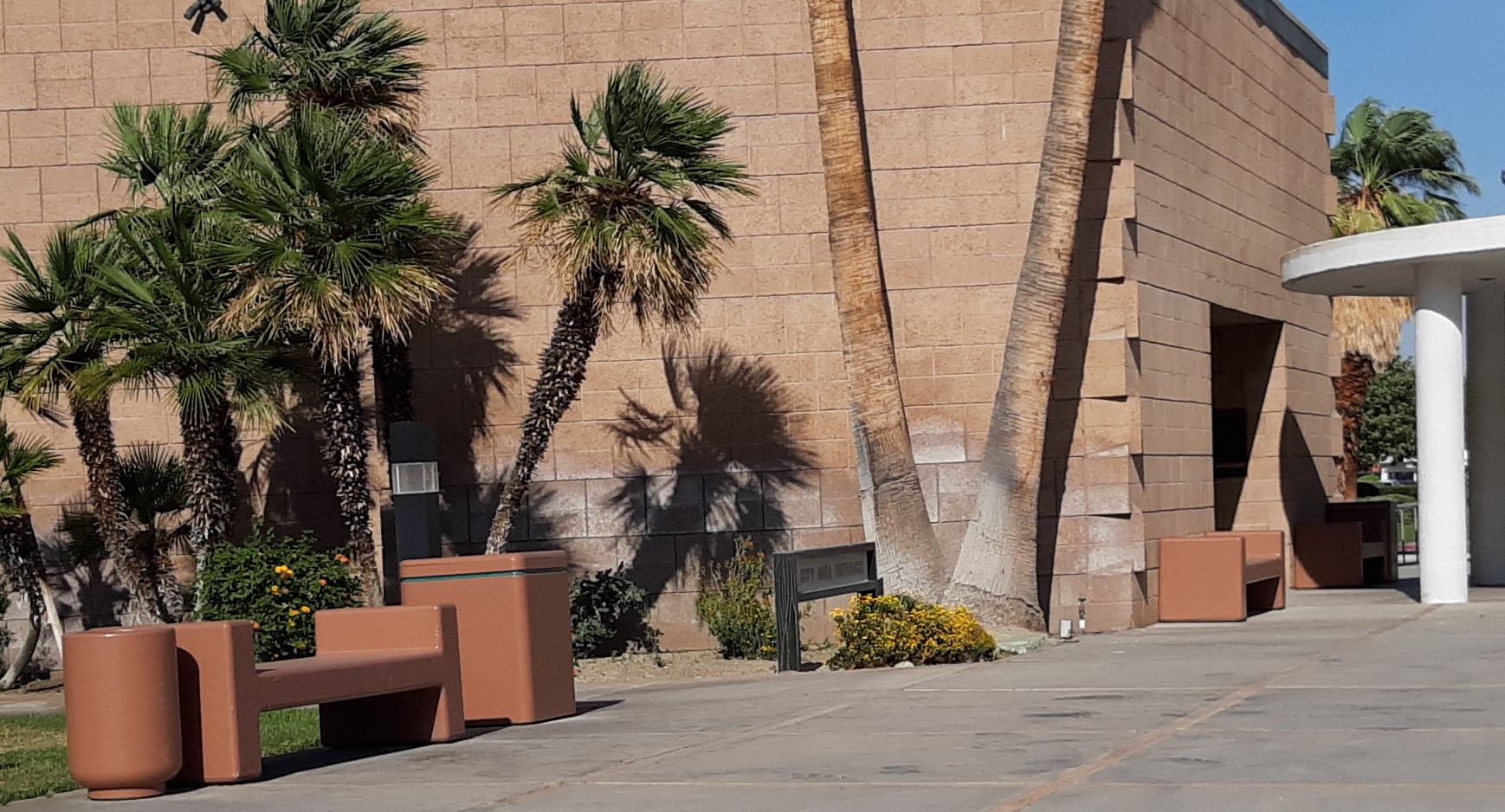
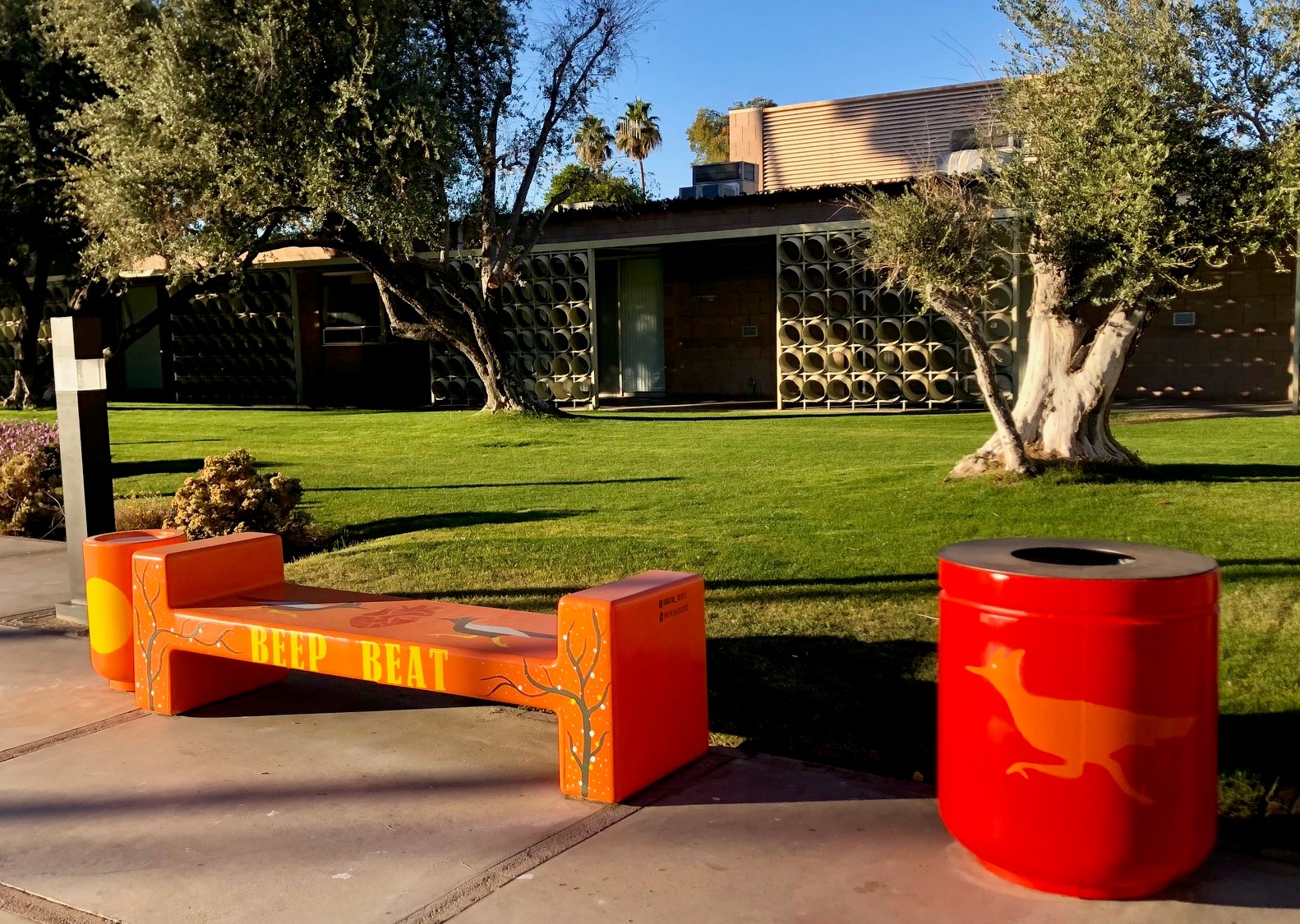
On April 24, 2021 PSPF was informed that the benches and trash receptacles in front of Palm Springs city hall had been restored to their original (brown) color.

In a January 25, 2021 letter response, Public Arts Commission Chair Ann Sheffer stated “I realize that somewhat different criteria apply to the benches at City Hall — and I certainly agree that we should have raised the issue with HSPB….This was clearly a lack of communication on our part, and I apologize for not contacting them…” To read the Public Arts Commission letter click here.

On January 13, 2021 PSPF sent a letter to the Palm Springs city manager objecting to the recent “temporary” installation of public art on the benches and trash receptacles at the Palm Springs city hall. The letter opined that, “These are utilitarian objects and to decorate them is a visual distraction, especially to a building lauded for its sublime architecture.” The letter reminded the city that PSPF had “fought a lengthy advocacy battle” to have the entire site designated as historic, not just the city hall building. PSPF’s letter also objected to the apparent procedural error which occurred when the city failed to have the art installation reviewed by the city’s Historic Site Preservation Board. To read the letter click here.

On March 7, 2012 the Palm Springs city council voted 4-1 (Lewin, Foat, Hutcheson and Pougnet supporting) to adopt Resolution No. 23106 which “amended” the historic site designation of the city hall site to “end at the curb of the North end of the rear City Hall parking lot, so not to include the dog park, the Co-Gen facility and landscape area, and the El Cielo Road right-of-way and to exclude all City Hall landscaping from the historic site designation.” This decision was a noteworthy preservation victory as it resolved a long-standing debate about the scope of Resolution 18907 which originally designated city hall as a Class 1 historic site. The amendment clarifies that the site designation includes the entire parking lot (which PSPF has always contended is an important component of the site). This decision now requires that proposed changes to the city hall site, and not just the building, undergo review by the city’s Historic Site Preservation Board.

On February 15, 2012 PSPF board members Gary Johns and Ron Marshall made public comment regarding a proposed amendment to Resolution 18907 that would “re-designate” (and narrowly define) the city hall site. Both Johns and Marshall argued that recent staff interpretations of Resolution 18907 were not only flawed but motivated by a desire to “paper over” an administrative error made when the city hall parking lot reconfiguration was not sent to the city’s Historic Site Preservation Board (a view held by the city’s own Planning Commission). Also making compelling public comment were Chris Menrad of PSModCom and PSPF members Robert Stone and Barbara Marshall.

On September 8, 2010 the city’s planning commission voted unanimously 5-0 (with 1 absent and 1 abstention) to uphold the appeal of six citizens (including PSPF board member Gary Johns) who had asked the commission to overturn the planning director’s approval of “MAA 3.3377,” an unnecessary and historically damaging plan to reconfigure the city hall parking lot and site. PSPF President Ron Marshall and board member Gary Johns, along with PSModCom board members and other concerned citizens, made compelling public comment.

On August 23, 2010 PSPF sent a letter to the Chair of the city’s Planning Commission detailing recently uncovered information that identifies famous modernist landscape designer Garrett Eckbo as having been involved with an early landscape design of the city hall site. To read the letter click here

On July 13, 2010 the appeal to the planning commission on the city hall parking lot reconfiguration issue was re-scheduled to September 8, 2010.

On June 8, 2010 representatives from both PSPF and PSModCom met with staff members of the city’s engineering department to discuss a proposed redesign of the city hall parking lot. While the redesign addressed some of the more egregious issues previously raised (like cars directly blocking sightlines to the city hall), the proposed redesign still significantly alters the “historic hardscape” of the site. PSPF and PSModCom representatives repeatedly stressed the importance of keeping the city hall site intact.

On March 10, 2010 at the hearing of an appeal to the Planning Commission (submitted by PSPF board member Gary Johns and other concerned citizens) the city’s Director of Planning Services informed the commission that the city had decided to explore a “redesign” of the proposed parking lot reconfiguration that might eliminate the objectionable proposed parking spaces blocking the front of City Hall. It is hoped that any redesign will mirror the current parking lot layout.

On February 11, 2010 PSPF and the Palm Springs Modern Committee (PSModCom) produced a joint informational flier on the city hall parking lot reconfiguration issue. The flier was distributed during Modernism Week (February 12-21). To read the flier click here.

On February 9, 2010 the city’s Historic Site Preservation Board (HSPB) finally discussed PSPF’s August 2009 letter. The HSPB then unanimously voted to have city staff prepare a recommendation to the city council to declare the city hall an historic site (not just an historic building). The board then issued a stay of demolition for 90 days (with a potential extension of another 90 days) for the city hall site to include the parking lot.

On February 8, 2010 a group of concerned citizens (including PSPF board member Gary Johns) submitted a letter to the Planning Commission appealing the city’s January 25, 2010 decision (Case No. 3.3377-MAA) to proceed with the ill-advised parking lot reconfiguration. The appeal notes that, (1) an important historic and architectural resource (city hall) is impacted, that (2) the proposed project is poorly designed, and that (3) the project is fiscally unsound. The appeal letter also emphasizes that the proposed project’s more praiseworthy sustainability aims (e.g., a sustainability demonstration garden) can be easily achieved without negatively affecting the city hall site.

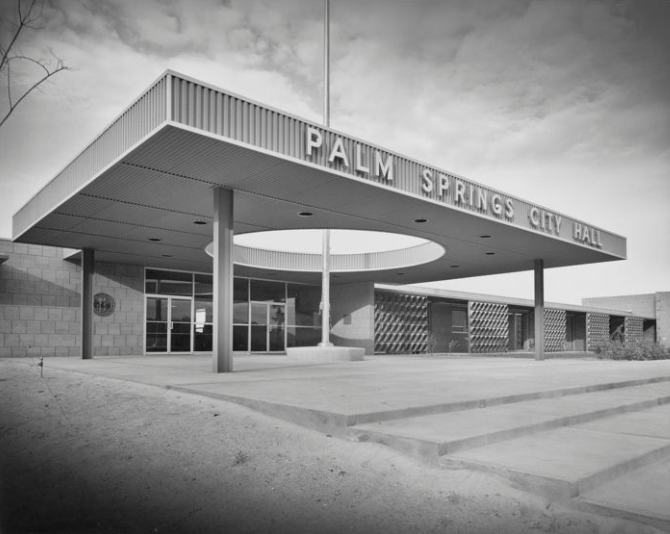
On August 23, 2009, PSPF sent a letter to Mayor Pougnet strongly objecting to a proposal to reconfigure the parking lot of the Palm Springs City Hall. The City Hall designed by Clark, Frey & Chambers (1952) is one of the icons of the city’s modernist architecture. The proposed reconfiguration blocks sight lines that have been in place for more than fifty years and trades a view of great architecture for a line of unsightly car grills. Please take a moment to read the PSPF letter to Mayor Pougnet for a more detailed explanation of the issue.

Continue Reading

© J. Paul Getty Trust. Getty Research Institute, Los Angeles (2004.R.10)
Courtesy Dick Burkett
Courtesy Brad Dunning

IN THE MEDIA

September 9, 2010, Desert Sun (City Hall Parking Reconfiguration)
March 2010, RPPN Bulletin (City Hall Parking Reconfiguration)
February 17, 2010, Desert Sun (City Hall Parking Reconfiguration)
February 16, 2010, Desert Sun (City Hall Parking Reconfiguration)
September 9, 2009, Desert Sun (City Hall Parking Reconfiguration)
September 8, 2009, Desert Sun (City Hall Parking Reconfiguration)
August 30, 2009, Desert Sun (City Hall Parking Reconfiguration)

Categories
Successes and Setbacks

Welwood Murray Memorial Library

Welwood Murray Memorial Library - 100 South Palm Canyon Drive SUCCESS

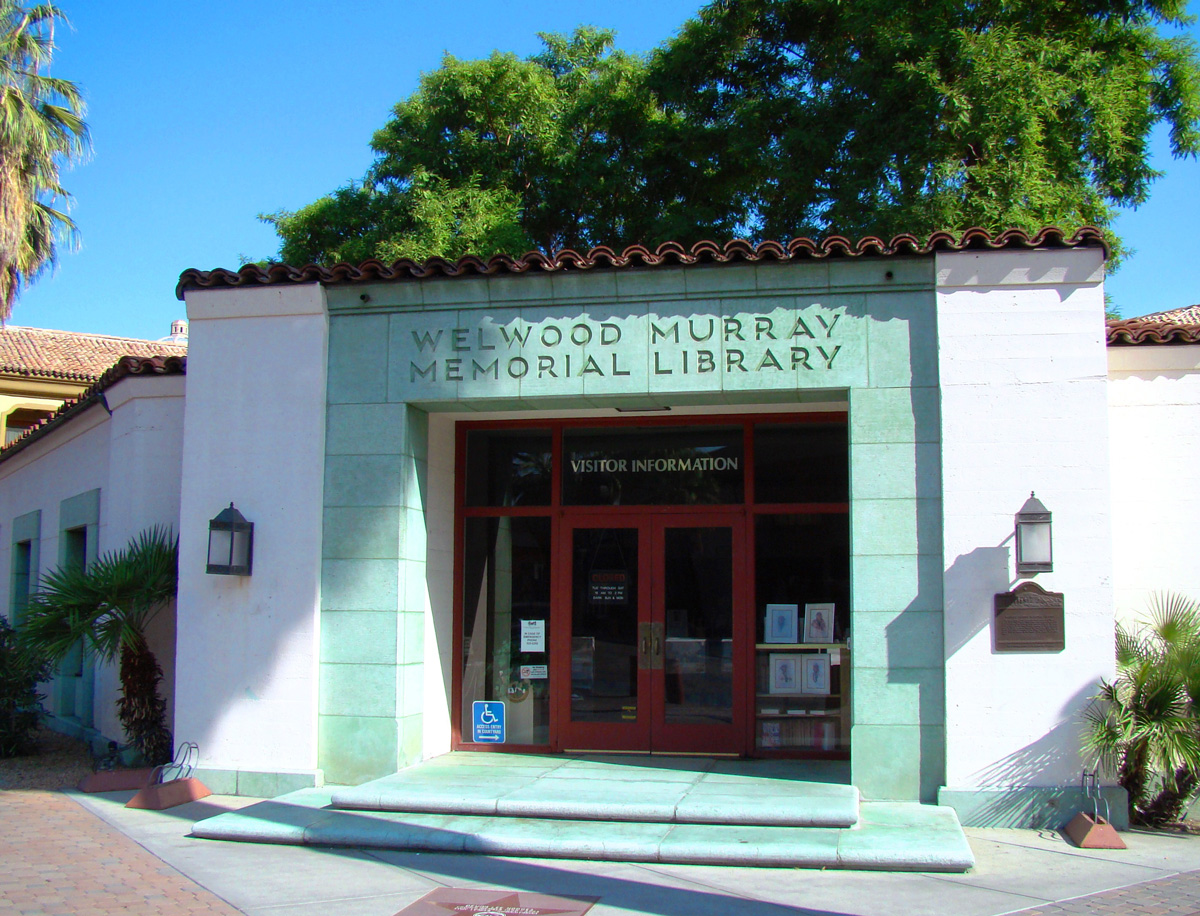
Designed by John Porter Clark, the city’s first resident architect, and constructed by local builder Charles Chamberlin, the library was completed in 1940. Designated a Class 1 Historic Site in 1984, the library’s green concrete trim and clean modern lines have made the downtown building a community favorite for decades. The library was named after George Welwood Murray who, along with Cornelia White, gift-deeded the property to the city in 1938.

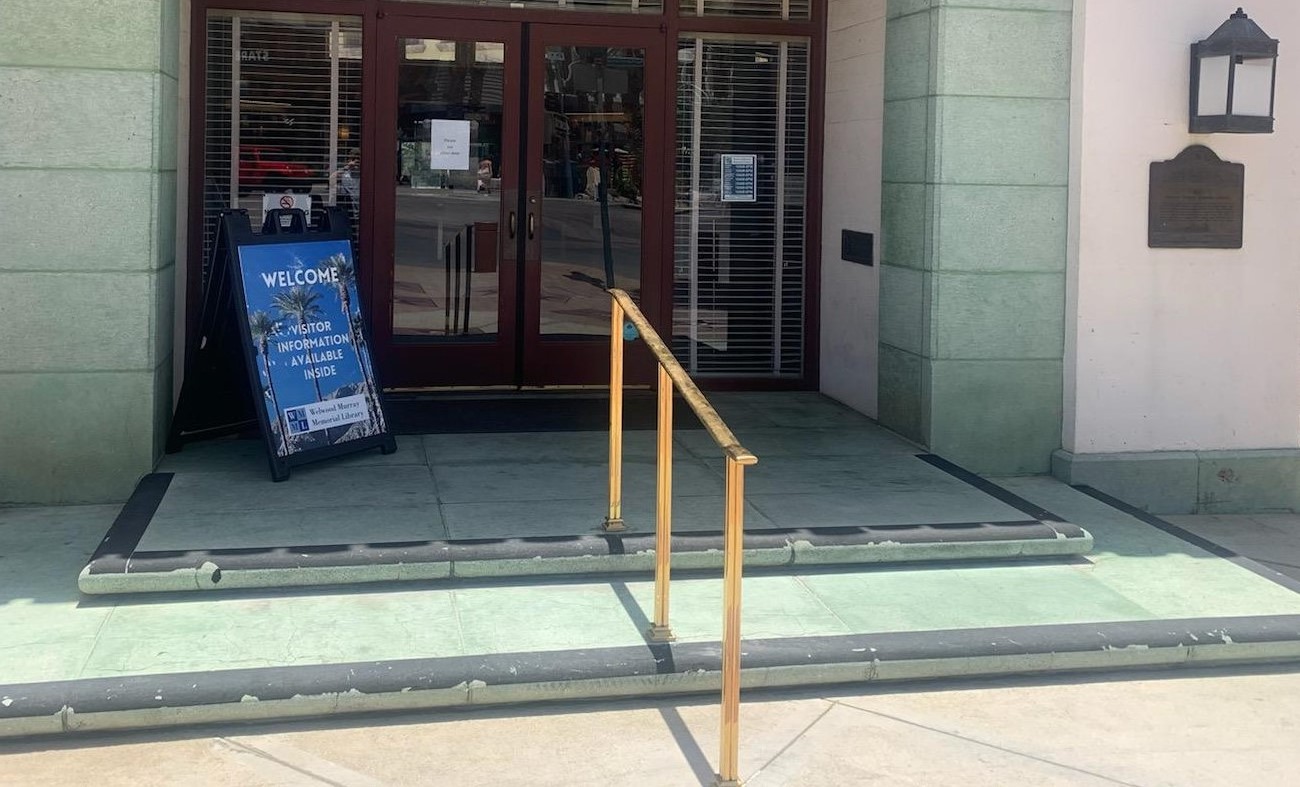
On June 22, 2022 concerns were raised about the installation of an unsympathetic handrail at the entrance to the library. Notably, the installation had not been coordinated with the city’s Historic Site Preservation Board.

On February 17, 2015 a grand re-opening event was held in celebration of returning the Welwood Murray Memorial Library to its life as a public building in downtown Palm Springs.

On October 24, 2014 the Desert Sun reported that “a divided library board of trustees narrowly approved a proposal to allow a bar and restaurant operation to encroach into the rear patio of the Welwood Murray Memorial Library.” However, the ensuing community furor over the board’s decision both public and private effectively halted the ill-advised proposal.

On October 21, 2014 PSPF sent a letter to the city of Palm Springs strenuously objecting to a proposal to extend a restaurant-bar from Plaza Las Flores into the Welwood Murray Memorial Library site. In the letter, PSPF stated “we have watched with interest the recent proposal to extend a bar-restaurant from Plaza Las Flores into the WMML [and]…expected that the city’s normal administrative processes would reject this ill-advised proposal….Unfortunately, it was revealed at the [HSPB] meeting on Tuesday, October 14th that the city appears to be circumventing its own normal processes.” The PSPF letter also opined, “We fail to understand why this proposal was not rejected outright; certainly there is compelling legal precedent to do so,” and cited the legal precedent of Save the Welwood Murray Memorial Library Committee v. City Council, 215 Cal.App.3d 1004(1989). To read the entire PSPF letter click here.

On May 21, 2014 in a mixed result, the Palm Springs city council voted 4-1 (Pougnet, Lewin, Hutcheson and Mills supporting) to ignore all but one of the Historic Site Preservation Board’s (HSPB) recommendations intended to improve the authenticity of the Welwood Murray Memorial Library’s interior design. Fortunately, the city council did support the HSPB’s most important recommendation which removed the non-historic and arbitrary “circle-in-square” motif that was to be integrated throughout the library’s design. Making public comment on the issue, PSPF board member Gary Johns opined that the recommendations were important to maintain the “sense of place” of the historic library. A stream of emails from the PSPF membership did much to convince the city council to critically evaluate the interior design which had been characterized as a “done deal.”

On May 19, 2014 PSPF sent a letter to the mayor of Palm Springs asking that the city council uphold the recommendations made by the HSPB which were intended to improve the proposed interior design of the WMML. In the letter PSPF opined that the conditions levied by the HSPB were “reasonable and thoughtful” and should not delay the progress of the library’s rehabilitation. Furthermore, PSPF stated that “the (HSPB’s) recommendations speak directly to the importance of the authenticity of the library’s original (interior) design.” To read the PSPF letter click here.

On May 13, 2014 the city’s HSPB met and made seven recommendations to improve the city’s plan for the interior rehabilitation of the WMML. Later that day, in an unfortunate development, an appeal was filed by a city councilmember asking that the “conditions” levied by the HSPB be over-turned by the city council.

On May 7, 2014 PSPF sent a letter to the city’s Historic Site Preservation Board voicing the foundation’s growing concerns about “the authenticity of some of the (library’s proposed) interior design elements” and reminding the board that the library’s “original design” was “clean and unornamented.” To read the PSPF letter click here.

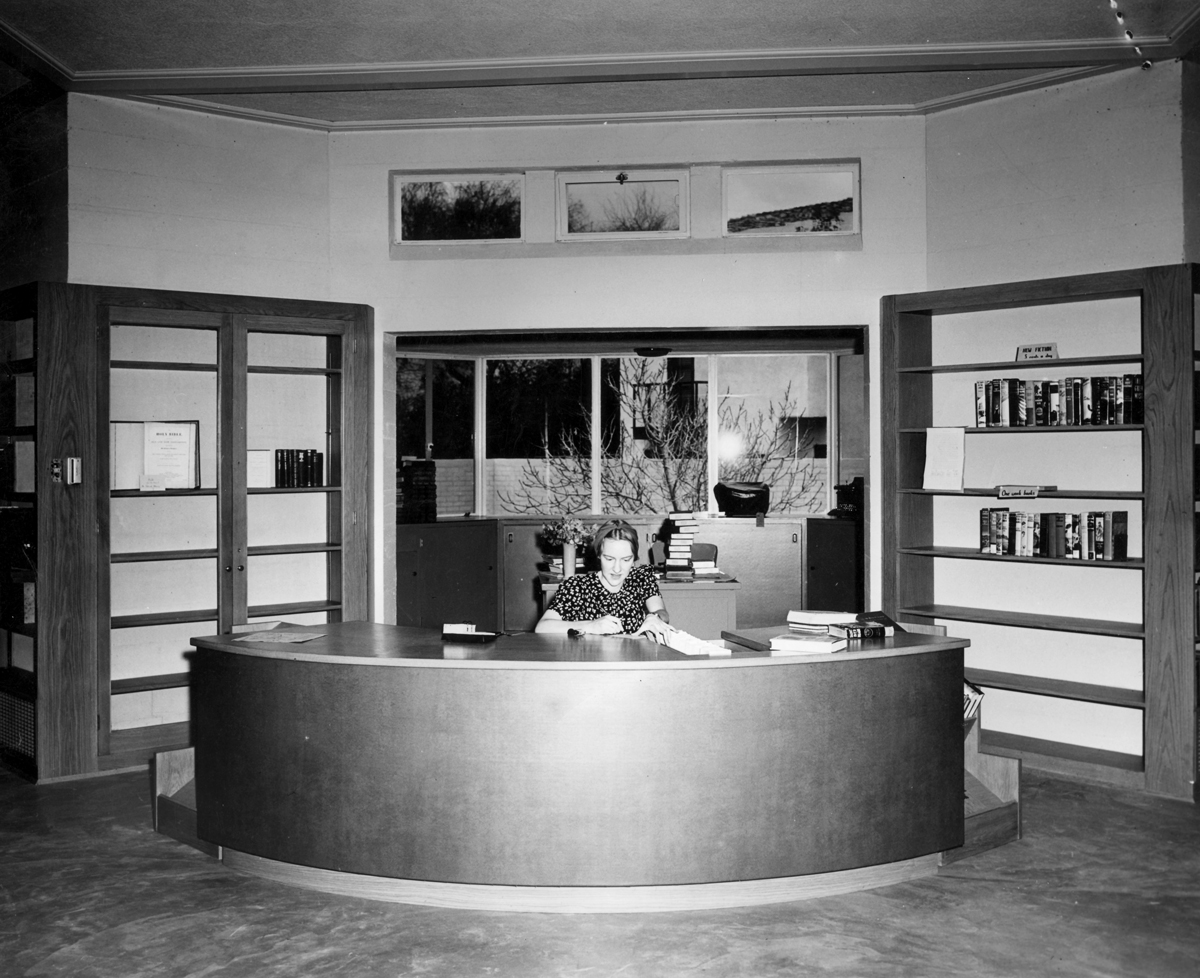
At the February 1, 2013 PSPF board of director’s meeting, PSPF board member Jim Harlan volunteered to prepare preliminary drawings of the historic library’s lost circulation desk. A recent site survey of the library determined that there were still outlines (“ghosting”) of the original desk remaining. This information, in conjunction with historic photographs, will allow for a faithful reconstruction of this important interior element.

On November 7, 2012 the Palm Springs city council voted unanimously (5-0) to support the proposed space plan for the Welwood Murray Memorial Library and to proceed with the “final design and bid document development.” PSPF’s offer to financially assist with the reconstruction of the historic library’s original circulation desk was commended by several speakers.

On November 6, 2012 PSPF board member Ron Duby made public comment before the city’s Historic Site Preservation Board lauding the city’s plans for the rehabilitation of the Welwood Murray Memorial Library and reiterating PSPF’s offer to financially support the reconstruction of the library’s original circulation desk (see vintage photograph of the desk below). The HSPB voted to support the city’s proposed plans for use of the library’s interior uses and endorsed PSPF’s desire to have the original circulation desk reconstructed.

On November 3, 2012 PSPF sent a letter to the city’s Director of Planning Services concerning the proposed interior plans for the Welwood Murray Memorial Library. PSPF applauded the planned uses for the library and offered financial support for the reconstruction of the library’s lost circulation desk (pictured below). To read the PSPF letter click here.

On May 2, 2012 the Palm Springs city council voted unanimously to fund the renovation of the Welwood Murray Memorial Library “and Gift Shop.” The Desert Sun newspaper reported that the general building improvements are projected to cost $650,000 and that those monies had already been set aside. While the details of the renovation still need to be reviewed by the Historic Site Preservation Board, the current proposal appears to a sympathetic rehabilitation of the historic library.

On January 12, 2012 the Palm Springs Library Board of Trustees and the city council subcommittee (Chris Mills and Paul Lewin) charged with the rehabilitation of the Welwood Murray Memorial Library met in open session. PSPF board members Patrick McGrew, Ron Duby and Ron Marshall made public comment that stressed the importance of maintaining the historical integrity of the library’s interior and encouraged the library trustees to explore novel ways of engaging locals and tourists alike with programs that emphasized the architecture and history of the city. Comments made by council member Mills and city manager David Ready were very encouraging insofar as there seemed to be a general consensus that the interior of the library needed to be treated in a sensitive manner with due consideration given to its historical importance.

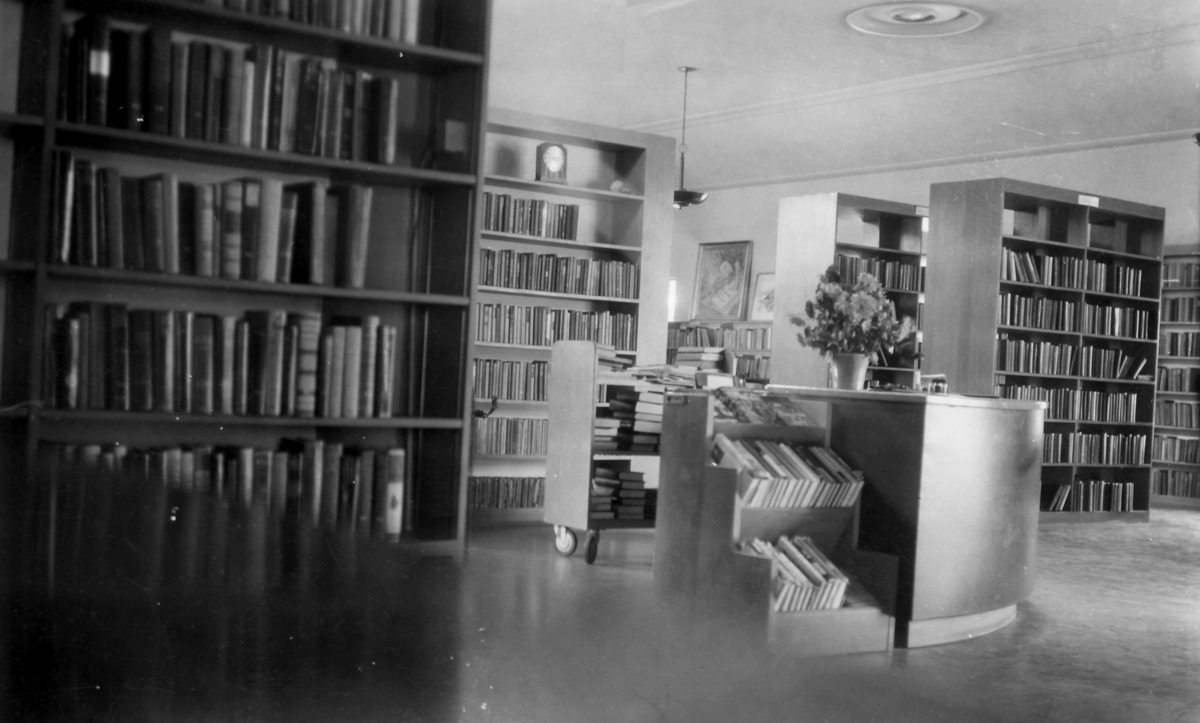
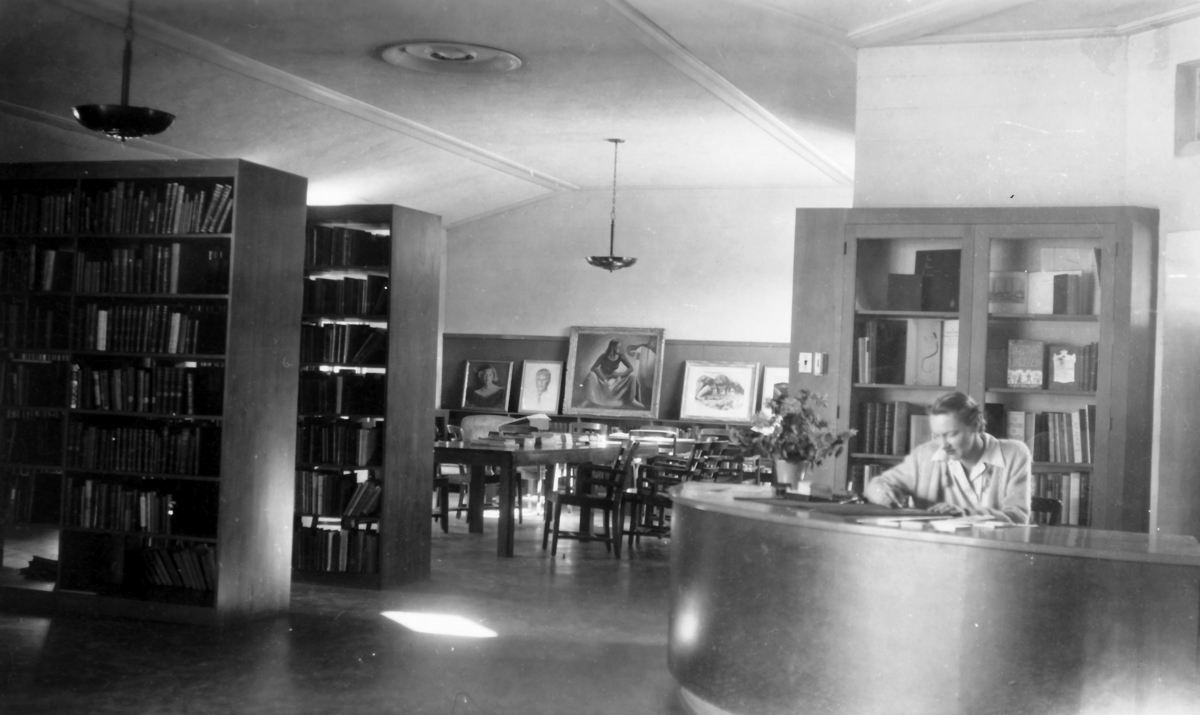
On January 4, 2012 the city council met to discuss the Welwood Murray Memorial Library renovation. There seemed to be consensus that the library shelving should be retained pending a better understanding of the library program and that preserving the shelving was important to maintaining the “atmosphere” of the 1940 library.

On December 30, 2011 PSPF sent a letter to Mayor Pougnet applauding the city’s “most recent proposals” for the rehabilitation of the Welwood Murray Memorial Library and the plan to house the city’s local history book collection, provide for “rotating exhibits” by the historical society and local museums and offer some tourism services. However, PSPF asked that the current plans be modified to reconstruct important elements of the original interior (e.g., the central desk) and retain as much of the book shelving as possible. PSPF asserts that by retaining the book shelving the city could “achieve much lower costs compared to the proposed interior design/build approach,” preserve the historical accuracy and “sense of space” of the interior and “reuse existing materials in a sustainable manner.” To read the PSPF letter click here.

At their September 13, 2011 meeting the Historic Site Preservation Board was asked to review minor adjustments to the Welwood Murray Memorial Library that would make the rear access of the historic building ADA-compliant. Importantly, the drawing accompanying this request seems to confirm that the city is pursuing a rehabilitation of the library within its historic footprint.

At the August 9, 2011 meeting of the Historic Site Preservation Board the city’s Director of Planning Services announced that the city had “withdrawn its architectural approval application” for the proposed unsympathetic remodel of the Welwood Murray Memorial Library and implied that the city was considering a rehabilitation of the library in its current historical configuration.

On June 20, 2011 the city’s Architectural Advisory Committee voted 6-0 (with one recusal) to recommend that the Director of Planning deny the proposed redesign of the Welwood Murray Memorial Library. In explaining their unanimous denial of the project, the committee members stated that they found the redesign fundamentally “damaging” to the historic library. PSPF board members Marshall and McGrew made public comment asking the committee to deny the project in favor of a more sensitive restoration.

In an unfortunate setback, on June 14, 2011 the city’s Historic Site Preservation Board voted 4-2 to grant a certificate of approval for the “glass box” addition to the library. PSPF board members Rosenow and McGrew made public comment expressing their disappointment with the new design

On June 6, 2011 the city’s Architectural Advisory Committee voted to have the city restudy the new design for the library. During the public comment portion of the hearing PSPF board members Marshall and McGrew expressed their disappointment with the new design which, again, removes significant historic fabric from the building for a “glass box” addition.

On April 20, 2011 the Palm Springs city council endorsed (4-1) a redesign of the Welwood Murray Memorial Library (the redesign appears to largely stay within the historic footprint of the library). Few details regarding the extent of the interior restoration were revealed. The city council decision means this new design proposal will now be reviewed by various city boards and commissions.

Winter 2010 Update

On November 17, 2010 in a 3-2 vote (Pougnet, Foat and Hutcheson supporting), the Palm Springs city council upheld the decision of the Historic Site Preservation Board to deny the Certificate of Approval for the proposed remodel of the Welwood Murray Memorial Library. After a long and exhaustive discussion by the city council, it was ultimately decided that the project architect would be directed to “redesign” the project based on council guidance to be provided by the end of November.

On hand for the November 17th hearing was a wide cross-section of the community (including Phillips Welwood Murray) who asked the city to use the library building in a manner that takes full advantage of its historic character. Many speakers also emphasized the importance of the library building’s “authenticity” and one speaker asserted that “adaptive reuse” should never masquerade as “unnecessary abuse.” A happy result of PSPF’s advocacy has been the emergence of a community-wide discussion about the library’s highest and best uses.

On November 5, 2010 PSPF asked the PSPF membership to contact the city (via the city clerk) to register their concerns about the ill-advised Welwood Murray Memorial Library remodel.

On November 4, 2010 the PSPF board of directors sent a letter to the Palm Springs mayor asking him to “uphold the recent, and overwhelming, decision” by the city’s Historic Site Preservation Board “to deny the Certificate of Approval for the flawed and unnecessary remodeling,” of the Welwood Murray Memorial Library. To read the PSPF letter click here.

On November 3, 2010 in a disappointing development, PSPF confirmed that a Palm Springs city councilmember had appealed the HSPB’s thoughtful 5-to-1 decision to stop the flawed remodel of the Welwood Murray Memorial Library. The appeal is scheduled to be heard by the city council on Wednesday, November 17, 2010.

On October 12, 2010 the city’s Historic Site Preservation Board voted 5-1 (Strahl, Ploss, Cohen, DeLeeuw and B. Marshall supporting) to approve a motion to deny the Certificate of Approval request for an unsympathetic remodeling of the Welwood Murray Memorial Library. PSPF board members Ron Marshall and Gary Johns, and PSPF volunteers Ron Duby and Erik Rosenow, made thoughtful and extensive public comment at this critical hearing (1) objecting to the requested Certificate of Approval and, (2) strongly advocating the sensitive restoration of this important transitional modern building. To see a PSPF graphic illustrating the proposed demolition plan click here.

On October 11, 2010 the city’s Architectural Advisory Committee voted 3-0 (with one abstention and three recusals) to recommend denial of the proposal to insensitively remodel the Welwood Murray Memorial Library. PSPF board members and PSPF volunteers voiced their serious concerns about the proposal.

Summer 2010 Update

On August 16, 2010 PSPF received a letter from Phillips Welwood Murray (a descendant of Dr. Welwood Murray) applauding PSPF’s advocacy on the Welwood Murray Memorial Library project. In his letter Mr. Murray asks the city leadership to pursue a “sensitive restoration” of the library and further asserts that such a course of action is the “smart thing to do.” To read Mr. Murray’s letter click here. On August 22, 2010 PSPF received a letter from Sara S. J. James (great-great-granddaughter of Welwood Murray) concerning the Welwood Murray Memorial Library project. In her letter Ms. James tells the city leadership she is “concerned and alarmed” about the proposed project and further states the project “would fundamentally and negatively impact the architecture of the building.” Ms. James also asks the city to support PSPF’s efforts to achieve a sensitive restoration.  To read Ms. James’ letter click here.

On August 10, 2010 at the city’s Historic Site Preservation Board meeting, the director of planning services announced that the “applicant” (i.e., the city) would be re-submitting the Welwood Murray Memorial Library (WMML) project to the Architectural Advisory Committee (AAC) on September 7, 2010 (with review by the Historic Site Preservation Board on September 14th) as a “new” application. Further, it appears that the previously submitted WMML project will be held in abeyance. The details of the new project may not be known until the September AAC meeting.

On August 9, 2010 PSPF sent a letter to the Palm Springs mayor and city council detailing the PSPF concerns raised at the August 4th meeting with the senior city staff.  Read the PSPS Letter

On August 4, 2010 PSPF board members Ron Marshall and Gary Johns met with the city manager, assistant city manager, city attorney, director of planning services and others to discuss the foundation’s many concerns regarding the Welwood Murray Memorial Library project. The meeting was cordial and there was a frank and wide-ranging exchange of views regarding the project. In addition to the concerns raised, the PSPF board members emphasized their view that a unique opportunity is available to the city to do a first-rate and sensitive restoration of the library.

At the July 13, 2010 meeting of the city’s Historic Site Preservation Board (HSPB) PSPF board members Gary Johns, Patrick McGrew and Ron Marshall made public comment regarding the Welwood Murray Memorial Library project. The remarks expressed alarm that the proposed project was not adhering to U.S. Secretary of Interior standards for the rehabilitation of historic buildings. Specific concerns were raised about the demolition of parts of the building (a Class1 historic site) and a new roof structure proposed to be attached to the original building. The PSPF board members emphasized that the city has a wonderful opportunity to do a first-class restoration of this architecturally and historically important building. PSPF board member McGrew also provided the HSPB with a written analysis that describes in detail how the current proposal fails to meet well-established preservation standards.

On July 8, 2010 PSPF board members Ron Marshall and Gary Johns met with the project architects (Escalante Architects) to discuss PSPF’s concerns about the proposed rehabilitation of the Welwood Murray Memorial Library. During the cordial meeting, PSPF emphasized the importance of following U.S. Secretary of Interior standards regarding the rehabilitation of historic properties.

Continue Reading

WMML-BMarshall-w
WMML handrail GJohns
Courtesy Palm Springs Historical Society

IN THE MEDIA

May 20, 2015, Desert Sun (Welwood Murray Memorial Library)
October 24, 2014, Desert Sun (Welwood Murray Memorial Library)
November 17, 2012, Desert Sun (Welwood Murray Memorial Library)
November 7, 2012, Desert Sun (Welwood Murray Memorial Library)
May 16, 2012, Desert Sun (Welwood Murray Memorial Library)
November 18, 2010, Desert Sun (Welwood Murray Memorial Library)
November 17, 2010, Desert Sun (Welwood Murray Memorial Library)
October 13, 2010, Desert Sun (Welwood Murray Memorial Library)