Categories
Historic Sites

Franz Alexander Residence

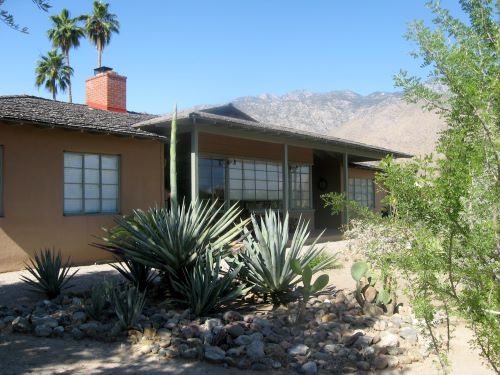
Dr. Franz Alexander Residence 1011 West Cielo Drive, Palm Springs, CA 92262

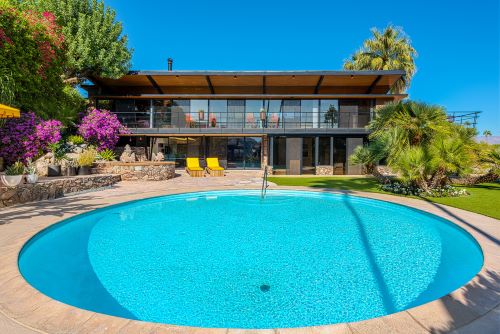
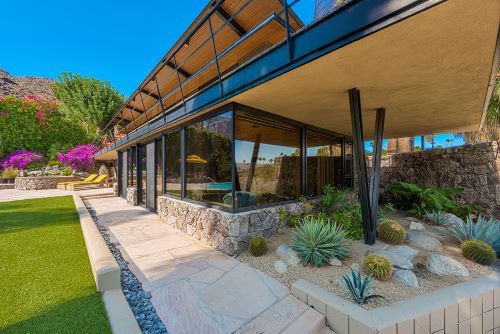
The Dr. Franz Alexander Residence was designed by famous modernist architect Walter S. White in 1956. Built by Rooth & Carr with structural engineering by Stanley E. Malora of Los Angeles, the house was designed as a desert retreat for internationally renowned psychoanalyst Dr. Franz Alexander and his wife, artist Anita Venier Alexander. White, who was also an industrial designer, inventor and builder, returned to the house almost thirty years later to design a sympathetic addition in 1984. In 2016, the home was added to the National Register of Historic Places whose application reads in part “designed in the Modern Style….the curling gesture of its roof, peeling away from the building’s boxy envelope, and the unusual steel framework that supports the roof and overall structure, are the dwelling’s primary and highly visible character defining features.”

REFERENCES

On November 12, 2020, the Palm Springs city council unanimously (5-0) approved the Class 1 Historic Resource designation of the Alexander Residence. PSPF board advisor and nomination author Steve Vaught made compelling public comment in support of the designation and Palm Springs mayor Geoff Kors complimented PSPF’s scholarly research.

On September 1, 2020 the city’s Historic Site Preservation Board voted unanimously (4-0) to recommend to city council approval of the Class 1 Historic Site designation of the Dr. Franz Alexander Residence. PSPF board advisor and nomination author Steve Vaught made public comment in support of the nomination.

On July 2, 2020 the Palm Springs Preservation Foundation (acting as agent for the owner) submitted the 70-page Class 1 Historic Resource nomination for the Dr. Franz Alexander Residence to the Palm Springs Historic Site Preservation Board.

In September of 2019, the Palm Springs Preservation Foundation board of directors assigned the task of writing the Class 1 Historic Resource nomination of the Dr. Franz Alexander Residence to PSPF board advisor Steve Vaught.
 

Franz Alexander Residence
Categories
Historic Sites

Haymond Residence

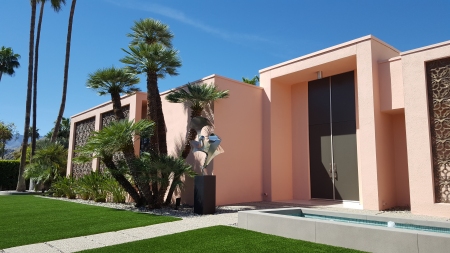
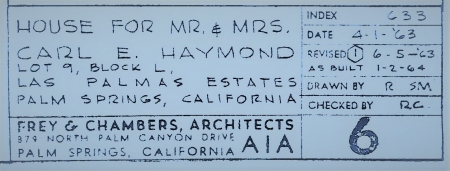
Mr. & Mrs. Carl E. Haymond Residence 1415 North Camino Centro, Palm Springs, CA 92262

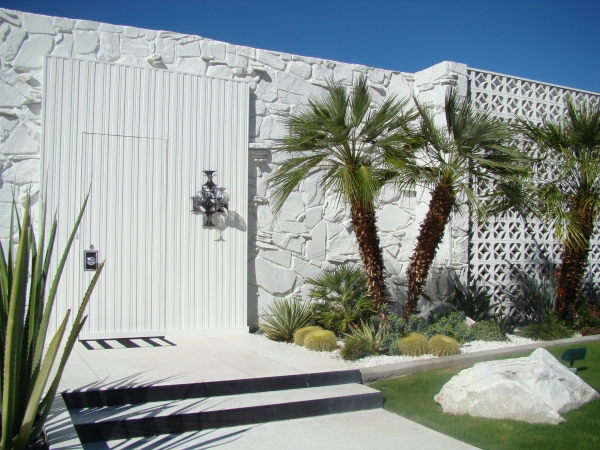
The Mr. & Mrs. Carl E. Haymond Residence was constructed in 1964 and designed by the architectural firm of Frey & Chambers. Carl Haymond was a prominent TV and radio station owner in the Pacific northwest, who fell in love with Palm Springs and eventually built his dream home in the Las Palmas Estates tract. The home’s most notable architectural feature is the use of cast aluminum grille units to screen out the desert sun. Designed by architect John deKoven Hill, over 170 of these decorative, but functional, grille units are used throughout the residence.

REFERENCES

On October 4, 2017 the Palm Springs city council unanimously approved (5-0) the Class 1 Historic Site designation of the Haymond residence. PSPF president Erik Rosenow made public comment in support of the nomination and the city’s mayor kindly lauded PSPF for yet another well-researched and interesting nomination.

On June 13, 2017 the city’s Historic Site Preservation Board voted unanimously to recommend to city council approval of the Class 1 Historic Site designation of the Haymond Residence.

On April 5, 2017, PSPF (acting as agent for the owner) submitted the 44-page Class 1 Historic Site nomination for the Mr. & Mrs. Carl E. Haymond Residence to the city’s Historic Site Preservation Board.

In March of 2017, the Palm Springs Preservation Foundation board of directors assigned the task of writing the Class 1 Historic Site nomination of the Mr. & Mrs. Carl E. Haymond Residence (1964, Frey & Chambers) to board members Ron & Barbara Marshall.

Haymond Residence
Haymond Residence
Categories
Historic Sites

Inspiration Point

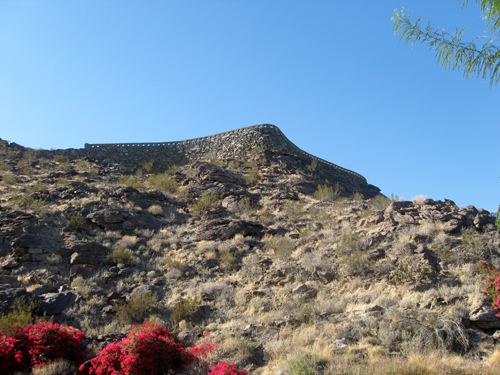
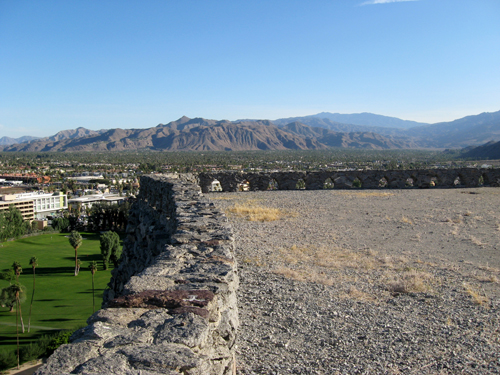
Inspiration Point (aka The Promontory) West Chino Drive, Palm Springs, CA 92262

Inspiration Point, also known as The Promontory, is one of the Coachella Valley’s most visible landmarks. Located on the lower slopes of Mount San Jacinto above the O’Donnell Golf Course, Inspiration Point was constructed between 1934-1935 and is a physical manifestation of the legacy of Thomas A. O’Donnell, one of the most significant figures in the history and development of Palm Springs.

On December 19, 2019 the Palm Springs city council voted unanimously (3-0) to approve the Class 1 Historic Resource designation of Inspiration Point. PSPF member Steven Vaught (the author of the nomination), PSPF board member Jan Harper, and PSPF honorary board member Hugh Kaptur, made public comment in support of the designation. A notable condition attached to the designation is that “the flat open space of the Promontory” is not included as a defining characteristic.

On December 16, 2019 PSPF sent a letter to the Palm Springs city council stating that, “It is our strong opinion that including the promontory platform in the designation is most beneficial to the community and the city. This opinion is consistent with the Historic Site Preservation Board’s recommendation.”

On April 9, 2019 the city’s Historic Site Preservation Board voted (4-2) to recommend to city council approval of the Class 1 Historic Site designation of Inspiration Point. PSPF board member Jan Harper and nomination author Steve Vaught made public comment in support of the nomination.

On December 13, 2018, PSPF submitted the 64-page Class 1 Historic Site nomination for Inspiration Point to the city of Palm Springs’ Historic Site Preservation Board.

In July of 2018, the PSPF board of directors assigned the task of writing Inspiration Point’s Class 1 Historic Site nomination to Steve Vaught.

Photo courtesy Steve Vaught

IN THE MEDIA

December 15, 2019, Desert Sun (Inspiration Point)

Categories
Historic Sites

J. Cheney Wells Residence

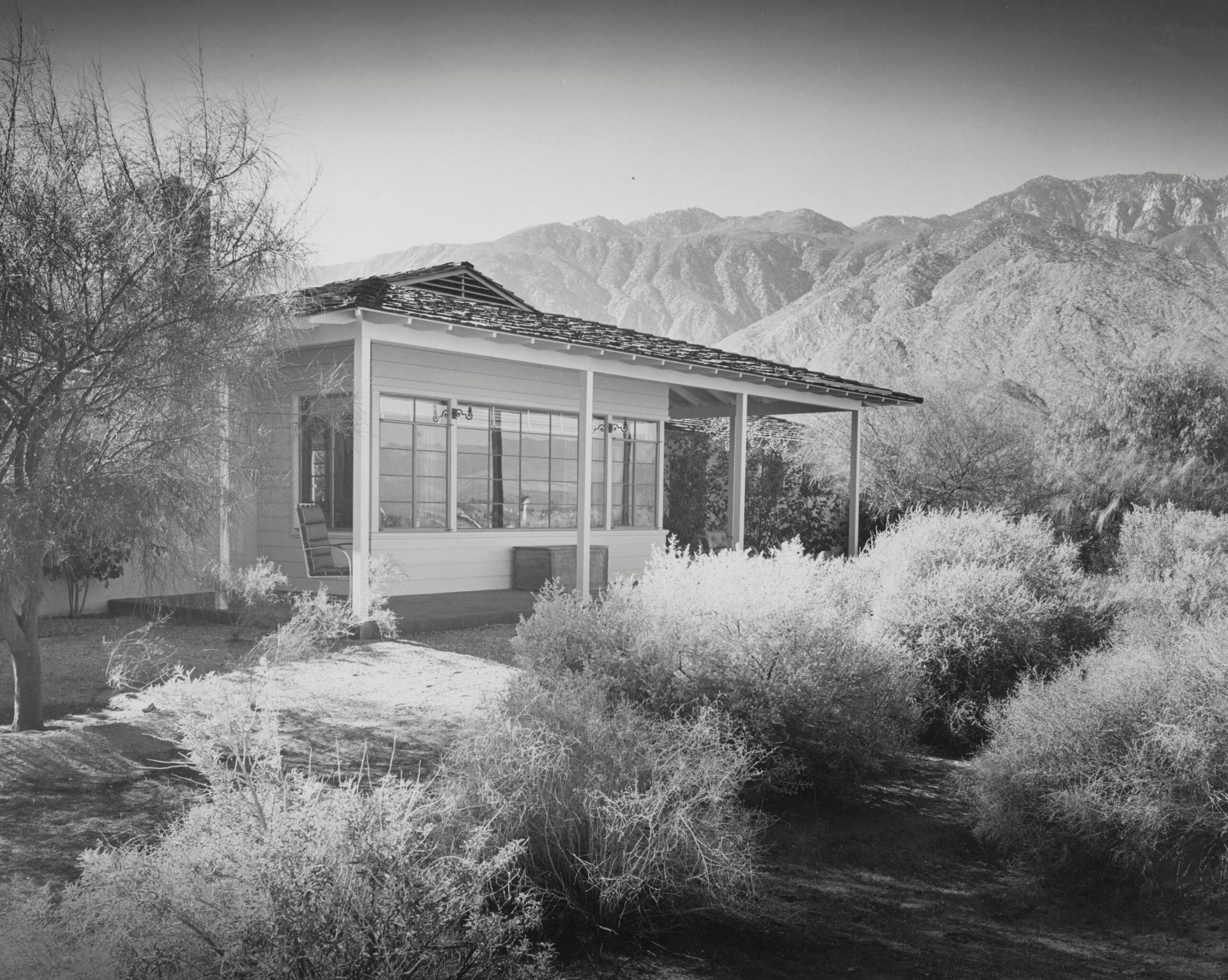
J. Cheney Wells Residence 1850 Smoke Tree Lane, Palm Springs, CA 92264

The J. Cheney Wells Residence was designed by Albert Frey and built by well-known desert contractors Wilson & Sorum. Completed in 1942, the residence is an important example of a custom traditional ranch structure as interpreted by a modernist master (traditional “ranch” style architecture was a pre-existing design condition imposed by the covenants of Smoke Tree Ranch). J. Cheney Wells and brothers Channing and Albert were the heads of the American Optical Company, the largest optical manufacturing enterprise of its kind in the world. Cheney and Albert were also the founders and developers of Old Sturbridge Village in Massachusetts, the biggest living history museum in New England.

REFERENCES

On January 30, 2020 the Palm Springs city council voted unanimously (5-0) to approve the Class 1 Historic Resource designation of the J. Cheney Wells Residence. Steve Vaught (PSPF member and author of the nomination) spoke on behalf of the nomination.

On November 12, 2019 the city’s Historic Site Preservation Board voted unanimously (7-0) to recommend to city council approval of the Class 1 Historic Resource designation of the J. Cheney Wells Residence. Tracy Conrad, CEO of Smoke Tree Ranch, spoke on behalf of the owners. PSPF member and nomination author Steve Vaught made public comment in support of the nomination.

On September 19, 2019 the Palm Springs Preservation Foundation (acting as agent for the owner) submitted the 75-page Class 1 Historic Resource nomination for the J. Cheney Wells Residence to the Palm Springs Historic Site Preservation Board.

In January of 2019, the Palm Springs Preservation Foundation board of directors assigned the task of writing the Class 1 Historic Resource nomination of the J. Cheney Wells Residence to Steve Vaught.

Courtesy Steve Vaught
Julius Shulman © J. Paul Getty Trust. Getty Research Institute, Los Angeles (2004.R.10)
Categories
Historic Sites

J.W. Robinson

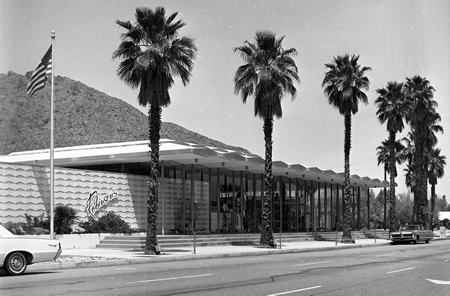
J.W. Robinson Department Store Building 333-343 South Palm Canyon Drive, Palm Springs, CA 92262

Constructed from 1957-1958 at a cost of $280,000 on land purchased from Palm Springs pioneer Pearl McManus, the J.W. Robinson Department Store Building was designed by the Los Angeles-based architectural firm of Charles Luckman Associates and William L. Pereira. Located on the southwest corner of South Palm Canyon Drive and West Baristo Avenue, the pavilion-style modernist building is dramatically elevated from the street level by four long horizontal concrete steps that create both a sense of arrival and impart a sense importance to the building. The building (currently The Alley) won the AIA’s “First Honor Award” for 1958.

REFERENCES

On January 16, 2013 the Palm Springs city council voted unanimously (5-0) to designate the J.W. Robinson Department Store building (Luckman & Pereira, 1958) a Class 1 Historic Site. While the council noted the owner’s opposition to the historic designation, the council ultimately determined that the designation was just “too important” to the citizens of the city. The pro bono nomination, written by PSPF board member Ron Marshall, was lauded by council as well-researched and convincing. Making compelling public comment in support of the nomination were PSPF board members Patrick McGrew and Erik Rosenow, and PSModCom president Chris Menrad.

On November 13, 2012 the city’s Historic Site Preservation Board voted 4-1 to recommend the Class 1 historic site nomination of the J.W. Robinson Department Store Building to the city council. PSPF board member Gary Johns made compelling public comment in support of the nomination.

On July 10, 2012 the Historic Site Preservation Board voted (4-1) to “initiate” the Class 1 Historic Site designation of the J.W. Robinson Department Store Building under the provisions of Chapter 8.05 of the Palm Springs Municipal Code.

At the June 12, 2012 meeting of the city’s Historic Site Preservation Board (HSPB), PSPF board member Ron Marshall provided members of the HSPB with copies of the historic site nomination of the J.W. Robinson Department Store Building (Luckman & Pereira, 1958) and asked that it be considered at the next HSPB meeting.

In 2012, as part of an initiative to energize the city’s historic resources program, PSPF board members committed to authoring Class 1 Historic Site nominations for various important residential and commercial buildings throughout Palm Springs and the Coachella Valley.

Courtesy Palm Springs Historical Society

IN THE MEDIA

November 14, 2012, Desert Sun (J. W. Robinson Department Store)

Categories
Historic Sites

Kirschner Residence

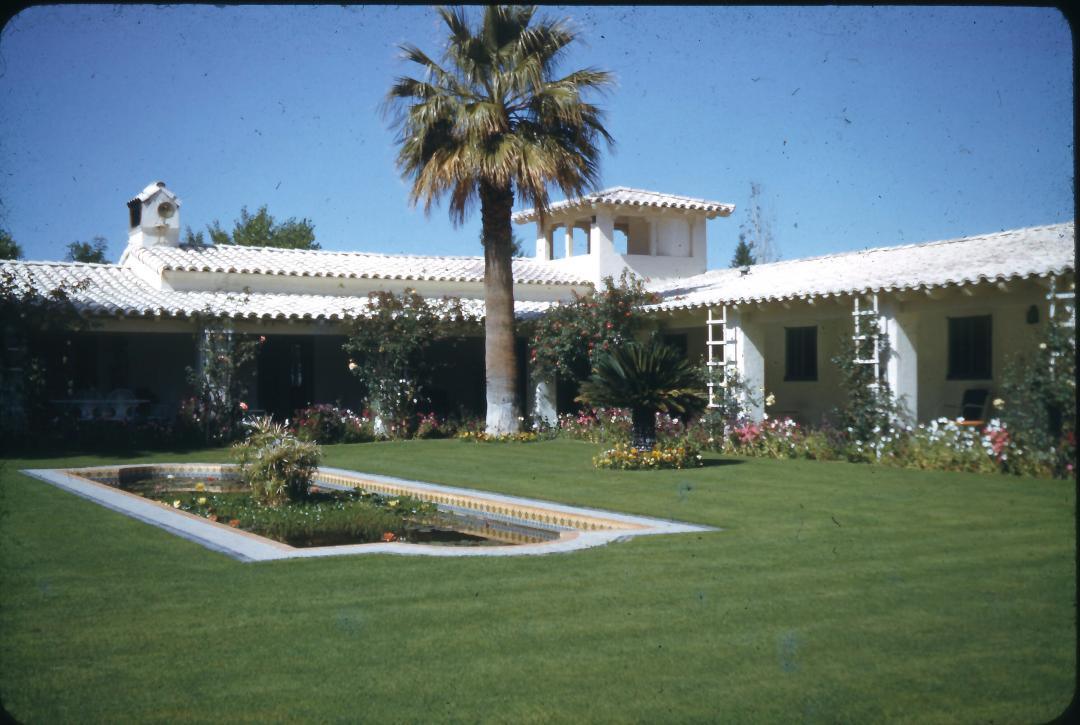
Walter Kirschner Residence 417 Hermosa Place, Palm Springs, CA 92262

Built in 1937 and designed by the architectural firm of Brewster & Benedict, the Walter Kirschner Residence is an important example of custom Spanish-Colonial Revival architecture. Kirschner was the wealthy co-owner of the nationwide Grayson’s chain of ladies’ apparel shops and was a friend and advisor to President’s Roosevelt, Truman and Eisenhower. Kirschner named the property “Casa Adaire” after his daughter.

REFERENCES

On April 3, 2019 the Palm Springs city council unanimously approved (5-0) the Class 1 Historic Site designation of the Walter Kirschner Residence. PSPF board member Steven Keylon made public comment in support of the nomination.

On March 12, 2019 the city’s Historic Site Preservation Board voted unanimously (7-0) to recommend to city council approval of the Class 1 Historic Site designation of the Walter Kirschner Residence.

On September 19, 2018, PSPF (acting as agent for the owner) submitted the 121-page Class 1 Historic Site nomination for the Walter Kirschner “Casa Adaire” Residence to the city of Palm Springs’ Historic Site Preservation Board.

In April of 2018, the Palm Springs Preservation Foundation board of directors assigned the task of writing the Class 1 Historic Site nomination of the Walter Kirschner “Casa Adaire” Residence (1937, Brewster & Benedict) to board member Steven Keylon.

Courtesy Palm Springs Historical Society
Categories
Historic Sites

Kramer Residence

Allan & Mildred Kramer Residence 800 East Granvia Valmonte, Palm Springs, CA 92262

The Kramer Residence, by noted architectural designer James McNaughton, was constructed in 1963. McNaughton not only knew the technical aspects of architecture but the theatrics of it in a way few others did. To him, all houses were stage sets in which their occupants lived out their lives. A rare desert interpretation of New Formalism, the elegant residence features verticality, monumentality (on a residential scale) and symmetry in plan.

REFERENCES

On January 9, 2020 the Palm Springs city council voted unanimously (5-0) to approve the Class 1 Historic Resource designation of the Allan & Mildred Kramer Residence. Steve Vaught (author of the nomination) attended the council meeting.

On July 9, 2019 the city’s Historic Site Preservation Board voted unanimously (7-0) to recommend to city council approval of the Class 1 Historic Site designation of the Allan & Mildred Kramer Residence. PSPF member and nomination author Steve Vaught made public comment in support of the nomination.

On March 20, 2019 the Palm Springs Preservation Foundation (acting as agent for the owner) submitted the 61-page Class 1 Historic Site nomination for the Kramer Residence to the Palm Springs Historic Site Preservation Board.

In January of 2019, the Palm Springs Preservation Foundation board of directors assigned the task of writing the Class 1 Historic Site nomination of the Kramer Residence to Steve Vaught.

Courtesy Estate of James H. McNaughton/Robert Miller
Categories
Historic Sites

Morse Residence

Theodore & Claire Morse Residence 1197 Abrigo Road, Palm Springs, CA 92262

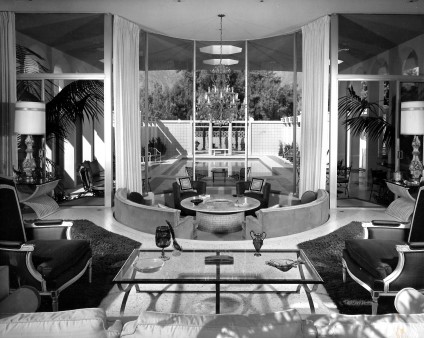
One of the most interesting modernist homes in the prestigious Vista Las Palmas neighborhood of Palm Springs, the Theodore & Claire Morse Residence (1960) started life as an Alexander tract home designed by the firm of Palmer & Krisel. In 1961, the Morses commissioned renowned Los Angeles architect Harold “Hal” Levitt to glamorize and expand the home turning it into a Hollywood-style “entertainment residence.” The Morse Residence is considered by many to have the best pool and bar entertainment combo in Palm Springs.

REFERENCES

On January 13, 2016 the Palm Springs city council unanimously approved (4-0 with one recusal) the Class 1 Historic Site nomination of the Theodore & Claire Morse Residence. Making public comment in support of the nomination was PSPF board member Ron Marshall who lauded architect Hal Levitt’s contribution to Palm Springs’ “built environment.”

On June 9, 2015 the city of Palm Springs’ Historic Site Preservation Board met and voted 7-0 to forward a proposed resolution to the city council to designate the Morse Residence a Class 1 Historic Site.

On March 3, 2015 the Palm Springs Preservation Foundation (acting as agent for the owners) submitted the Class 1 historic site nomination for the Theodore & Claire Morse Residence to the city’s Historic Site Preservation Board. The 42-page nomination was prepared for PSPF by PSPF board members Ron and Barbara Marshall.

On February 15, 2015 PSPF held a fundraising event at the Theodore & Claire Morse Residence. The event entitled “Hollywood Glam in Palm Springs” was a great success attended by over 150 partygoers.

Morse Residence

IN THE MEDIA

Categories
Historic Sites

O’Donnell Golf Course

Thomas A. O'Donnell's "Desert Golf Course" 301 North Belardo Road, Palm Springs, CA 92262

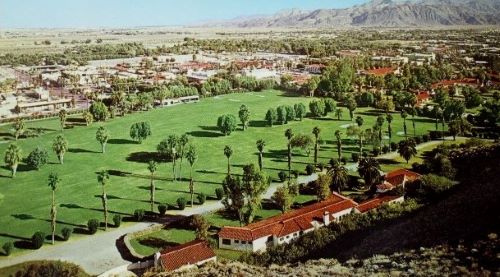
Thomas A. O’Donnell’s “Desert Golf Course,” known today as the O’Donnell Golf Club, was the creation of oil tycoon Thomas O’Donnell who began construction of the course in 1926, finishing the first iteration of his private 9-hole course the following year. It is the oldest existing golf course in the Coachella Valley. In 1936, he commissioned architect William Charles Tanner to design a custom Spanish-Colonial Revival residence on the golf course, which O’Donnell called the “Golf House.”

In 1944, O’Donnell willed the course to the city of Palm Springs, which leased it back to the O’Donnell Golf Club for 99 years. Under the terms of the O’Donnell gift, when the lease ends in 2043, the property’s use must remain “a public benefit” or it will revert to O’Donnell’s heirs.

On August 14, 2020, the Thomas A. O’Donnell “Desert Golf Course” nomination was heard by the California State Historical Resources Commission in Sacramento. The commission voted unanimously to add the golf course to both State and National Registers of Historic Places. Notably, the golf course nomination received a letter of support from the O’Donnell Golf Club and further “approval” from the city of Palm Springs.

On June 12, 2020, PSPF asked the California State Historic Preservation Office to add the O’Donnell Golf Course to the California State Register (and by extension the National Register) of Historic Places. Accompanying the request was a scholarly 62-page application authored by Susan Secoy Jensen.

On October 23, 2019 the Palm Springs city council unanimously approved (5-0) the Class 1 Historic Resource designation of Thomas A. O’Donnell’s “Desert Golf Course.” After a presentation on the merits of the nomination by PSPF board member and nomination author Steven Keylon, compelling public comment was made by PSPF board member Jan Harper and PSPF honorary board member Hugh Kaptur. A large contingent of golf club members attended to support the nomination. Several city council members made favorable comments about how well written and persuasive Keylon’s nomination was.

On October 8, 2019 the city’s Historic Site Preservation Board voted unanimously (4-0) to recommend to city council approval of the Class 1 Historic Resource designation of Thomas A. O’Donnell’s “Desert Golf Course.” Several HSPB members made enthusiastic comments in support of designating the entire site. PSPF board members Steven Keylon and Jan Harper made compelling public comment in support of the nomination.

On September 27, 2019, PSPF assigned the task of writing the National Register nomination for the Thomas A. O’Donnell “Desert Golf Course” to PSPF advisor and preservation architect Susan Secoy Jensen. The effort supplements PSPF’s successful campaign to have the historic golf course designated a city of Palm Springs Class 1 Historic Resource.

On September 3, 2019 the Palm Springs Preservation Foundation (acting on behalf of the O’Donnell Golf Club) submitted the 118-page Class 1 Historic Resource nomination for Thomas A. O’Donnell’s “Desert Golf Course” to the Palm Springs Historic Site Preservation Board.

In June of 2018, the Palm Springs Preservation Foundation board of directors assigned the task of writing the Class 1 Historic Resource nomination of Thomas A. O’Donnell’s “Desert Golf Course” to PSPF board member Steven Keylon.

Courtesy Patrick McGrew
Categories
Historic Sites

Piazza di Liberace

Piazza di Liberace 1441 North Kaweah Road, Palm Springs, CA 92262

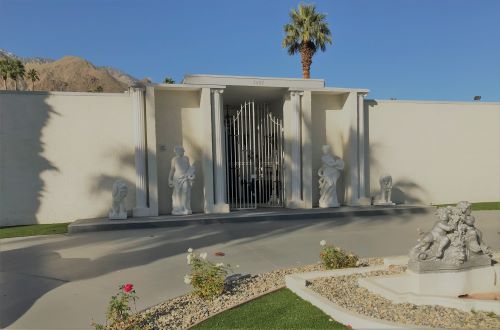
Built by contractor John H. (“Jack”) Slaten in 1951, this simple, contemporary home was bought by Liberace in 1966 and was his primary residence until 1974. Liberace remodeled the house extensively, and stylistically it is in harmony with the over-the-top Hollywood Regency style for which he is most well-known. Of the three Palm Springs homes owned and lived in by Liberace, Piazza di Liberace is the only one remaining which closely resembles its appearance at the time he owned it.

REFERENCES

On September 10, 2019, the Class 1 Historic Site nomination for the Piazza di Liberace was withdrawn by the owners.

On May 15, 2019, PSPF (acting as agent for the owner) submitted the 55-page Class 1 Historic Site nomination for Piazza di Liberace to the Palm Springs Historic Site Preservation Board.

In March of 2018, the Palm Springs Preservation Foundation board of directors assigned the task of writing the Class 1 Historic Site nomination of the Piazza di Liberace to board member Steven Keylon.

Courtesy Steven Keylon